
Dr. Yugal Karkhur is an orthopaedic surgeon, treating hip and joint diseases for over 14 years. It is his detailed diagnosis and a stage-wise treatment approach that make him a leading AVN Doctor in Sonipat, and many patients rely on him for this reason.
MS (Orthopaedics) was his degree from Maulana Azad Medical College, New Delhi, and then he was a Senior Registrar at Lok Nayak Hospital and Sushruta Trauma Centre. He also went to the Missouri Orthopaedic Institute (USA) for adult hip preservation surgery and joint replacement training.
At YK Orthopaedics, Dr. Karkhur is the one who is able to take the early AVN case as a natural hip joint saving. Even in advanced AVN, the doctor is resorting to hip replacement for long-term pain relief and mobility.
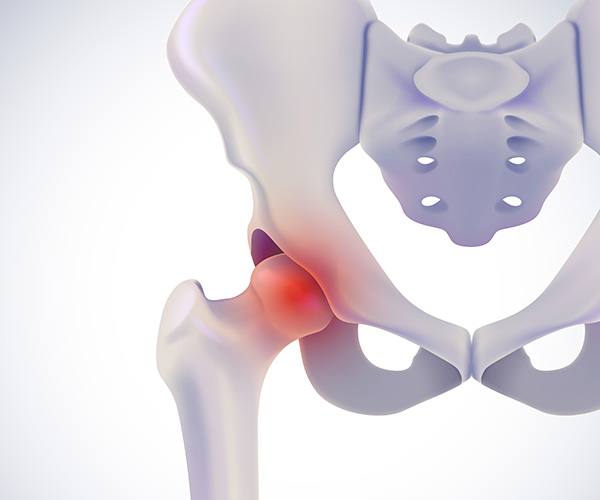
AVN is a condition that occurs when the blood supply to a bone is reduced or completely cut off. As a result, the bone fails to receive sufficient oxygen and other nutritional substances. Eventually, the bone begins to die, and hence the name, AVN is also referred to as osteonecrosis.
AVN is seen mostly in hip joints, particularly in the upper part of the thigh bone known as the femoral head. During the initial stage, AVN sometimes gives rise to trivial pain. However, if medical intervention comes late, the affected bone can go through a process of weakening and eventually collapse, which can further on can lead to the joint being damaged.
This is the reason why early diagnosis and timely treatment are so essential. The periodontics of AVN are determined by its stage and the severity of pain, as well as the extent of the bony necrosis.
AVN is a condition that occurs when the blood flow to the bone is significantly reduced. There are several factors that can lead to AVN.
The most common among them are:
In some cases, AVN can develop without any known reason. This is referred to as idiopathic AVN. People who experience hip pain for a few weeks or pain in the groin area should not take it lightly. A prompt visit to an orthopedic doctor can prevent more bone damage and also improve the treatment outcome.
The AVN treatment cost in Sonipat varies based on the stage of the disease and the required treatment. In the beginning, the patient might be given medicines, physiotherapy, core decompression, or stem cell support. Advanced AVN can lead to replacement surgery of the hip joint. In Sonipat, the initial treatment might cost ₹50,000 to ₹2.5 lakh, while the total cost of hip replacement might range from ₹2.5 lakh to ₹5.5 lakh, strictly based on the implant type and the length of hospital stay.
| AVN Treatment Type | Estimated Cost Range (Sonipat) |
|---|---|
| Consultation + X-ray / MRI | ₹3,000 – ₹15,000 |
| Medicines + Physiotherapy | ₹5,000 – ₹25,000 |
| Core Decompression Surgery | ₹50,000 – ₹1.5 lakh |
| Stem Cell Therapy (with surgery) | ₹1.2 lakh – ₹2.5 lakh |
| Total Hip Replacement Surgery | ₹2.5 lakh – ₹5.5 lakh |
The symptoms of AVN could develop very slowly; the majority of patients at first don't pay attention to them. However, the initial signs need to be examined immediately in order to stop the bone from breaking.
In the beginning, the pain may be intermittent. But with the progression of the AVN, pain becomes constant, and mobility is further hindered. Should the hip pain last longer than a couple of weeks, it is advisable to see a doctor without any delay. The early intervention is not only beneficial in saving the joint but also in avoiding hip replacement.
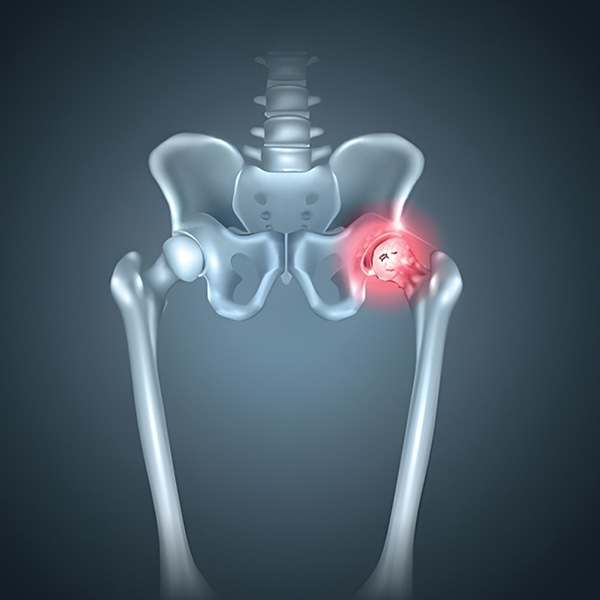
Diagnosis at YK Orthopaedics begins with a thorough examination. The physician inquires about the patient's pain, difficulties in walking, use of steroids, drinking habits, or if they have had any hip injury in the past.
Diagnosis tests comprise:
MRI's role is critical as it is capable of early diagnosing AVN when no collapse of bone has occurred yet. After an MRI, the stage of AVN is determined, and the doctor suggests the most suitable treatment based on the pain and the state of the joint. To get the best out of the early diagnosis, it needs to be less painful and not to cause further joint damage.
The management of AVN is determined by the stage. In the initial stage, the treatment is primarily aimed at preserving the hip joint. However, in advanced cases, surgery might be necessary
Core decompression can elevate and enhance blood flow to the affected region in early AVN. If a complete bone collapse occurs along with severe joint damage, hip replacement turns out to be the most effective in providing long-term mitigation of pain. At YK Orthopaedics, the treatment is meticulously planned in a stepwise manner for optimal outcomes.
Watch Dr Yugal’s informative Reel Content

The recovery period is determined by the kind of treatment provided. In the case of early AVN, the recovery process entails rest, limited walking, and physiotherapy. Walking support may be required for patients after core decompression for a few weeks.
Most patients can start walking with support within 1–2 days after hip replacement surgery. Physiotherapy aids in the improvement of hip movement, strength, and balance. Basic recovery may last 4–6 weeks, whereas complete recovery may take 3–6 months.
Good care leads to faster healing and favorable permanent results.
When it comes to hip care and advanced orthopaedic treatment, YK Orthopaedics is the top-notch clinic that everyone trusts. Our primary concern is the patient's welfare, which means that we diagnose early and plan accordingly so that the patient will be able to receive the right treatment at the right time.
Reasons for selection for us by patients are MRI-based early detection, joint-saving treatment options for early AVN, and timely surgery for advanced cases with no risk. Strict hygiene and safety measures are always in place during treatment. Complete physiotherapy and follow-up guidance are also provided to the patients as part of their training to support their recovery.
The main goal of ours is going to be relieving the pain from the hip joint, enhancing the mobility of the patient, and helping them get back to their previous way of living, but this time with long-lasting pain relief.
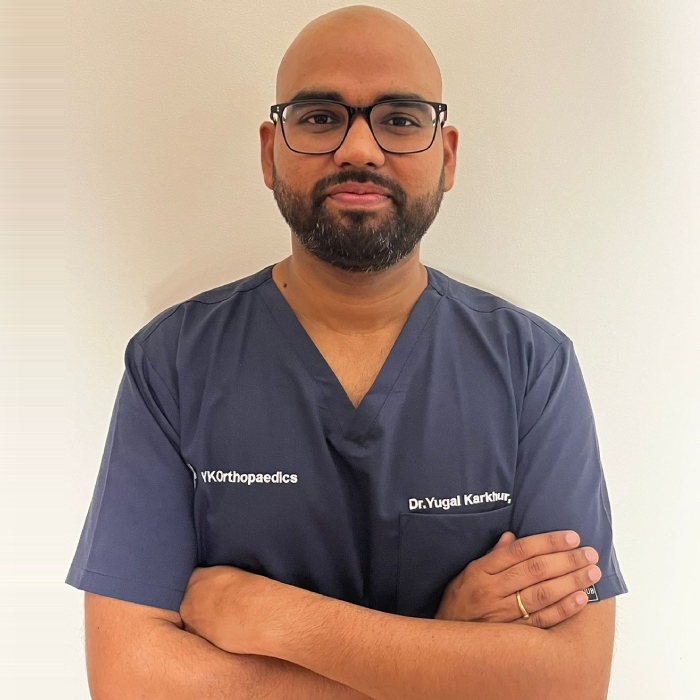
Dr. Yugal Karkhur is a highly experienced Orthopaedic Doctor & Joint Replacement Specialist...
14+ years of experience in Orthopaedics & Joint Replacement Surgery
MS (Orthopaedics) – Maulana Azad Medical College, New Delhi
Locations: Gurgaon & Delhi NCR
Years of Experience
Surgeries
Happy Patients
Locations