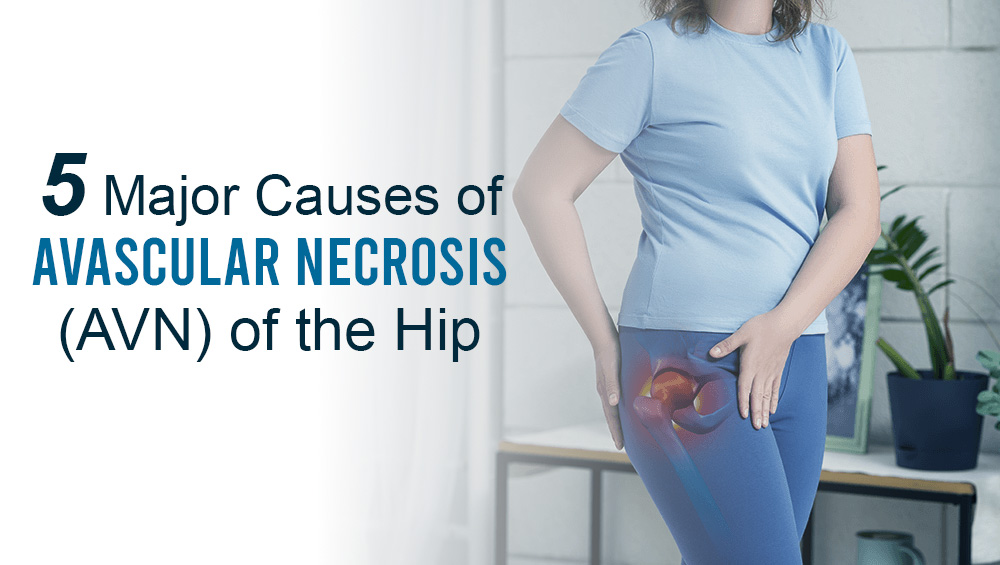
Avascular Necrosis (AVN) of the hip — also called osteonecrosis of the femoral head — is a serious joint condition caused by reduced or blocked blood supply to the hip bone. When the femoral head does not receive adequate oxygen and nutrients, the bone tissue begins to die, eventually leading to joint collapse.
AVN is increasingly being diagnosed in younger adults between 30–50 years, often without any obvious injury. Early detection is crucial because untreated AVN can rapidly progress to severe arthritis and may require total hip replacement surgery.
This guide explains the major causes of avascular necrosis of the hip, risk factors, and how the disease develops — helping patients recognize warning signs early.
What Causes Avascular Necrosis (AVN) of the Hip?
AVN develops when blood flow to the femoral head — the ball portion of the hip joint — is interrupted or reduced. Without proper circulation, bone cells die, weakening the joint structure over time.
Doctors broadly classify AVN causes into:
-
Traumatic causes – Injury-related
-
Non-traumatic causes – Medical or lifestyle-related
Understanding these avascular necrosis hip causes helps in early prevention and treatment.
1️⃣ Traumatic Causes (Injury-Related)
Hip Fractures
Fractures near the femoral neck can damage or tear blood vessels supplying the hip bone. Once circulation stops, bone tissue begins to die — making fractures one of the leading causes of AVN.
Hip Dislocation
Hip dislocation — commonly seen in road accidents or major falls — can compress or rupture blood vessels. Delayed repositioning significantly increases AVN risk.
2️⃣ Corticosteroid Use
Long-term or high-dose steroid use is one of the most common non-traumatic causes of AVN.
Steroids may:
-
Increase fat deposits in blood vessels
-
Reduce blood circulation
-
Block nutrient supply to bone
Patients taking steroids for asthma, autoimmune diseases, or post-COVID complications are at higher risk.
3️⃣ Excessive Alcohol Consumption
Chronic alcohol intake interferes with fat metabolism and leads to fatty deposits in blood vessels.
Over time, this results in:
-
Narrowed circulation
-
Reduced bone oxygen supply
-
Femoral head damage
Alcohol-related AVN often develops silently.
4️⃣ Blood Disorders (Sickle Cell & Clotting Diseases)
Blood disorders can obstruct micro-circulation to the hip bone.
High-risk conditions include:
-
Sickle cell disease
-
Clotting disorders
-
Antiphospholipid syndrome
These conditions reduce oxygen delivery, accelerating bone tissue death.
5️⃣ Other Medical Conditions
Several systemic diseases can contribute to AVN development:
-
Lupus
-
Gaucher disease
-
Pancreatitis
-
Kidney disease
-
Cancer treatments (radiation/chemotherapy)
These disorders alter bone metabolism or blood supply, increasing osteonecrosis risk.
Idiopathic AVN (Unknown Cause)
In some patients, no clear cause is identified despite advanced diagnostics. These are termed idiopathic AVN cases.
Even healthy individuals may develop AVN due to microvascular compromise.
Early Symptoms of AVN Hip
AVN often begins silently. As the disease progresses, patients may experience:
-
Groin pain radiating to thigh or buttock
-
Pain while walking or standing
-
Limping
-
Hip stiffness
-
Reduced range of motion
Pain may initially occur only during weight-bearing but later persists even at rest.
Diagnosis of Avascular Necrosis
Early diagnosis prevents joint collapse.
Common tests include:
-
MRI – Detects early AVN before X-ray changes
-
X-ray – Shows advanced bone damage
-
CT Scan – Evaluates structural collapse
MRI remains the gold standard for early detection.
Treatment Options for AVN Hip
Treatment depends on disease stage:
Early Stage
-
Medications
-
Bisphosphonates
-
PRP / Stem cell therapy
-
Core decompression
-
Lifestyle modification
Advanced Stage
-
Bone grafting
-
Joint preservation surgery
-
Total hip replacement
Timely intervention can delay or prevent joint replacement.
Prevention Tips
You can reduce AVN risk by:
-
Limiting alcohol intake
-
Avoiding unnecessary steroid use
-
Managing cholesterol
-
Treating blood disorders
-
Quitting smoking
Early screening is essential in high-risk patients.
Conclusion
Avascular Necrosis of the hip is a progressive condition caused by loss of blood supply to the femoral head. Trauma, steroids, alcohol, blood disorders, and systemic diseases are the major contributors.
Recognizing early symptoms and seeking specialist care can prevent joint collapse and major surgery.
If you’re experiencing persistent hip pain, consult Dr. Yugal Karkhur, Orthopaedic & Joint Replacement Specialist, for accurate diagnosis and advanced AVN treatment.
FAQs
Q1. What is avascular necrosis of the hip?
A condition where hip bone tissue dies due to reduced blood supply.
Q2. What are the major causes of AVN?
Trauma, steroid use, alcohol, blood disorders, and systemic diseases.
Q3. Who is at risk of AVN?
Adults 30–50, steroid users, alcoholics, and trauma patients.
Q4. Can AVN be treated without surgery?
Yes, in early stages with medicines and joint-preserving procedures.
Q5. What is the best test for AVN diagnosis?
MRI is the most accurate early diagnostic test.