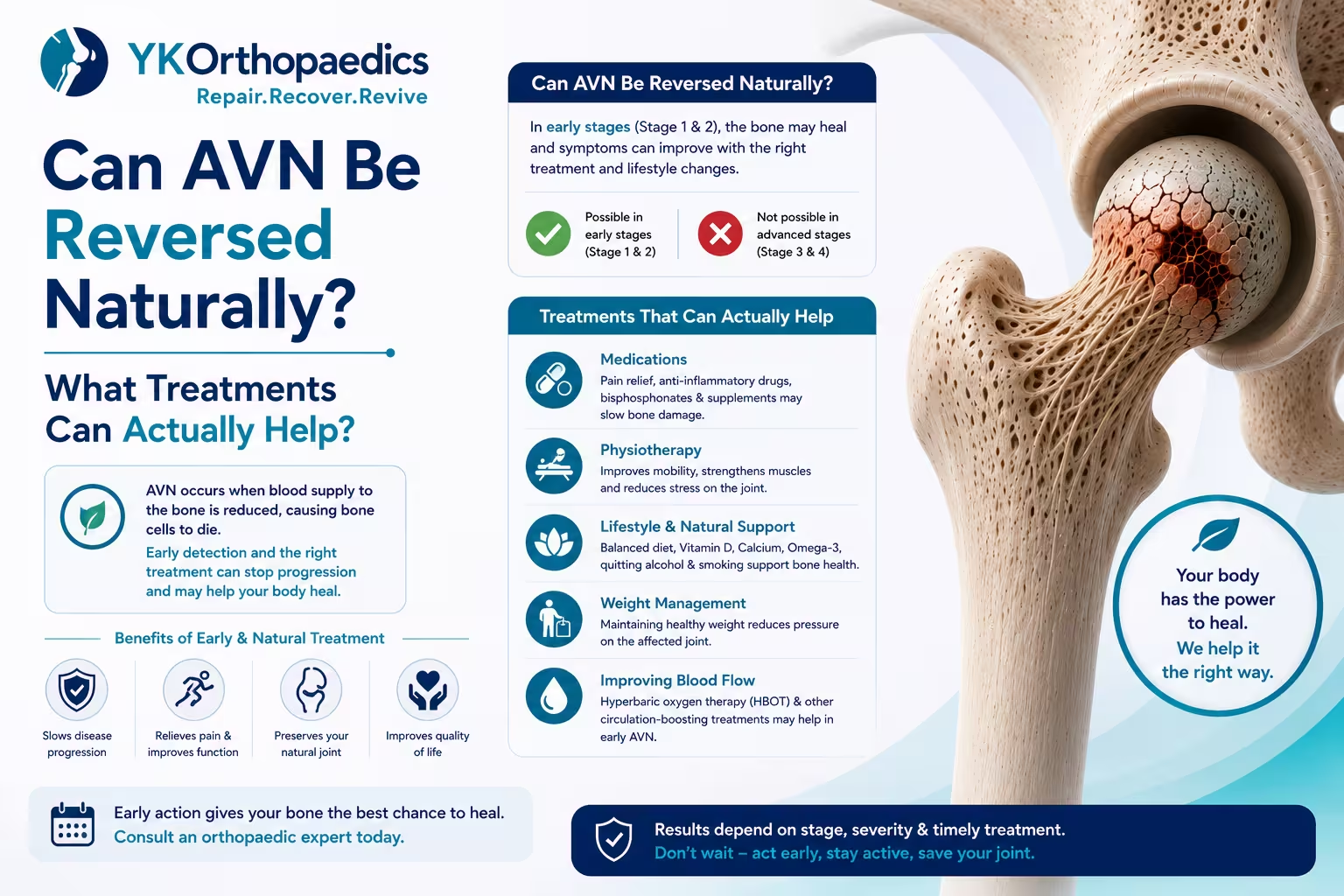
Avascular Necrosis (AVN) cannot be reliably reversed naturally once significant bone damage or femoral-head collapse has occurred. However, some small and early AVN lesions may remain stable or, in selected cases, heal through the body's natural repair processes, particularly when the affected area is not exposed to major weight-bearing forces.
Natural measures such as healthy nutrition, avoiding excessive alcohol, stopping smoking, modifying activities and following an appropriate exercise program can support overall bone and joint health. However, these measures should not be considered a cure for AVN. Non-surgical treatment may help manage symptoms, but according to NIAMS, it generally does not cure osteonecrosis or reliably stop its progression.
The most important factor is how early AVN is detected. Early diagnosis provides a greater opportunity to protect the joint before collapse occurs.
What Does "Natural Reversal" of AVN Actually Mean?
AVN occurs when part of the bone loses an adequate blood supply, causing bone tissue to become damaged or die. If the affected area is small and not subjected to major weight-bearing forces, the body's repair mechanisms may sometimes rebuild the damaged area.
But this is very different from saying that AVN can be "cured naturally" in everyone.
A small early lesion may remain stable.
Another lesion may continue progressing.
A large lesion involving the weight-bearing portion of the femoral head may eventually collapse.
Therefore, AVN should be evaluated based on its stage, size and location rather than relying on natural remedies alone.
Can Early AVN Heal on Its Own?
In selected cases, yes.
According to NIAMS, when osteonecrosis is diagnosed early, the damaged area is small and the bone is not weight-bearing, the bone may sometimes heal on its own.
This means early detection can make an important difference.
More favorable situation
Small lesion + early stage + no collapse + low weight-bearing stress
Higher-risk situation
Large lesion + weight-bearing area + subchondral fracture + collapse
These two situations should not be treated in the same way.
Can Stage 1 AVN Reverse Naturally?
Some Stage 1 lesions may remain stable or heal, but this cannot be guaranteed.
Stage 1 represents early disease, and MRI may detect AVN even when X-rays are still normal.
If the lesion is small and the femoral head remains structurally intact, your doctor may consider:
- Observation
- Activity modification
- Protected weight-bearing
- Risk-factor management
- Physiotherapy
- Regular imaging
Depending on the lesion characteristics, a joint-preserving procedure may also be discussed.
Can Stage 2 AVN Reverse Naturally?
Some early Stage 2 lesions may remain stable or potentially heal, but progression is also possible.
The most important factors are:
- Lesion size
- Lesion location
- Weight-bearing involvement
- Presence or absence of collapse
- Underlying cause
A small Stage 2 lesion without collapse may have a better outlook than an extensive lesion involving the weight-bearing portion of the femoral head.
This is why an MRI should be evaluated carefully rather than focusing only on the words "Stage 2."
Can Stage 3 or Stage 4 AVN Reverse Naturally?
Established femoral-head collapse cannot be reliably reversed through natural methods.
Once the weakened bone develops a subchondral fracture and collapses, the shape and mechanical structure of the femoral head may be permanently altered.
Advanced AVN can also lead to:
- Cartilage damage
- Joint-space narrowing
- Secondary osteoarthritis
- Severe pain
- Loss of hip movement
At this stage, treatment may need to focus on preserving function and relieving pain rather than expecting the collapsed bone to naturally return to its original shape.
Can Diet Reverse AVN?
No specific diet has been proven to reverse AVN.
A nutritious diet can support overall health and normal bone function, but it cannot reliably restore the blood supply to a damaged femoral head.
A balanced diet can include:
- Adequate protein
- Calcium-rich foods
- Vitamin D sources
- Fruits and vegetables
- Whole grains
- Healthy fats
If you have a nutritional deficiency, your doctor may recommend appropriate supplementation.
But nutrition should be considered supportive care, not a treatment that cures AVN.
Can Vitamin D Cure AVN?
Vitamin D is important for bone health, but vitamin D alone cannot cure AVN.
If you have a vitamin D deficiency, correcting it can be beneficial for your overall bone health.
However, taking vitamin D without medical advice will not reverse established osteonecrosis.
A blood test can determine whether you actually have a deficiency.
Can Calcium Reverse AVN?
Calcium is essential for maintaining healthy bones, but calcium supplements cannot reverse AVN.
If your diet provides insufficient calcium or you have a medical reason to take supplements, your doctor can recommend the appropriate amount.
Do not assume that taking more calcium will repair an AVN lesion.
Can Exercise Reverse AVN Naturally?
Exercise cannot reverse established AVN.
However, appropriately selected exercise may help:
- Maintain muscle strength
- Preserve hip mobility
- Reduce stiffness
- Improve physical function
The type of exercise matters.
High-impact activities such as:
- Running
- Jumping
- Certain sports
- Repetitive heavy loading
may not be appropriate for someone with a weakened femoral head.
Your orthopedic doctor or physiotherapist should determine which exercises are safe for your stage of AVN.
Can Walking Help AVN?
Walking needs to be individualized.
For some patients, normal or modified walking may be appropriate.
For others, particularly those with significant weight-bearing lesions or pain, the doctor may recommend protected weight-bearing with a cane or crutches.
NIAMS notes that reducing weight on a weight-bearing bone may help relieve symptoms and, in some cases, may slow damage and allow some healing.
So:
Walking is not automatically good or bad for AVN.
It depends on the condition of the affected bone.
Can Rest Reverse AVN?
Rest alone cannot be considered a cure for AVN.
Reducing activities that place excessive stress on the affected joint can be useful, particularly in early disease.
However, prolonged complete inactivity can also result in:
- Muscle weakness
- Stiffness
- Reduced fitness
- Reduced mobility
Your doctor should determine the appropriate level of activity and weight-bearing.
Can Physiotherapy Help AVN?
Yes, physiotherapy can help manage AVN, but it does not reverse dead bone.
Physiotherapy can help:
- Maintain range of motion
- Strengthen surrounding muscles
- Reduce stiffness
- Improve mobility
- Support daily function
NIAMS lists physical therapy as a non-surgical treatment that can help reduce joint tenderness and stiffness and improve range of motion.
The exercises should be adapted to the stage of AVN.
Can Losing Weight Help Reverse AVN?
Weight loss cannot reverse AVN.
However, if you are overweight, achieving a healthy weight may reduce mechanical stress on the hip during walking and everyday activities.
This can be helpful as part of an overall joint-protection strategy.
But it should not replace medical treatment or monitoring.
Can Stopping Alcohol Help AVN?
Stopping excessive alcohol consumption can address an important risk factor for AVN.
Excessive alcohol use is associated with osteonecrosis.
However, stopping alcohol does not automatically reverse an established AVN lesion.
It is better understood as removing a potential contributor to disease progression rather than a treatment that repairs damaged bone.
Can Quitting Smoking Help AVN?
Smoking is also associated with osteonecrosis risk.
Quitting smoking is beneficial for overall cardiovascular and bone health.
However, smoking cessation alone cannot reliably reverse established AVN.
It should be part of a broader treatment strategy.
Can Steroid-Induced AVN Be Reversed Naturally?
If corticosteroids are contributing to AVN risk, the medication should be reviewed with the doctor who prescribed it.
Do not suddenly stop corticosteroids yourself.
Your doctor may determine whether the medication can be reduced, changed or stopped safely.
Addressing the underlying risk factor can be important, but it does not guarantee that existing AVN will disappear.
Can Medicines Reverse AVN?
There is no universally proven medicine that can reliably reverse established AVN.
Doctors may prescribe medicines to:
- Control pain
- Reduce inflammation
- Address specific underlying conditions
- Manage certain blood-clotting problems when appropriate
NIAMS notes that non-surgical treatments generally help manage symptoms but do not cure osteonecrosis or reliably stop its progression.
Certain drug treatments have been studied, but treatment should be based on the individual patient's condition rather than assuming that a particular medicine can cure AVN.
Can Blood Thinners Cure AVN?
Blood thinners may have a role in selected patients with specific blood-clotting problems, but they are not a general treatment for AVN.
NIAMS notes that blood thinners may be used when blood-clotting problems are contributing to the condition.
They should never be started without medical supervision.
Can Supplements Reverse AVN?
There is no reliable evidence that ordinary supplements can reverse established AVN.
Be cautious about products claiming to:
- "Regrow dead bone"
- "Restore blood supply naturally"
- "Cure AVN permanently"
- "Avoid hip replacement in every case"
Such claims can be misleading.
If you are considering a supplement, discuss it with your doctor first, especially if you are taking other medicines.
Can Home Remedies Reverse AVN?
No proven home remedy can reliably reverse AVN.
Home measures may help with comfort and general health, but they cannot replace proper diagnosis and treatment.
Examples of supportive measures include:
- Following weight-bearing restrictions
- Maintaining a healthy weight
- Avoiding excessive alcohol
- Stopping smoking
- Following prescribed physiotherapy
- Maintaining a balanced diet
The most important step is to determine how advanced the AVN is.
What Treatments Can Actually Help Early AVN?
Treatment depends on the individual case.
Conservative Treatment
May include:
- Activity modification
- Protected weight-bearing
- Pain management
- Physiotherapy
- Management of underlying risk factors
- Monitoring with imaging
These measures can help manage symptoms and protect the joint, but they do not guarantee reversal.
Joint-Preserving Treatment
For selected patients with early AVN, doctors may consider procedures such as core decompression.
Core decompression is designed to reduce pressure within the affected bone and is commonly used in earlier stages before significant collapse.
Advanced AVN
If the femoral head has already collapsed and the joint is significantly damaged, total hip replacement may become necessary.
Can Core Decompression Reverse AVN?
Core decompression is not a "natural" treatment—it is a joint-preserving surgical procedure.
It is generally considered in selected patients with early disease before significant collapse.
The procedure creates channels through the affected bone to reduce pressure and may promote bone repair.
Whether it is appropriate depends on:
- AVN stage
- Lesion size
- Lesion location
- Weight-bearing involvement
- Patient age
- Symptoms
- Overall hip condition
Can AVN Be Reversed Before Hip Collapse?
This is when treatment has the greatest potential to preserve the natural joint.
Early diagnosis provides a better opportunity to prevent further damage. NIAMS specifically notes that early diagnosis increases the chance that treatment will be successful.
Therefore:
Early AVN → evaluate and protect the joint
rather than:
Wait until severe pain or collapse develops.
Can a Collapsed Femoral Head Recover Naturally?
A significantly collapsed femoral head generally cannot be restored to its original shape through natural remedies.
Once collapse has changed the mechanical structure of the joint, treatment may need to focus on repairing or replacing the damaged joint.
If advanced disease has caused severe pain and joint dysfunction, total hip replacement may be considered.
How Do You Know Whether Your AVN Can Still Be Reversed?
Your MRI is one of the most important pieces of information.
Your orthopedic specialist will assess:
- AVN stage
- Lesion size
- Lesion location
- Weight-bearing involvement
- Subchondral fracture
- Femoral-head collapse
- Cartilage condition
- Joint-space changes
More favorable features
Small lesion + early stage + no collapse
More concerning features
Large lesion + weight-bearing involvement + subchondral fracture + collapse
This is why simply asking "Do I have AVN?" is not enough.
The more useful question is:
"What stage is my AVN, how large is the lesion, and has the femoral head collapsed?"
What Happens If You Ignore Early AVN?
Early AVN may not cause severe symptoms, but the disease can progress.
Possible progression:
Reduced blood supply → Bone damage → Subchondral fracture → Femoral-head collapse → Cartilage damage → Arthritis
The rate of progression varies between patients.
This is why an early diagnosis should be followed by appropriate medical assessment rather than relying only on pain levels.
When Should You See an Orthopedic Doctor?
You should consider an orthopedic evaluation if you have:
- MRI-confirmed AVN
- Persistent hip or groin pain
- Increasing difficulty walking
- Hip stiffness
- Reduced range of motion
- A large AVN lesion
- Weight-bearing area involvement
- Subchondral fracture
- Femoral-head collapse
- AVN in both hips
- A history of long-term steroid use
- A history of excessive alcohol use
Early evaluation is particularly important because treatment aimed at preserving the natural hip is generally more useful before significant collapse occurs.
Expert Opinion
According to Dr. Yugal Karkhur, a Best Orthopedic Doctor in Gurgaon, AVN should not be approached with the expectation that natural remedies alone will reverse the disease.
Some small and early lesions may remain stable or heal, but this depends heavily on lesion size, location, weight-bearing involvement and whether the femoral head has collapsed.
Healthy lifestyle changes, activity modification, appropriate physiotherapy and management of underlying risk factors can support treatment. However, when the lesion is high-risk or progressing, delaying appropriate orthopedic treatment in the hope of natural reversal can allow irreversible collapse to develop.
The goal is to identify AVN early and preserve the natural hip whenever possible.
Conclusion
AVN can sometimes remain stable or heal naturally when the lesion is small, detected early and not exposed to major weight-bearing forces. However, this is not the same as saying that AVN can be reliably cured naturally.
Healthy lifestyle changes, activity modification, protected weight-bearing, physiotherapy and treatment of underlying risk factors can support the management of early AVN. But there is no proven home remedy, supplement or diet that can reliably reverse established AVN or femoral-head collapse.
If the disease is progressing or the lesion is high-risk, a joint-preserving procedure such as core decompression may be considered in selected early cases. Once significant collapse and joint damage occur, total hip replacement may become necessary.
If you are looking for a Best Orthopedic Doctor in Gurgaon, Dr. Yugal Karkhur can evaluate your MRI, assess the stage and risk characteristics of AVN and explain whether monitoring, conservative management or joint-preserving treatment is appropriate.
FAQs
Can AVN be reversed naturally?
Some small and early AVN lesions may remain stable or heal, but established AVN cannot be reliably reversed through natural remedies.
Can Stage 1 AVN heal naturally?
Selected small Stage 1 lesions may heal or remain stable, particularly when they are not in a major weight-bearing area.
Can Stage 2 AVN reverse naturally?
Some early Stage 2 lesions may remain stable, but progression is possible. Lesion size and location are important.
Can Stage 3 AVN heal naturally?
Once subchondral fracture or significant femoral-head collapse has occurred, natural reversal is unlikely.
Can Stage 4 AVN be reversed naturally?
Advanced AVN with substantial collapse and joint degeneration cannot generally be reversed with natural treatment.
Can diet cure AVN?
No specific diet has been proven to cure AVN. A balanced diet can support overall and bone health but cannot reliably reverse osteonecrosis.
Can vitamin D cure AVN?
No. Correcting a vitamin D deficiency may support bone health, but vitamin D does not cure established AVN.
Can exercise reverse AVN?
No. Appropriate exercise can maintain muscle strength and mobility but cannot reverse dead or collapsed bone.
Can physiotherapy cure AVN?
Physiotherapy can help manage stiffness, mobility and muscle weakness, but it cannot reliably reverse AVN.
Can home remedies cure AVN?
No proven home remedy can reverse AVN. Home measures should not replace orthopedic assessment and appropriate treatment.
Can stopping alcohol help AVN?
Stopping excessive alcohol can remove an important risk factor associated with AVN, but it does not guarantee that existing AVN will reverse.
Can smoking make AVN worse?
Smoking is associated with osteonecrosis risk. Quitting smoking is beneficial for overall health, although it cannot by itself reverse established AVN.
Can core decompression help early AVN?
Yes, core decompression is a joint-preserving procedure used in selected patients with early AVN before significant collapse.
When is AVN no longer reversible?
There is no single cutoff, but significant femoral-head collapse and advanced joint degeneration indicate structural damage that natural treatment cannot reliably reverse.
Does every AVN patient need hip replacement?
No. Early AVN may have conservative or joint-preserving treatment options. Hip replacement becomes more relevant when significant collapse and joint degeneration have developed.