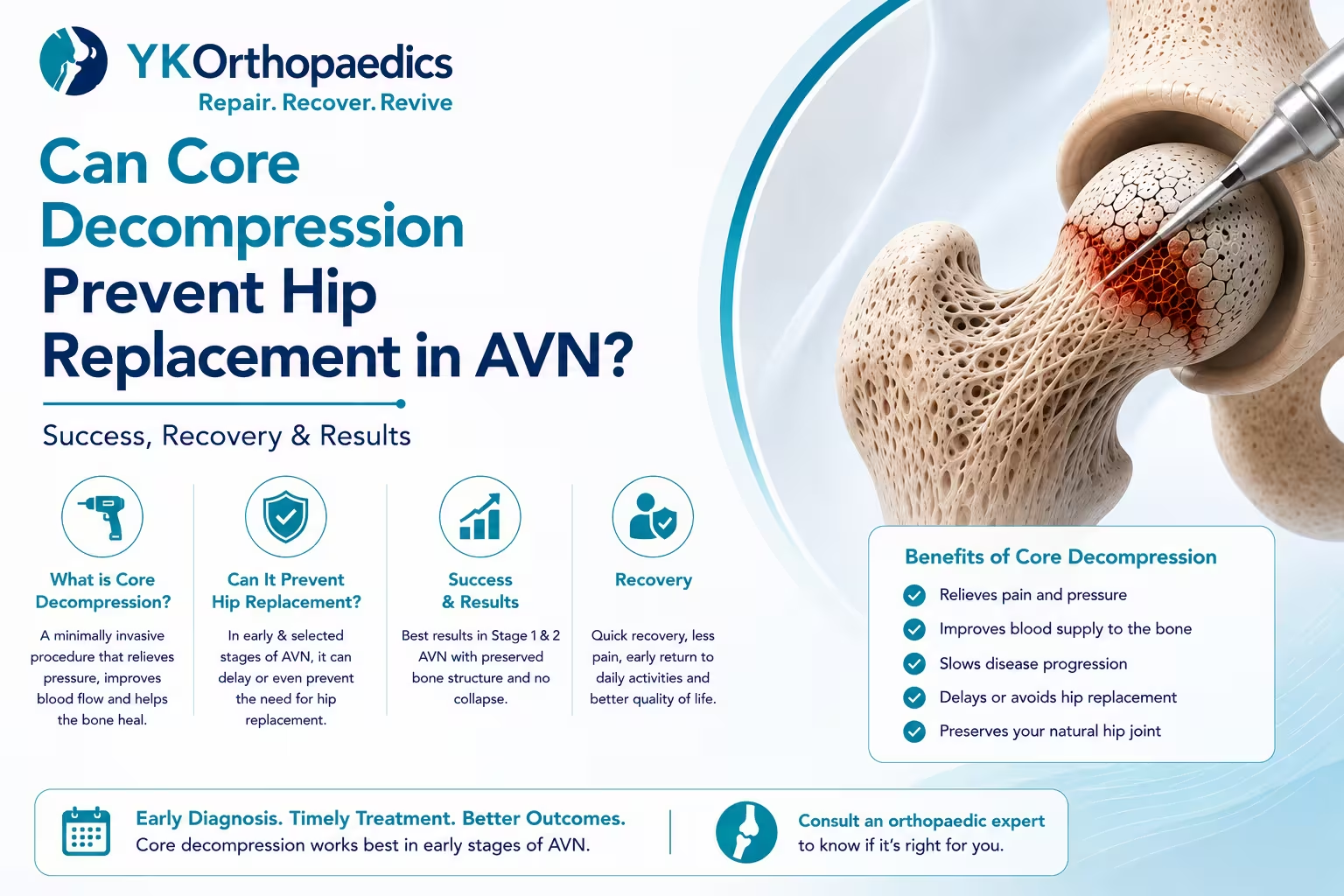
Yes, core decompression can prevent or delay hip replacement in some patients with early AVN, but it is not guaranteed to work for everyone.
The best candidates generally have:
- Early-stage AVN
- No significant femoral-head collapse
- A smaller or moderate-sized lesion
- Limited involvement of the weight-bearing surface
- Symptoms that are attributable to the AVN
A 2019 meta-analysis of 32 studies involving 2,441 hips reported an overall success rate of about 65%, with outcomes differing significantly according to disease stage. The authors also found that adding autologous bone or bone marrow could improve success in some settings.
Another systematic review focusing on core decompression without augmentation found that approximately 38% of hips eventually underwent total hip replacement, although most included hips were early-stage and the studies varied considerably.
So the realistic answer is:
Core decompression can preserve the hip in many appropriately selected early cases, but it cannot guarantee that hip replacement will never be needed.
What Is Core Decompression for AVN?
Core decompression is a hip-preserving surgical procedure used to treat osteonecrosis of the femoral head.
During the procedure, the surgeon creates one or more channels into the affected portion of the femoral head.
The goals are to:
- Reduce pressure within the affected bone
- Remove or bypass some necrotic bone
- Encourage blood vessel and bone growth
- Support the body's healing response
- Delay or prevent femoral-head collapse
Core decompression is primarily used before substantial femoral-head collapse has occurred.
How Does Core Decompression Prevent Hip Replacement?
AVN can weaken the femoral head.
As the weakened bone is repeatedly loaded during standing and walking, it may develop:
Bone damage → subchondral fracture → femoral-head collapse → arthritis → hip replacement
Core decompression attempts to intervene before this process reaches advanced collapse.
By creating a channel through the affected bone, the procedure aims to encourage healing and preserve the shape of the femoral head.
The objective is not simply to reduce pain.
The main goal is to preserve the natural hip joint for as long as possible.
Can Core Decompression Completely Cure AVN?
No.
Core decompression is a treatment designed to promote healing and preserve the femoral head. It does not guarantee that all necrotic bone will completely recover.
Some patients improve significantly and avoid hip replacement.
Others may experience:
- Persistent symptoms
- Continued AVN progression
- Femoral-head collapse
- Need for additional treatment
- Eventually, total hip replacement
The likelihood of success depends greatly on when the procedure is performed and the characteristics of the lesion.
Which AVN Stages Are Best for Core Decompression?
Core decompression is generally most useful in early-stage AVN before significant collapse.
Stage 1 AVN
This is one of the situations where joint-preserving treatment may be particularly relevant.
The X-ray may be normal while MRI shows AVN.
Stage 2 AVN
Core decompression may also be considered when structural collapse has not occurred.
The lesion size and location become particularly important.
Stage 3 AVN
Once subchondral fracture or femoral-head collapse develops, the results of core decompression become less predictable.
Stage 4 AVN
Advanced collapse and secondary arthritis generally make core decompression less suitable as a definitive treatment.
NIAMS describes core decompression as a treatment generally used in earlier stages of osteonecrosis and notes that it may be combined with bone grafting.
Can Stage 1 AVN Avoid Hip Replacement With Core Decompression?
Many Stage 1 patients can potentially preserve their natural hip, particularly when treatment is performed before progression.
Older meta-analysis data found a success rate of approximately 84% for Stage I hips treated with core decompression, although the evidence base and techniques have evolved and older results should not be interpreted as a guarantee for an individual patient.
The important factors remain:
- Lesion size
- Location
- Underlying cause
- Patient characteristics
- Surgical technique
Can Stage 2 AVN Avoid Hip Replacement With Core Decompression?
Yes, selected Stage 2 patients can potentially avoid or delay hip replacement.
However, Stage 2 is not a single-risk category.
A small Stage 2 lesion away from the major weight-bearing area is different from a large lesion involving much of the weight-bearing surface.
Therefore, the MRI should be assessed for:
Stage + size + location + weight-bearing involvement
rather than relying on the stage number alone.
What Is the Success Rate of Core Decompression?
There is no single success rate that applies to every AVN patient.
Published studies report different results depending on:
- AVN stage
- Lesion size
- Lesion location
- Surgical technique
- Whether biological or structural augmentation was used
- Length of follow-up
A 2019 meta-analysis of 32 studies reported an overall success rate of 65%, with significant differences according to stage.
A systematic review of core decompression without augmentation found that approximately 38% of hips eventually underwent total hip replacement, with a weighted mean time to replacement of about 26 months in the pooled studies.
These figures show why it is better to discuss individual prognosis rather than promise a particular success percentage.
Does Lesion Size Affect Core Decompression Success?
Yes, lesion size is an important factor.
A systematic review found better outcomes when the necrotic lesion involved less than 50% of the femoral head.
A smaller lesion may be easier to treat before structural collapse.
A large lesion involving a significant portion of the femoral head may have a higher risk of progression even after core decompression.
This is why the MRI is so important before surgery.
Does Lesion Location Matter?
Yes.
The location of the AVN lesion can influence the amount of mechanical stress placed on the weakened bone.
A lesion involving the major weight-bearing portion of the femoral head may have a greater risk of collapse than a smaller lesion in a less mechanically stressed region.
Therefore, two patients with the same AVN stage may have very different treatment recommendations.
Can Core Decompression Work After Femoral-Head Collapse?
Its effectiveness becomes much less predictable once significant collapse has occurred.
Core decompression is primarily a pre-collapse joint-preserving treatment.
Once the femoral head has flattened or substantially collapsed, the procedure may not be able to restore its original shape.
If collapse is advanced and arthritis has developed, total hip replacement may provide a more predictable solution for pain and function.
Can Core Decompression Delay Hip Replacement?
Yes.
Even when it does not permanently prevent hip replacement, successful core decompression may delay the need for arthroplasty.
The goal is particularly valuable in younger patients because preserving the natural hip can potentially postpone the need for a prosthetic joint.
However, the duration of benefit varies between patients.
What Happens If Core Decompression Fails?
Failure does not necessarily mean that the patient has no further treatment options.
Depending on the stage and condition of the hip, the doctor may consider:
- Continued monitoring
- Additional joint-preserving treatment
- Bone grafting or biological augmentation in selected situations
- Hip replacement if significant collapse and joint damage have developed
Importantly, previous core decompression does not necessarily make later hip replacement unsuccessful. A systematic review found no significant difference in revision rates or postoperative hip scores between patients undergoing total hip replacement after prior core decompression and those undergoing primary hip replacement, although some potential complications require attention.
Can Core Decompression Be Combined With Stem Cells?
Yes.
Bone marrow-derived cell therapy, including BMAC, has been studied as an addition to core decompression.
A meta-analysis of early-stage AVN found that adding bone marrow cells to core decompression was associated with better pain and hip-function scores and lower rates of progression and total hip replacement than core decompression alone. However, the authors also noted heterogeneity and limitations in the available evidence.
More recent evidence continues to suggest potential benefits from biological augmentation, although the long-term ability to reduce hip replacement remains less certain.
Can Core Decompression Be Combined With Bone Grafting?
Yes.
Bone grafting may be used with core decompression to provide structural or biological support.
The graft can help fill the decompressed area and may provide a framework for bone repair.
However, not every patient needs bone grafting.
The decision depends on:
- Lesion size
- Location
- Stage
- Structural integrity
- Surgical technique
Is Core Decompression Better With PRP or Stem Cells?
Current evidence suggests that biological augmentation may provide additional benefits in selected early AVN, but there is no universally established combination that is best for every patient.
A 2025 systematic review and meta-analysis found that biological augmentation of core decompression improved pain and hip-function outcomes up to 24 months, although it did not demonstrate a statistically significant reduction in radiological progression or conversion to total hip replacement.
This means biological treatments can be promising, but they should not be marketed as guaranteed ways to avoid hip replacement.
How Long Does Core Decompression Recovery Take?
Recovery varies according to:
- Surgical technique
- Whether bone grafting or other augmentation was used
- Size and location of the lesion
- One or both hips treated
- Patient's overall health
- Surgeon's rehabilitation protocol
Many patients require protected or reduced weight-bearing for a period after surgery to protect the femoral head while healing occurs.
Your surgeon will determine when you can:
- Start increasing weight-bearing
- Walk without support
- Drive
- Return to work
- Resume exercise
- Return to sports
Do not use a generic timeline as a substitute for your surgeon's instructions.
What Is Recovery Like After Core Decompression?
A typical recovery plan may involve:
Early Recovery
The focus is on:
- Pain control
- Protecting the operated hip
- Walking with appropriate support
- Gentle movement
- Preventing complications
Rehabilitation Phase
As healing progresses, rehabilitation may focus on:
- Gradually increasing weight-bearing
- Hip mobility
- Muscle strengthening
- Walking pattern
- Functional activities
Later Recovery
Once sufficient healing has occurred, the patient may gradually return to normal activities according to medical clearance.
The exact timeline is individualized.
Can You Walk After Core Decompression?
Yes, but usually with restrictions initially.
Many patients need crutches, a walker or another form of support after surgery.
The amount of weight you can place on the operated leg depends on the procedure and surgeon's protocol.
Your doctor may gradually increase weight-bearing as healing progresses.
When Can You Return to Work After Core Decompression?
There is no single timeline.
Return to work depends on:
- Type of job
- Whether one or both hips were treated
- Pain
- Mobility
- Weight-bearing restrictions
- Recovery progress
A desk-based job may allow an earlier return than work involving:
- Heavy lifting
- Long periods of standing
- Climbing
- Manual labor
Your surgeon can provide a personalized return-to-work plan.
When Can You Exercise After Core Decompression?
Exercise is generally reintroduced gradually.
Early rehabilitation may focus on gentle mobility and muscle activation.
Later, strengthening and low-impact activities may be introduced.
High-impact activities such as running and jumping should not be resumed until your orthopedic surgeon confirms that the hip has adequately recovered.
What Are the Risks of Core Decompression?
As with any surgical procedure, core decompression has potential risks.
These can include:
- Infection
- Bleeding
- Pain
- Blood clots
- Fracture
- Nerve or blood-vessel injury
- Persistent symptoms
- Continued AVN progression
- Femoral-head collapse
- Need for additional surgery
The specific risk depends on the surgical technique and patient's health.
Is Core Decompression Better Than Hip Replacement?
These procedures have different purposes.
Core Decompression
Goal: Preserve the natural hip.
Best suited to selected early AVN before significant collapse.
Total Hip Replacement
Goal: Replace a severely damaged joint.
More commonly considered when significant collapse, arthritis and severe symptoms are present.
Therefore, asking which is "better" is less useful than asking:
Which treatment is appropriate for the stage of my AVN?
Who Is a Good Candidate for Core Decompression?
A patient may be considered a candidate when:
- AVN is diagnosed early
- Femoral-head collapse is absent or minimal
- The lesion is suitable for joint preservation
- Symptoms are significant enough to require treatment
- The patient wants to preserve the natural hip
- MRI findings support the procedure
The final decision should be made after reviewing imaging and clinical findings.
Who May Not Be a Good Candidate?
Core decompression may be less suitable when there is:
- Advanced femoral-head collapse
- Severe secondary arthritis
- Extensive joint destruction
- Significant cartilage damage
- A lesion with characteristics associated with poor joint-preservation outcomes
In such cases, hip replacement may provide a more predictable result.
Can Core Decompression Prevent Hip Replacement in Young Patients?
It can potentially delay or prevent hip replacement in appropriately selected young patients with early AVN.
This is one of the major reasons joint-preserving treatment is considered in younger people.
However, younger age alone does not guarantee success.
The stage and characteristics of the AVN lesion remain more important.
How Is Success Monitored After Core Decompression?
Your doctor may monitor:
- Pain
- Walking ability
- Hip range of motion
- Muscle strength
- Functional activity
- X-rays
- MRI when indicated
The purpose of follow-up is to determine whether:
- The lesion is stabilizing
- The femoral head remains intact
- Collapse is developing
- Additional treatment is needed
Improvement in pain is encouraging, but imaging may still be necessary to assess structural progression.
When Should You See an Orthopedic Doctor?
An orthopedic evaluation is especially important if you have:
- MRI-confirmed AVN
- Stage 1 or Stage 2 AVN
- Persistent hip or groin pain
- A large AVN lesion
- Weight-bearing surface involvement
- Increasing difficulty walking
- A subchondral fracture
- Early femoral-head collapse
- Bilateral AVN
The earlier AVN is assessed, the more opportunity there may be to consider hip-preserving treatment.
Expert Opinion
According to Dr. Yugal Karkhur, a Best Orthopedic Doctor in Gurgaon, core decompression can be an important option for selected patients with early AVN who want to preserve their natural hip.
However, the procedure should not be promoted as a guaranteed way to avoid hip replacement. Lesion size, location, AVN stage and the presence or absence of femoral-head collapse are critical when estimating the chance of success.
For suitable early-stage patients, core decompression may delay or prevent progression and help preserve the hip. Biological augmentation such as bone-marrow-derived cell therapy may be considered in selected cases, although evidence about its long-term ability to prevent hip replacement is still evolving.
The most important principle is treating AVN before substantial collapse develops.
Conclusion
Core decompression can help prevent or delay hip replacement in selected patients with early AVN, particularly when the femoral head has not significantly collapsed. It is a hip-preserving procedure intended to encourage healing and protect the natural joint.
However, there is no universal success rate and no guarantee that hip replacement will be avoided. Published studies show substantially different outcomes depending on AVN stage, lesion size, surgical technique and follow-up duration.
The strongest candidates are generally patients with early-stage AVN, no significant collapse and a lesion suitable for joint preservation.
If you are looking for a Best Orthopedic Doctor in Gurgaon, Dr. Yugal Karkhur can evaluate your MRI, determine whether core decompression is appropriate and explain the realistic chances of preserving your natural hip.
FAQs
Can core decompression prevent hip replacement?
Yes, core decompression can prevent or delay hip replacement in selected patients with early AVN, but it is not guaranteed to work in every case.
What is the success rate of core decompression for AVN?
Published studies vary considerably. A meta-analysis of 32 studies reported an overall success rate of about 65%, while another review of unaugmented procedures found that about 38% of hips eventually underwent total hip replacement.
Is core decompression good for Stage 1 AVN?
Stage 1 is generally considered one of the more favorable stages for joint-preserving treatment because significant collapse has not yet occurred.
Can Stage 2 AVN be treated with core decompression?
Yes. Selected Stage 2 patients without significant collapse may be candidates for core decompression.
Can core decompression work after femoral-head collapse?
Its results are less predictable after significant collapse. Core decompression is primarily used before substantial femoral-head collapse.
Does lesion size affect core decompression success?
Yes. Smaller lesions generally have more favorable outcomes than extensive lesions, particularly when the lesion does not substantially involve the weight-bearing region.
How long does recovery from core decompression take?
Recovery varies depending on the procedure, lesion and rehabilitation protocol. Patients commonly require a period of protected or reduced weight-bearing followed by gradual rehabilitation.
Can I walk after core decompression?
Yes, but you may initially need crutches, a walker or another walking aid. Your surgeon will determine when and how quickly weight-bearing can increase.
Can I exercise after core decompression?
Yes, exercise is usually reintroduced gradually under medical guidance. High-impact activities should generally wait until your surgeon confirms adequate recovery.
Can core decompression be combined with stem cells?
Yes. Bone-marrow-derived cell therapies such as BMAC have been studied as an adjunct to core decompression, with some evidence of improved outcomes in early-stage AVN.
Can core decompression be combined with bone grafting?
Yes. Bone grafting can be used with core decompression in selected patients to provide additional biological or structural support.
Is core decompression better than hip replacement?
They serve different purposes. Core decompression aims to preserve the natural hip in early AVN, while hip replacement replaces a severely damaged joint.
Can core decompression delay hip replacement?
Yes. Even when it does not permanently prevent hip replacement, successful treatment may delay the need for arthroplasty.
What happens if core decompression fails?
If AVN progresses, the doctor may consider additional joint-preserving treatment or hip replacement depending on the degree of collapse and joint damage.
Is core decompression suitable for Stage 4 AVN?
Usually, advanced collapse and secondary arthritis make core decompression less suitable. Hip replacement may provide a more predictable result when the joint is severely damaged.