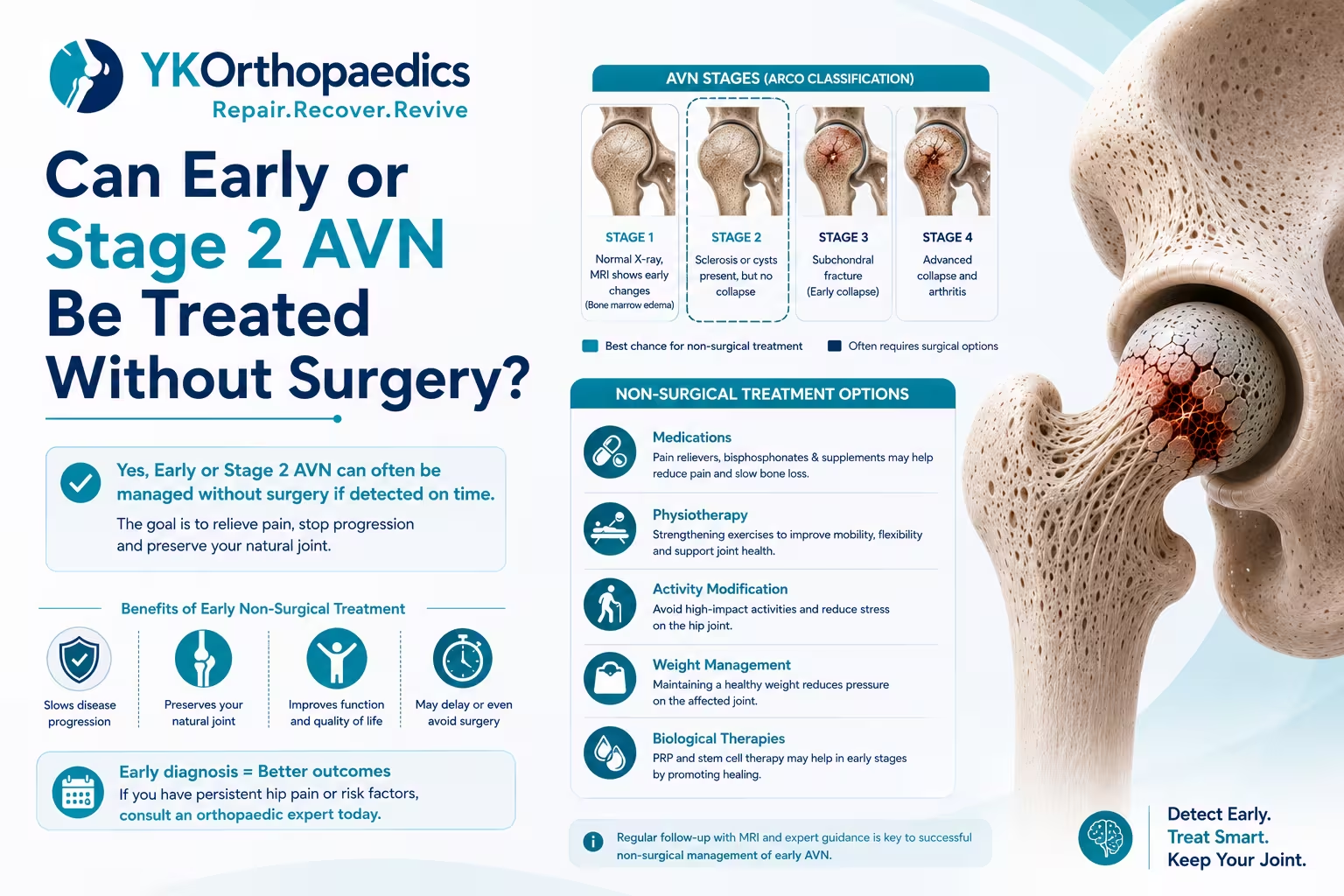
Yes, early or Stage 2 Avascular Necrosis (AVN) can sometimes be managed without immediate surgery, particularly when the femoral head has not collapsed. Treatment depends on the size and location of the AVN lesion, whether the weight-bearing area is involved, the patient's symptoms and the risk of progression.
Non-surgical management may include activity modification, protected weight-bearing, pain management, physiotherapy and addressing underlying risk factors. However, conservative treatment does not guarantee that AVN will stop progressing. In selected patients with early-stage disease, a joint-preserving procedure may also be considered before femoral-head collapse develops.
What Does Stage 2 AVN Mean?
Stage 2 generally refers to AVN in which imaging shows changes within the femoral head but significant femoral-head collapse has not yet occurred.
Depending on the staging system, imaging may show:
- AVN lesion
- Abnormal bone density or structure
- Serpiginous changes on MRI
- Bone marrow abnormalities
- No major femoral-head collapse
The exact definition of Stage 2 can vary between staging systems such as Ficat and ARCO.
Therefore, your MRI findings should be interpreted according to the classification system used by your orthopedic specialist.
Can Stage 2 AVN Be Cured Without Surgery?
There is no guarantee that Stage 2 AVN will be cured with non-surgical treatment.
Some early or smaller lesions may remain stable or heal, particularly when they do not involve a major weight-bearing area.
However, other lesions can continue progressing despite conservative treatment.
The prognosis depends on:
- Lesion size
- Lesion location
- Weight-bearing involvement
- Underlying cause
- Symptoms
- Patient age
- Overall health
So, Stage 2 is an important window for treatment, but it should not simply be ignored because the bone has not collapsed yet.
What Non-Surgical Treatments Are Used for Stage 2 AVN?
Activity Modification
Reducing activities that put excessive stress on the hip may help reduce mechanical loading.
Your doctor may recommend limiting:
- Running
- Jumping
- High-impact sports
- Heavy lifting
- Long periods of standing
- Activities that increase hip pain
The goal is to protect the affected femoral head while maintaining appropriate mobility.
Protected Weight-Bearing
Depending on the size and location of the lesion, your doctor may recommend:
- Cane
- Crutches
- Walker
- Reduced weight-bearing
Protected weight-bearing may reduce stress on the weakened bone.
However, it does not guarantee that AVN will stop progressing.
The amount and duration of weight-bearing restriction should be decided by your orthopedic specialist.
Pain Management
Pain medicines may be recommended when AVN causes hip or groin pain.
Depending on your health and medical history, your doctor may prescribe appropriate pain-relieving or anti-inflammatory medicines.
Remember:
Pain relief does not mean that AVN has been cured.
Medicines mainly help control symptoms while the underlying condition is monitored or treated.
Physiotherapy
A properly designed physiotherapy program may help maintain:
- Hip flexibility
- Muscle strength
- Range of motion
- Balance
- Mobility
However, exercises should be selected according to the condition of the femoral head.
High-impact exercises should generally not be started without medical advice when AVN is present.
Should I Stop Steroids If I Have Stage 2 AVN?
Do not stop prescribed corticosteroids on your own.
Long-term or high-dose corticosteroid use is a recognized risk factor for AVN.
If you are taking steroids and have been diagnosed with AVN, speak with the doctor who prescribed them. They can determine whether the dose can be reduced, changed or stopped safely.
Should I Stop Drinking Alcohol With AVN?
Excessive alcohol consumption is associated with an increased risk of osteonecrosis.
If alcohol may be contributing to your AVN risk, reducing or avoiding it may be recommended as part of managing the underlying risk factors.
However, lifestyle changes should be considered part of an overall treatment plan rather than a cure for AVN.
Can Stage 2 AVN Progress to Collapse?
Yes.
Stage 2 means significant collapse has not occurred, but it does not guarantee that collapse will never happen.
The risk can be higher when:
- The lesion is large
- The weight-bearing surface is involved
- A substantial portion of the femoral head is affected
- The underlying cause continues
- The disease progresses despite conservative management
This is why regular follow-up can be important.
Can Stage 2 AVN Become Stage 3?
Yes.
A simplified progression can look like:
Stage 1 → Stage 2 → Subchondral fracture/collapse → Advanced joint damage
Stage 3 generally involves structural failure such as a subchondral fracture or femoral-head collapse.
The progression is not identical in every patient, and some early lesions may remain stable.
Is Stage 2 AVN Better Than Stage 3?
Generally, yes, because the femoral head has not undergone significant structural collapse.
This can provide more opportunity to consider joint-preserving treatment.
Once substantial collapse occurs, preserving the natural shape and function of the femoral head becomes more difficult.
Therefore, identifying AVN before collapse can be clinically important.
Can Stage 2 AVN Be Treated With Core Decompression?
In selected patients, yes.
Core decompression is a joint-preserving procedure that may be considered for certain patients with early AVN before significant femoral-head collapse.
Whether it is appropriate depends on:
- Stage
- Lesion size
- Lesion location
- Weight-bearing involvement
- Symptoms
- Overall health
It is not automatically required for every patient with Stage 2 AVN.
Your orthopedic surgeon should assess the MRI before recommending it.
Is Core Decompression Better Than Non-Surgical Treatment?
There is no single treatment that is best for every Stage 2 AVN patient.
The choice depends on the individual case.
For a small, low-risk lesion, monitoring and conservative management may be reasonable.
For a larger or higher-risk lesion, the doctor may discuss a joint-preserving procedure before collapse occurs.
The key is to identify which Stage 2 lesions are likely to progress rather than treating every patient in exactly the same way.
Can Stage 2 AVN Be Treated Without Hip Replacement?
Yes.
Hip replacement is generally associated with advanced disease where significant femoral-head collapse and joint degeneration have occurred.
A patient with Stage 2 AVN who still has a preserved femoral head may have options aimed at preserving the natural hip joint.
These may include:
- Conservative management
- Monitoring
- Joint-preserving procedures in selected cases
The appropriate option depends on the individual MRI findings.
Does Stage 2 AVN Always Need Surgery?
No.
A Stage 2 diagnosis does not automatically mean surgery.
The doctor will consider:
Small lesion + no collapse + low-risk location
versus
Large lesion + weight-bearing involvement + high risk of progression
These two situations can require very different treatment strategies even though both may be described as Stage 2 AVN.
How Important Is Lesion Size in Stage 2 AVN?
Very important.
A small lesion may have a relatively favorable outlook, particularly when it does not involve the main weight-bearing area.
A larger lesion can have a greater risk of progression and collapse.
Therefore, your MRI should be assessed for both:
Stage + lesion size + location
rather than looking at the stage number alone.
Why Does the Weight-Bearing Area Matter?
The weight-bearing part of the femoral head experiences significant mechanical stress during standing and walking.
If AVN affects this region, the weakened bone is repeatedly exposed to loading.
This can increase the risk of structural failure.
Therefore:
Stage 2 AVN outside the major weight-bearing region
may have a different prognosis from:
Stage 2 AVN involving a large portion of the weight-bearing region.
Can Exercise Help Stage 2 AVN?
Appropriately selected exercise can help maintain mobility and muscle strength, but it cannot cure AVN.
A physiotherapist can recommend exercises based on:
- Pain level
- Hip movement
- Muscle strength
- Lesion characteristics
- Weight-bearing restrictions
Low-impact activities may be more appropriate than running, jumping or other high-impact exercises.
Can Diet Cure Stage 2 AVN?
No specific diet has been proven to cure AVN.
A balanced diet can support general health and bone health.
Adequate:
- Protein
- Calcium
- Vitamin D
- Fruits and vegetables
- Overall nutrition
may be beneficial as part of healthy living.
But diet should not replace orthopedic treatment or monitoring.
Can Home Remedies Cure Stage 2 AVN?
No.
Home measures may help with general comfort, but they cannot reliably restore the damaged blood supply or reverse AVN.
Be cautious about claims that oils, supplements or special home remedies can completely cure AVN.
If you have Stage 2 AVN, the most important step is to understand the MRI findings and risk of progression.
How Is Stage 2 AVN Monitored?
Your orthopedic specialist may monitor:
- Pain
- Walking ability
- Hip movement
- Functional limitations
- X-ray changes
- MRI findings
Follow-up imaging may be recommended depending on:
- Lesion size
- Location
- Symptoms
- Risk factors
- Treatment plan
Do not wait for severe pain before getting reassessed.
AVN can sometimes progress even when symptoms are relatively mild.
What Happens If Stage 2 AVN Gets Worse?
If imaging shows progression, the treatment plan may need to change.
If There Is Still No Collapse
A joint-preserving procedure may be considered in selected patients.
If Subchondral Fracture or Collapse Develops
The disease has progressed structurally, and treatment options become more dependent on the amount of collapse.
If Advanced Arthritis Develops
If the femoral head is significantly damaged and the joint has developed advanced degeneration, total hip replacement may eventually be considered.
When Should You See an Orthopedic Doctor?
If you have Stage 2 AVN, an orthopedic evaluation is particularly important when you have:
- Persistent hip or groin pain
- Increasing pain while walking
- Difficulty climbing stairs
- Hip stiffness
- Reduced range of motion
- Limping
- A large AVN lesion
- Weight-bearing surface involvement
- Increasing symptoms despite conservative treatment
Early assessment can help determine whether monitoring, conservative treatment or joint-preserving treatment is most appropriate.
Expert Opinion
According to Dr. Yugal Karkhur, a Best Orthopedic Doctor in Gurgaon, Stage 2 AVN should not automatically be treated as either "no treatment needed" or "immediate surgery."
The most important factors are lesion size, location, weight-bearing involvement and whether the femoral head remains structurally intact.
A small, low-risk Stage 2 lesion may sometimes be managed conservatively with appropriate monitoring. A larger lesion involving the weight-bearing area may require closer follow-up and discussion of joint-preserving treatment before collapse occurs.
The aim is to identify the risk of progression early and protect the natural hip joint whenever reasonably possible.
Conclusion
Early or Stage 2 AVN can sometimes be treated without immediate surgery, particularly when the femoral head has not collapsed and the lesion is small or located away from the major weight-bearing area.
Conservative treatment may include activity modification, protected weight-bearing, pain management, physiotherapy and addressing underlying risk factors.
However, Stage 2 AVN should not simply be ignored. Some lesions can progress to subchondral fracture and femoral-head collapse. The size and location of the lesion are therefore extremely important when deciding whether monitoring alone is appropriate or whether joint-preserving treatment should be considered.
If you are looking for a Best Orthopedic Doctor in Gurgaon, Dr. Yugal Karkhur can review your MRI, assess the stage and risk characteristics of your AVN and explain whether conservative management or a joint-preserving approach may be appropriate.
FAQs
Can Stage 2 AVN be treated without surgery?
Yes. Selected Stage 2 cases can be managed conservatively, particularly when there is no significant femoral-head collapse. Treatment depends on lesion size, location, symptoms and risk of progression.
Is Stage 2 AVN curable?
Some early lesions may remain stable or heal, but there is no guarantee that Stage 2 AVN will resolve with conservative treatment.
Does Stage 2 AVN always require surgery?
No. Surgery is not automatically required. The treatment decision depends on the individual MRI findings and risk of progression.
Can Stage 2 AVN become Stage 3?
Yes. AVN can progress to subchondral fracture and femoral-head collapse, although not every patient progresses in the same way.
Is Stage 2 AVN serious?
Stage 2 is generally considered an earlier stage than disease with collapse, but it can still progress. The size and location of the lesion are important when assessing risk.
Can Stage 2 AVN be treated with core decompression?
Core decompression may be considered for selected patients with early AVN before significant collapse. The decision depends on the lesion and overall condition of the hip.
Can exercise cure Stage 2 AVN?
No. Exercise cannot cure AVN, but appropriately prescribed low-impact exercises can help maintain strength, flexibility and mobility.
Can walking make Stage 2 AVN worse?
Excessive weight-bearing may increase mechanical stress on the affected femoral head. Your doctor may recommend protected or reduced weight-bearing depending on the lesion.
Can Stage 2 AVN be treated without hip replacement?
Yes. Hip replacement is generally considered for advanced AVN with significant collapse and joint degeneration. Earlier disease may have joint-preserving options.
How long can Stage 2 AVN remain stable?
There is no fixed timeline. Some lesions remain stable for long periods, while others progress more quickly. Regular clinical and imaging follow-up can help identify changes.
What is the most important thing to know about Stage 2 AVN?
Do not look at the stage number alone. Lesion size, location, weight-bearing involvement and whether the femoral head has collapsed are critical when deciding treatment.