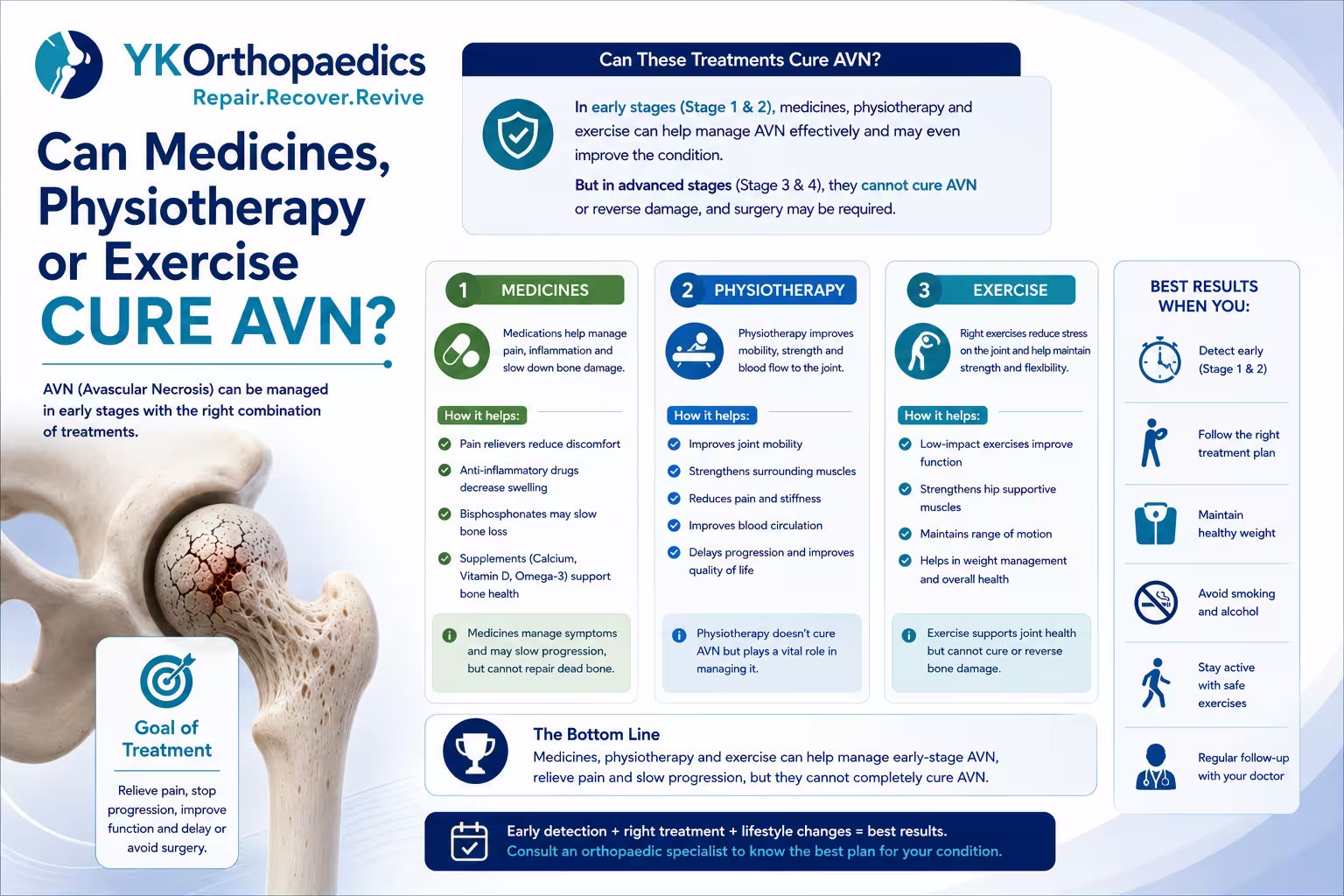
Medicines, physiotherapy and exercise can help manage AVN symptoms and maintain hip function, but they cannot reliably cure or reverse established Avascular Necrosis (AVN). Their role depends on the stage of the disease and whether the femoral head has developed a subchondral fracture or collapse.
In early AVN without significant collapse, conservative treatment may help control pain, reduce stress on the affected hip and maintain mobility. However, some lesions can continue to progress despite non-surgical treatment. Once the femoral head has significantly collapsed or secondary arthritis has developed, medicines and physiotherapy cannot restore the original shape of the joint, and surgical treatment may need to be considered.
Can Medicines Cure AVN?
Medicines can help manage AVN, but there is no universally proven medicine that reliably cures established AVN.
Doctors may prescribe medicines depending on the patient's symptoms and underlying condition.
These may include:
- Pain-relieving medicines
- Anti-inflammatory medicines when appropriate
- Medicines to treat underlying medical conditions
- Specific medicines in selected patients with particular risk factors
The important distinction is:
Medicine may control symptoms, but symptom control does not necessarily mean that the AVN has stopped progressing.
Can Painkillers Cure AVN?
No.
Painkillers can reduce hip or groin pain and make daily activities easier, but they do not repair the damaged blood supply or regenerate the affected bone.
If pain improves after taking medication, the underlying AVN may still be present.
Therefore, medication should be viewed as symptom management rather than a cure.
Can Anti-Inflammatory Medicines Cure AVN?
No.
Anti-inflammatory medicines may help reduce pain and inflammation associated with the condition, but they do not reverse osteonecrosis.
They should be used only as advised by a doctor because some anti-inflammatory medicines may not be suitable for people with certain kidney, stomach, heart or other medical conditions.
Can Medicines Prevent AVN From Progressing?
The answer depends on the individual case.
There is no medication that can guarantee that AVN will stop progressing.
Some medicines may be considered for specific underlying conditions or risk factors, but treatment needs to be individualized.
The most important factors remain:
- Stage of AVN
- Size of the lesion
- Location
- Weight-bearing involvement
- Whether collapse has occurred
Can Physiotherapy Cure AVN?
Physiotherapy cannot cure AVN or reverse established bone death.
However, it can be useful for maintaining:
- Hip range of motion
- Muscle strength
- Flexibility
- Balance
- Functional mobility
Physiotherapy can also help patients adapt their movements and activities to reduce unnecessary stress on the affected joint.
The exercises should be customized according to the stage of AVN.
How Does Physiotherapy Help AVN?
A physiotherapist may focus on:
Maintaining Hip Mobility
Gentle range-of-motion exercises can help reduce stiffness.
Strengthening Muscles
Strengthening the muscles around the hip can help support normal movement.
Improving Function
Appropriate exercises can help with walking and everyday activities.
Reducing Excessive Joint Stress
A physiotherapist can teach safer movement patterns and recommend appropriate activity levels.
However, physiotherapy should be considered supportive treatment, not a replacement for orthopedic management.
Can Exercise Cure AVN?
No.
Exercise cannot restore the blood supply to an area of bone that has already undergone osteonecrosis.
However, appropriate exercise can help:
- Maintain muscle strength
- Preserve flexibility
- Reduce stiffness
- Maintain mobility
- Improve general physical fitness
The type and intensity of exercise are important.
What Exercises Are Safe for AVN?
The appropriate exercise program depends on the stage and severity of the disease.
Your doctor or physiotherapist may recommend low-impact exercises that place less stress on the hip.
Depending on your condition, these may include:
- Gentle range-of-motion exercises
- Controlled strengthening exercises
- Swimming or water-based exercise when appropriate
- Stationary cycling when medically suitable
However, not every exercise is suitable for every AVN patient.
Should I Run With AVN?
Running creates repeated impact and loading through the hip.
If you have diagnosed AVN, particularly a lesion involving the weight-bearing portion of the femoral head, you should not start or continue high-impact exercise without discussing it with your orthopedic specialist.
Your doctor may recommend reducing or avoiding:
- Running
- Jumping
- High-impact sports
- Repetitive heavy loading
Can Walking Cure AVN?
No.
Walking does not cure AVN.
For some patients, normal or modified walking may be appropriate. Others may require reduced or protected weight-bearing.
If the femoral head is weakened or the lesion involves a major weight-bearing area, your doctor may recommend:
- Cane
- Crutches
- Walker
- Reduced weight-bearing
The appropriate level of walking depends on your individual MRI findings.
Can Rest Cure AVN?
No.
Rest can reduce stress on the affected hip and may help control symptoms, but prolonged rest does not cure AVN.
Too much inactivity can also lead to:
- Muscle weakness
- Stiffness
- Reduced fitness
- Reduced mobility
The goal is usually appropriate activity modification, rather than complete inactivity.
Can Exercise Help Early AVN?
Yes, exercise can be helpful for maintaining function in selected patients with early AVN, but it does not cure the underlying disease.
Early AVN may require a carefully planned combination of:
- Activity modification
- Appropriate weight-bearing
- Physiotherapy
- Risk-factor management
- Regular monitoring
If the lesion has a high risk of progression, the orthopedic specialist may discuss joint-preserving treatment.
Can Stage 1 AVN Be Treated With Medicines and Exercise?
Selected Stage 1 cases may initially be managed conservatively.
Treatment may include:
- Activity modification
- Protected weight-bearing
- Pain management
- Physiotherapy
- Monitoring
- Management of underlying risk factors
However, Stage 1 does not guarantee that the disease will resolve.
The size and location of the lesion are important when estimating the risk of progression.
Can Stage 2 AVN Be Treated With Physiotherapy?
Physiotherapy may help manage symptoms and preserve mobility in Stage 2 AVN.
However, it cannot guarantee that the AVN will stop progressing.
If the lesion is large or involves a major weight-bearing area, the orthopedic specialist may consider whether a joint-preserving procedure is appropriate before collapse occurs.
Can Stage 3 AVN Be Cured With Exercise?
No.
Stage 3 generally involves structural failure such as a subchondral fracture or femoral-head collapse.
Exercise may help maintain surrounding muscle strength and mobility, but it cannot restore the collapsed femoral head.
Treatment depends on the extent of collapse and the condition of the hip joint.
Can Stage 4 AVN Be Treated With Physiotherapy?
Physiotherapy can help maintain mobility and manage symptoms, but it cannot reverse advanced femoral-head collapse or secondary arthritis.
When advanced AVN causes significant pain and functional limitations, total hip replacement may be considered.
Can Medicines and Physiotherapy Prevent Hip Replacement?
There is no guarantee.
Conservative treatment can be useful in selected early cases, but AVN can progress despite non-surgical treatment.
The risk of needing hip replacement depends on factors such as:
- Lesion size
- Weight-bearing involvement
- Collapse
- Stage
- Joint degeneration
- Symptoms
- Response to treatment
The earlier the disease is identified, the more opportunity there may be to consider joint-preserving treatment.
Can AVN Heal on Its Own?
Some small, early lesions may remain stable or heal, but this cannot be predicted for every patient.
The prognosis tends to be more favorable when:
- The lesion is small
- It is detected early
- The major weight-bearing region is not involved
- There is no subchondral fracture
- There is no significant femoral-head collapse
A large lesion involving the weight-bearing surface carries a greater risk of progression.
What Actually Helps Treat AVN?
Treatment depends on the stage.
Early AVN Without Collapse
Possible approaches include:
- Activity modification
- Protected weight-bearing
- Pain management
- Physiotherapy
- Addressing risk factors
- Regular imaging
- Joint-preserving treatment in selected patients
AVN With Collapse
Once significant collapse has developed, non-surgical measures may still help with symptoms but cannot reliably restore the damaged bone.
Advanced AVN With Arthritis
When substantial collapse and secondary joint degeneration cause severe symptoms, total hip replacement may become the most appropriate treatment.
Can Core Decompression Cure AVN?
Core decompression is a joint-preserving surgical procedure, not a medicine or physiotherapy treatment.
It may be considered for selected patients with early AVN before significant femoral-head collapse.
The suitability of core decompression depends on:
- AVN stage
- Lesion size
- Lesion location
- Weight-bearing involvement
- Symptoms
- Overall health
It is not automatically required for every patient with early AVN.
What Is the Best Treatment for Early AVN?
There is no single treatment that is best for every patient.
For a small, low-risk lesion, conservative management and monitoring may be considered.
For a larger or high-risk lesion without collapse, the orthopedic specialist may discuss a joint-preserving procedure.
For advanced AVN with significant collapse and arthritis, joint replacement may provide a more predictable result.
Therefore, the MRI should be evaluated carefully before choosing treatment.
What Should You Avoid if You Have AVN?
Depending on your stage and lesion characteristics, your doctor may recommend avoiding or reducing:
- Running
- Jumping
- High-impact sports
- Heavy lifting
- Excessive weight-bearing
- Activities that significantly increase hip pain
You should also discuss:
- Excessive alcohol consumption
- Smoking
- Long-term corticosteroid use
with your doctor because these can be relevant to AVN risk.
How Do You Know if Conservative Treatment Is Working?
Improvement in pain and mobility is encouraging, but it does not necessarily prove that the AVN has stopped progressing.
Your doctor may assess:
- Pain
- Walking ability
- Hip movement
- Functional ability
- X-ray findings
- MRI findings
Follow-up imaging may be recommended depending on the stage and risk profile.
When Should You See an Orthopedic Doctor?
An orthopedic evaluation is important if you have:
- MRI-confirmed AVN
- Persistent hip or groin pain
- Increasing difficulty walking
- Hip stiffness
- Reduced range of motion
- A large AVN lesion
- Weight-bearing area involvement
- Subchondral fracture
- Femoral-head collapse
- Bilateral AVN
Early assessment is important because treatment aimed at preserving the natural hip is generally more useful before significant collapse develops.
Expert Opinion
According to Dr. Yugal Karkhur, a Best Orthopedic Doctor in Gurgaon, medicines, physiotherapy and exercise can play an important supportive role in AVN management, but they should not be considered a guaranteed cure.
For early AVN, these measures may help control symptoms, maintain mobility and reduce unnecessary stress on the hip. However, the decision should be based on the size and location of the lesion, weight-bearing involvement and whether the femoral head remains structurally intact.
If the AVN lesion is high-risk or shows progression, a joint-preserving procedure may be considered before collapse. Once significant collapse and arthritis develop, conservative treatment cannot restore the damaged joint, and hip replacement may become necessary.
Conclusion
Medicines, physiotherapy and exercise can help manage AVN, but they cannot reliably cure established osteonecrosis or reverse a collapsed femoral head.
In early AVN without significant collapse, conservative treatment may help control pain, maintain hip movement and reduce stress on the affected joint. However, some lesions can continue to progress despite these measures.
The most important factors are AVN stage, lesion size, location, weight-bearing involvement and whether collapse has occurred.
If you are looking for a Best Orthopedic Doctor in Gurgaon, Dr. Yugal Karkhur can review your MRI or X-ray and determine whether conservative management, joint-preserving treatment or hip replacement is appropriate for your condition.
FAQs
Can medicines cure AVN?
No. Medicines can help control symptoms and manage certain underlying conditions, but they cannot reliably reverse established AVN.
Can physiotherapy cure AVN?
No. Physiotherapy can improve mobility, strength and flexibility, but it cannot regenerate significantly damaged or collapsed bone.
Can exercise cure AVN?
No. Exercise cannot cure AVN, but appropriately selected low-impact exercises can help maintain muscle strength and joint mobility.
Can Stage 1 AVN be treated with medicines and exercise?
Selected early cases may be managed conservatively, but the lesion should be monitored because progression is still possible.
Can Stage 2 AVN be treated with physiotherapy?
Physiotherapy can help maintain mobility and manage symptoms, but whether conservative treatment is sufficient depends on the size and location of the AVN lesion.
Can Stage 3 AVN be cured without surgery?
Once subchondral fracture or significant collapse has occurred, medicines and physiotherapy cannot reliably reverse the structural damage.
Can exercise make AVN worse?
High-impact or excessive weight-bearing activities may place additional stress on a weakened femoral head. Exercise should therefore be tailored to the stage of AVN.
Should I stop walking if I have AVN?
Not necessarily. Some patients can walk normally, while others may need protected or reduced weight-bearing. Your orthopedic doctor should guide you based on your MRI findings.
Can physiotherapy prevent hip replacement?
There is no guarantee. Physiotherapy can support mobility and symptom management, but it cannot prevent progression in every AVN patient.
Can AVN heal naturally?
Some small and early lesions may remain stable or heal, but this cannot be guaranteed.
When does AVN require surgery?
Surgery becomes more likely when the disease progresses to significant femoral-head collapse, secondary arthritis, persistent severe pain or major functional limitations.
Does every AVN patient need hip replacement?
No. Early AVN may have conservative or joint-preserving treatment options. Hip replacement is generally considered when advanced collapse and joint degeneration have developed.