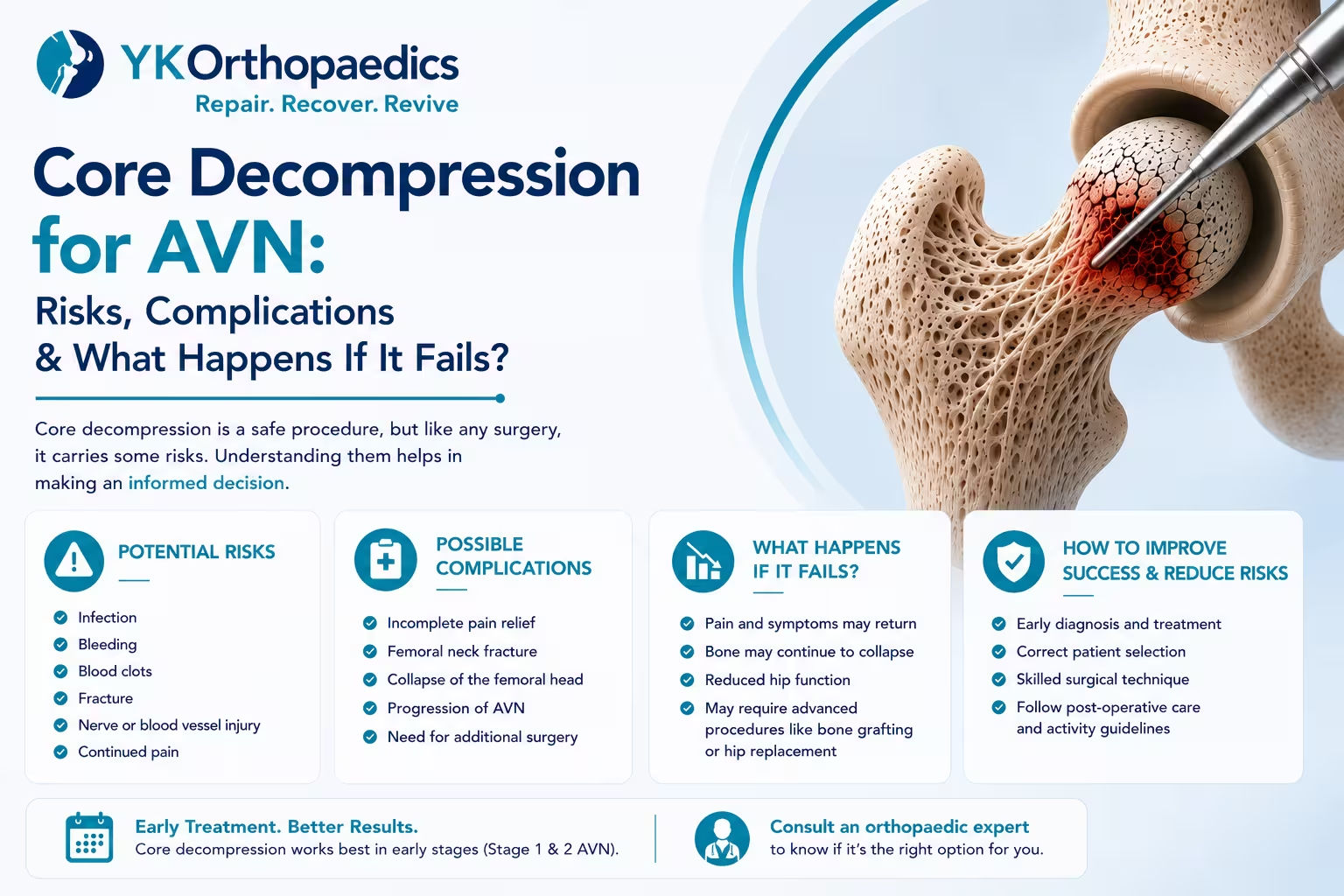
Core decompression is a joint-preserving procedure mainly used for early Avascular Necrosis (AVN) before significant femoral-head collapse. Like any surgery, it carries potential risks, including infection, bleeding, blood clots, fracture, nerve or blood-vessel injury, persistent pain and continued progression of AVN. The most important long-term risk is that the procedure may not stop the disease, and the femoral head may eventually collapse and require further treatment.
Core decompression generally has better outcomes when AVN is diagnosed before collapse, while results become less predictable in advanced disease. A 2019 meta-analysis of 32 studies involving 2,441 hips reported an overall success rate of about 65%, but outcomes varied significantly according to disease stage and treatment approach.
If core decompression fails, hip replacement is not automatically required immediately. The next step depends on whether the femoral head remains intact, whether AVN has progressed and how much pain or joint damage is present.
What Is Core Decompression?
Core decompression is a procedure designed to preserve the natural hip in patients with AVN.
During surgery, the orthopedic surgeon creates a channel or several smaller channels through the affected portion of the femoral head.
The objectives are to:
- Reduce pressure inside the affected bone
- Create pathways that may support new blood-vessel growth
- Encourage bone healing
- Reduce the risk of further femoral-head damage
- Delay or potentially prevent hip replacement
AAOS describes core decompression as a procedure that can be successful in preventing femoral-head collapse when osteonecrosis is diagnosed early.
Who Has the Best Chance of Success?
Core decompression generally has its best results when:
- AVN is diagnosed early
- The femoral head has not collapsed
- The lesion is relatively small
- The major weight-bearing area is not extensively involved
- There is no advanced arthritis
The stage alone is not enough.
Your doctor should also evaluate:
Stage + lesion size + lesion location + weight-bearing involvement + collapse
A small Stage 2 lesion and a large Stage 2 lesion can have very different outcomes.
What Are the Common Risks of Core Decompression?
Pain After Surgery
Some pain around the surgical area is expected during recovery.
The pain should gradually improve as healing progresses.
Persistent or worsening pain should be discussed with the treating surgeon.
Infection
Like other surgical procedures, core decompression carries a risk of infection.
Signs that require medical attention can include:
- Increasing redness
- Wound drainage
- Fever
- Increasing swelling
- Worsening pain
Bleeding
Bleeding can occur during or after surgery.
Significant bleeding is uncommon but remains a possible surgical complication.
Blood Clots
Hip surgery and reduced mobility can increase the risk of blood clots.
Your doctor may recommend appropriate preventive measures depending on your individual risk.
Nerve or Blood-Vessel Injury
Nerve or blood-vessel injury is uncommon but possible with any procedure around the hip.
Modern surgical and imaging techniques are used to minimize these risks.
Can Core Decompression Cause a Fracture?
Yes, although this is uncommon.
Creating channels through the femoral head and neck changes the structure of the bone temporarily.
If the bone is already significantly weakened, there may be a risk of fracture.
This is one reason postoperative weight-bearing restrictions are important.
You should not increase weight-bearing simply because you feel less pain.
Can Core Decompression Make AVN Worse?
Core decompression is performed to help control AVN, not worsen it.
However, AVN can continue to progress despite treatment.
If the underlying lesion is extensive or already structurally compromised, the femoral head may still collapse.
This is considered treatment failure or disease progression rather than the procedure intentionally causing AVN.
Can the Femoral Head Collapse After Core Decompression?
Yes.
Femoral-head collapse remains one of the most important concerns after core decompression.
AAOS notes that when osteonecrosis is diagnosed after collapse, core decompression is generally not successful in preventing further collapse.
A 2025 systematic review of arthroscopic-assisted core decompression reported collapse rates ranging from 2.9% to 14% in comparative studies of predominantly pre-collapse AVN treated with arthroscopic-assisted decompression, compared with 14.6% to 28.6% for isolated core decompression in those studies. However, the authors emphasized limitations in the available evidence.
What Factors Increase the Risk of Failure?
Several factors can influence the outcome.
Advanced AVN
Core decompression is primarily a treatment for early disease.
As the disease progresses toward collapse, the chance of successful joint preservation decreases.
Large AVN Lesion
A larger area of necrotic bone can be more difficult to stabilize.
Weight-Bearing Involvement
A lesion involving a large portion of the weight-bearing surface may be exposed to greater mechanical stress.
Existing Collapse
Once substantial collapse has occurred, core decompression becomes less predictable.
Secondary Arthritis
If AVN has already caused significant cartilage and joint damage, simply decompressing the bone may not restore normal hip function.
Can Core Decompression Fail Even in Early AVN?
Yes.
Early diagnosis improves the opportunity for success, but it does not guarantee it.
A 2019 systematic review and meta-analysis found that outcomes differed significantly according to AVN stage.
This is why an individual prognosis should not be based solely on a general "success rate."
How Do You Know If Core Decompression Has Failed?
Your orthopedic surgeon may look for:
- Persistent or returning hip pain
- Increasing difficulty walking
- Reduced hip movement
- New or worsening symptoms
- Femoral-head collapse on X-ray
- Progression of the AVN lesion on imaging
- Development of arthritis
Pain alone is not always enough to determine failure.
Imaging is important because AVN can progress even when symptoms are not severe.
What Happens If Core Decompression Fails?
Failure does not automatically mean immediate hip replacement.
The next treatment depends on what has happened to the femoral head.
If the Femoral Head Is Still Preserved
Your surgeon may consider:
- Continued monitoring
- Activity modification
- Additional joint-preserving treatment
- Bone grafting
- Biological augmentation in selected cases
If Collapse Has Developed
Treatment depends on the extent of collapse.
If the hip is still relatively preserved, selected joint-preserving approaches may sometimes be discussed.
If Severe Collapse and Arthritis Develop
Total hip replacement may become the most predictable treatment.
AAOS states that once the femoral head has collapsed, total hip replacement is generally the most successful treatment for advanced osteonecrosis.
Does Failed Core Decompression Mean I Need Hip Replacement?
Not necessarily.
The decision depends on:
- Amount of femoral-head collapse
- Cartilage condition
- Arthritis
- Pain severity
- Functional limitations
- Age
- Overall hip condition
If the femoral head remains structurally preserved, additional joint-preserving treatment may sometimes be possible.
If the joint has substantially deteriorated, hip replacement may be recommended.
How Often Is Hip Replacement Needed After Core Decompression?
There is no single percentage applicable to every patient.
A large 2024 database study of 3,025 patients who underwent core decompression found that 387 patients (12.8%) underwent total hip replacement within five years, with 64% of those conversions occurring during the first year.
Other studies and systematic reviews report different rates because patient selection, disease stage, surgical techniques and follow-up periods differ.
This is why a patient's individual MRI findings are more useful than quoting one universal failure rate.
How Soon Can Core Decompression Fail?
Failure can occur at different times.
Some patients may show progression relatively early, while others may remain stable for years.
In the 2024 database study, among patients who eventually underwent total hip replacement, the median time from core decompression to hip replacement was 252 days.
However, this does not mean that every failure occurs within a year.
Long-term follow-up remains important.
Can Core Decompression Be Repeated?
In selected cases, another joint-preserving procedure may be considered, but repeating core decompression is not appropriate for everyone.
The decision depends on:
- Why the first procedure failed
- Current AVN stage
- Amount of collapse
- Lesion size
- Remaining bone quality
- Cartilage condition
Your orthopedic surgeon needs to reassess the hip before deciding on another procedure.
Can Bone Grafting Help After Failed Core Decompression?
It may be considered in selected patients.
Core decompression can be combined with bone grafting to provide biological or structural support.
AAOS describes bone grafting as one of the procedures that may be combined with core decompression for osteonecrosis.
However, bone grafting is not automatically appropriate after a failed decompression.
The condition of the femoral head determines whether joint preservation remains realistic.
Can Stem Cells or BMAC Help If Core Decompression Fails?
Biological augmentation such as bone marrow aspirate concentrate (BMAC) has been studied with core decompression.
Evidence is more encouraging in early AVN than in advanced post-collapse disease.
A systematic review of post-collapse AVN found that adding BMAC to core decompression did not show a significant additional benefit over core decompression alone for delaying progression or conversion to hip replacement.
Therefore, stem-cell or BMAC treatment should not be presented as a guaranteed rescue treatment after failed core decompression.
Can Core Decompression Cause Problems During Future Hip Replacement?
Usually, previous core decompression does not prevent successful hip replacement later.
A systematic review found that previous core decompression did not significantly worsen survivorship or hip scores after subsequent total hip replacement, although surgeons should remain aware of potential issues such as intraoperative fracture and postoperative radiolucent lines.
A 2024 study also found no significant differences in several postoperative outcomes between patients undergoing hip replacement after previous core decompression and matched patients undergoing primary hip replacement.
So, if core decompression ultimately fails, hip replacement remains a viable treatment option.
What Is the Recovery After Core Decompression?
Recovery is an important part of protecting the treated femoral head.
AAOS notes that bone healing takes several months and that patients may need crutches or a walker to reduce stress on the damaged bone during this period.
Recovery commonly involves:
- Protected weight-bearing
- Walking support
- Pain management
- Gentle hip movement
- Physiotherapy
- Gradual strengthening
- Follow-up imaging
The exact rehabilitation schedule should come from your surgeon.
Why Is Weight-Bearing Restriction Important?
The femoral head remains vulnerable while the bone heals.
Too much loading too early may place unnecessary stress on the treated area.
Your surgeon may therefore recommend:
- Non-weight-bearing
- Partial weight-bearing
- Crutches
- Walker
- Gradual progression to full weight-bearing
The exact protocol depends on the surgical technique and condition of the hip.
What Can You Do to Improve the Chances of Success?
You cannot completely control whether AVN progresses, but you can follow the treatment plan carefully.
Important measures may include:
- Follow weight-bearing restrictions
- Attend physiotherapy as advised
- Avoid high-impact activities during recovery
- Maintain a healthy body weight
- Avoid excessive alcohol
- Stop smoking
- Follow prescribed medicines
- Attend follow-up appointments
- Complete recommended imaging
If you are taking corticosteroids, do not stop them suddenly. Discuss the medication with the doctor who prescribed it.
Can Exercise Cause Core Decompression to Fail?
Excessive or premature loading may put additional stress on the healing femoral head.
During early recovery, follow the surgeon's restrictions carefully.
Later, controlled physiotherapy and low-impact exercise can help restore strength and mobility.
High-impact activities such as running and jumping should only be resumed after medical clearance.
Is Core Decompression Safe?
Core decompression is generally considered a relatively safe joint-preserving procedure, but no surgery is completely risk-free.
A 2024 meta-analysis comparing conventional and arthroscopic-assisted core decompression found no significant difference in overall postoperative complication rates, although arthroscopic-assisted procedures had a longer operative time and showed lower reported femoral-head collapse rates in the included studies. The authors rated several outcomes as low- or very-low-quality evidence, so these findings should be interpreted cautiously.
When Is Core Decompression More Likely to Fail?
It is more concerning when:
- AVN is advanced
- Femoral-head collapse has already occurred
- The lesion is extensive
- The weight-bearing area is heavily involved
- Significant arthritis is present
This is why early diagnosis matters.
When Should Hip Replacement Be Considered?
Hip replacement may become appropriate when AVN has caused:
- Significant femoral-head collapse
- Severe arthritis
- Persistent disabling pain
- Major loss of hip function
- Difficulty walking
- Failure of reasonable joint-preserving treatment
The goal is to match treatment to the actual condition of the joint rather than delaying replacement at all costs.
Can Hip Replacement Be Done After Failed Core Decompression?
Yes.
If core decompression fails and the hip progresses to advanced AVN, total hip replacement can still be performed.
Available evidence suggests that previous core decompression does not necessarily compromise later hip replacement outcomes.
When Should You Contact Your Doctor After Core Decompression?
Contact your surgical team if you experience:
- Increasing rather than improving pain
- Fever
- Wound drainage
- Increasing redness or swelling
- Sudden inability to bear weight
- New numbness or weakness
- Severe calf swelling or pain
- Shortness of breath or chest pain
These symptoms may require prompt medical evaluation.
When Should You See an Orthopedic Doctor?
An orthopedic evaluation is particularly important if you have:
- MRI-confirmed AVN
- Stage 1 or Stage 2 AVN
- Persistent hip pain
- Increasing difficulty walking
- A large lesion
- Weight-bearing surface involvement
- Previous core decompression
- Returning pain after initial improvement
- Suspected femoral-head collapse
Early assessment can help determine whether the natural hip can still be preserved.
Expert Opinion
According to Dr. Yugal Karkhur, a Best Orthopedic Doctor in Gurgaon, core decompression should be viewed as a hip-preserving procedure, not a guaranteed cure for AVN.
The risk of failure depends largely on when the procedure is performed and the characteristics of the AVN lesion. Early disease without significant collapse generally provides a better opportunity for successful joint preservation, while advanced collapse and arthritis make the procedure less predictable.
If core decompression fails, the next step is not automatically hip replacement. The femoral head should first be reassessed with appropriate clinical examination and imaging. If the joint remains structurally preserved, additional preservation strategies may be considered. If substantial collapse and arthritis have developed, total hip replacement may provide a more reliable solution.
Conclusion
Core decompression is an important treatment option for selected early AVN, but it does not guarantee that the disease will stop progressing.
The main concerns are persistent pain, continued AVN progression and femoral-head collapse. The risk of failure is influenced by AVN stage, lesion size, lesion location and weight-bearing involvement.
If core decompression fails, the next treatment depends on the condition of the hip. Some patients may still have joint-preserving options, while those with substantial collapse and arthritis may benefit more from total hip replacement.
Importantly, having a failed core decompression does not mean that future hip replacement will necessarily have poor results. Current evidence suggests that patients can still achieve good outcomes after subsequent total hip replacement.
If you are looking for a Best Orthopedic Doctor in Gurgaon, Dr. Yugal Karkhur can evaluate your MRI and X-rays, assess the stage and extent of AVN and explain whether core decompression or another treatment is appropriate.
FAQs
What are the main risks of core decompression for AVN?
Potential risks include infection, bleeding, blood clots, fracture, nerve or blood-vessel injury, persistent pain and continued AVN progression.
Can AVN get worse after core decompression?
Yes. Core decompression can fail to stop progression, particularly when the lesion is extensive or disease is already advanced.
Can the femoral head collapse after core decompression?
Yes. Femoral-head collapse remains one of the main reasons core decompression may eventually fail.
What happens if core decompression fails?
Your doctor will reassess the hip. If the femoral head remains preserved, additional joint-preserving treatment may be considered. If substantial collapse and arthritis have developed, hip replacement may be recommended.
Does failed core decompression always mean hip replacement?
No. The need for hip replacement depends on the amount of collapse, arthritis, pain and functional limitation.
How often is hip replacement needed after core decompression?
Rates vary considerably between studies. One large 2024 database study found that 12.8% of patients underwent total hip replacement within five years, with most conversions occurring during the first year.
Can core decompression be repeated?
In selected cases, another joint-preserving procedure may be considered, but this depends on why the first procedure failed and the current condition of the femoral head.
Can bone grafting help after failed core decompression?
It may be considered in selected patients if the femoral head remains suitable for joint preservation.
Can stem cells or BMAC fix failed core decompression?
BMAC and other biological treatments may have a role in selected cases, but they are not guaranteed rescue treatments. Evidence is more favorable in early AVN than in advanced post-collapse disease.
Can I get hip replacement after core decompression?
Yes. Previous core decompression generally does not prevent successful total hip replacement later.
How long does it take to know whether core decompression worked?
Assessment occurs over time through symptoms, clinical examination and imaging. There is no single point at which success or failure can be determined for every patient.
Is core decompression safe?
It is generally considered a relatively safe joint-preserving procedure, but complications are possible and outcomes depend strongly on patient selection and disease stage.
Is core decompression suitable after AVN collapse?
Its effectiveness becomes less predictable after significant collapse. AAOS notes that once collapse has occurred, core decompression is generally not successful in preventing further collapse.
Can core decompression prevent hip replacement?
It can prevent or delay hip replacement in selected patients with early AVN, but it cannot guarantee that replacement will never be required.
What is the most important factor for core decompression success?
Timing is critical. Early AVN without significant femoral-head collapse generally provides a better opportunity for successful joint preservation.