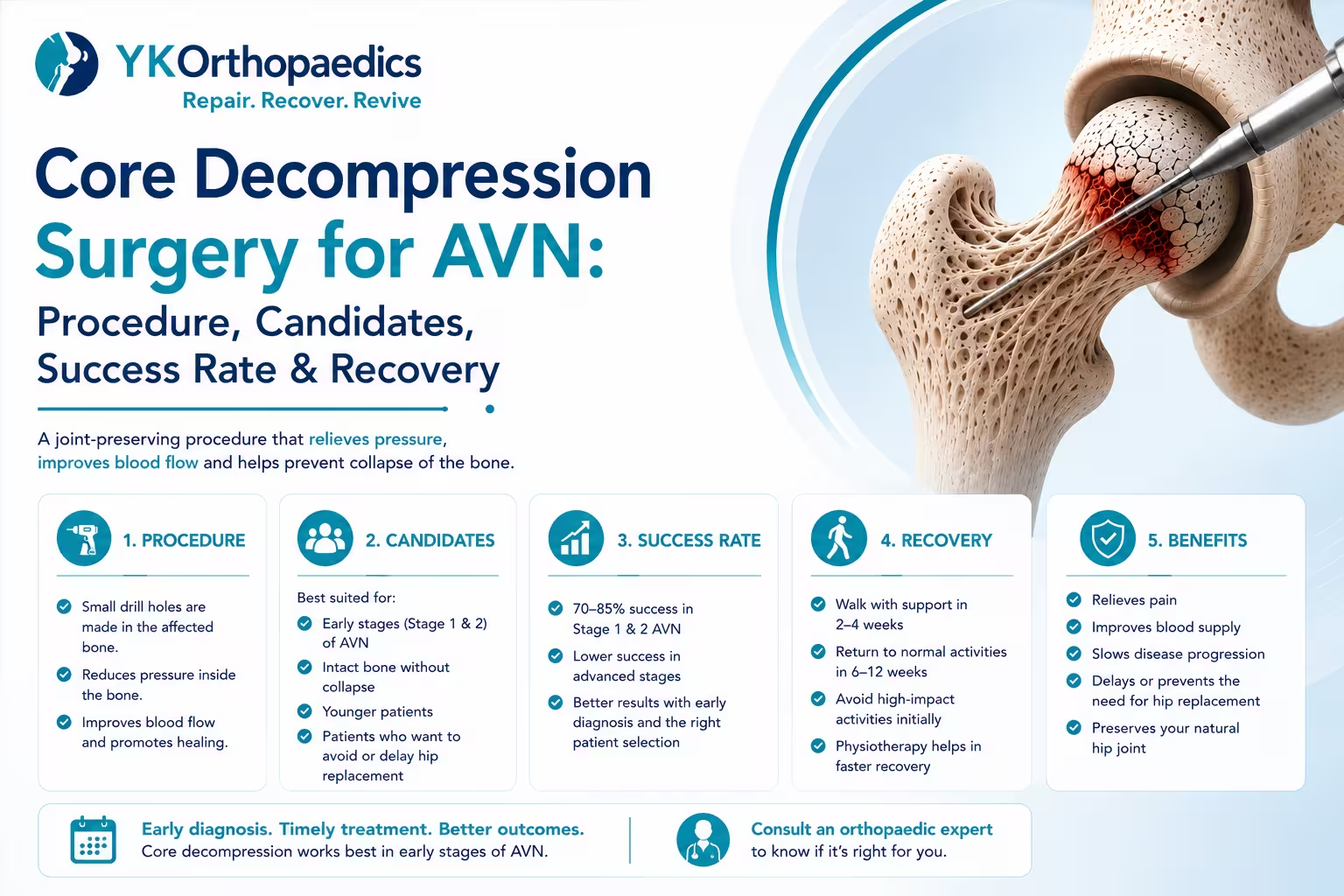
Core decompression is most useful for early-stage AVN before significant femoral-head collapse.
It may be considered when:
- AVN is Stage 1 or selected Stage 2
- The femoral head has not significantly collapsed
- The lesion is suitable for joint preservation
- Symptoms are affecting daily activities
- MRI shows a potentially treatable lesion
The procedure aims to preserve the patient's natural hip rather than replace it.
However, success varies considerably between patients. A 2019 meta-analysis of 32 studies reported an overall success rate of about 65%, while emphasizing that outcomes differed according to disease stage and treatment technique.
What Is Core Decompression Surgery?
Core decompression is a surgical treatment for osteonecrosis of the femoral head, commonly called AVN.
In AVN, reduced blood supply damages bone tissue inside the femoral head. As the disease progresses, the weakened bone can develop a fracture and eventually collapse.
Core decompression attempts to intervene before this happens.
The surgeon creates a channel or several smaller channels into the affected area to:
- Reduce pressure inside the bone
- Remove or bypass some damaged bone
- Create pathways for blood vessels
- Encourage bone healing
- Reduce the risk of further structural damage
AAOS describes core decompression as a procedure involving one large channel or several smaller channels through the femoral head to relieve pressure and create pathways for new blood vessels.
Why Is Core Decompression Done for AVN?
The main objective is hip preservation.
Without appropriate treatment, some AVN lesions can progress:
Reduced blood supply → bone damage → subchondral fracture → femoral-head collapse → arthritis → hip replacement
Core decompression is intended to intervene before substantial collapse develops.
The goal is not simply to reduce pain.
The larger goal is to preserve the shape and function of the natural femoral head.
Who Is a Candidate for Core Decompression?
The best candidates are generally patients with early AVN without significant femoral-head collapse.
Your orthopedic surgeon will consider:
- AVN stage
- Lesion size
- Lesion location
- Weight-bearing involvement
- Presence of subchondral fracture
- Degree of collapse
- Pain and functional limitations
- Age and general health
AAOS notes that patients diagnosed in the very early stages, before femoral-head collapse, may be candidates for hip-preserving procedures.
Is Core Decompression Suitable for Stage 1 AVN?
Stage 1 AVN is generally one of the more favorable stages for considering joint-preserving treatment.
At this stage, X-rays can sometimes appear normal while MRI detects the abnormal bone.
If the lesion is considered at risk of progression, core decompression may be discussed.
However, not every Stage 1 lesion requires surgery.
Small, low-risk lesions may sometimes be monitored with appropriate medical guidance.
Is Core Decompression Suitable for Stage 2 AVN?
Selected Stage 2 patients can be candidates for core decompression, particularly when the femoral head has not significantly collapsed.
The stage alone is not enough to determine treatment.
The surgeon also needs to assess:
- How large the lesion is
- Where it is located
- Whether it involves the weight-bearing area
- Whether there is a subchondral fracture
- Whether the femoral head remains structurally intact
A small Stage 2 lesion and a large Stage 2 lesion can have very different treatment implications.
Is Core Decompression Suitable for Stage 3 AVN?
It depends on the degree of structural damage, but outcomes are generally less predictable once collapse has developed.
Stage 3 disease commonly involves a subchondral fracture or femoral-head collapse.
Core decompression is primarily a pre-collapse treatment.
Once significant collapse has occurred, the procedure may not be able to restore the original shape of the femoral head.
Is Core Decompression Suitable for Stage 4 AVN?
Advanced Stage 4 AVN is generally not an ideal situation for core decompression alone.
When extensive collapse has been followed by secondary arthritis and significant joint damage, total hip replacement may provide a more predictable solution.
AAOS states that core decompression is generally not successful in preventing further collapse after the bone has already collapsed.
How Is Core Decompression Surgery Performed?
The exact technique varies according to the surgeon, lesion and equipment.
In general, the procedure involves:
Step 1: Imaging and Surgical Planning
MRI and X-rays are reviewed to identify:
- Exact location of AVN
- Lesion size
- Weight-bearing involvement
- Areas at risk of collapse
Step 2: Creating Access to the Femoral Head
The surgeon uses imaging guidance to accurately reach the affected area.
Step 3: Decompression
A channel or multiple channels are created through the femoral head.
The purpose is to reduce pressure and provide a pathway that may support healing.
Step 4: Optional Augmentation
In selected cases, the surgeon may combine decompression with:
- Bone grafting
- Bone marrow aspirate concentrate (BMAC)
- Other biological augmentation
The choice depends on the individual case.
Step 5: Closure and Recovery
The surgical area is closed, and the patient begins a structured recovery and rehabilitation plan.
Can Core Decompression Be Combined With Bone Grafting?
Yes.
Core decompression may be combined with bone grafting in selected patients.
The graft can provide structural or biological support to the affected area.
AAOS notes that core decompression may be performed with grafting, while evidence regarding the additional benefit of different grafting techniques varies.
Can Core Decompression Be Combined With Stem Cells or BMAC?
Yes.
Bone marrow-derived cell therapies such as BMAC have been studied as biological augmentation to core decompression.
The idea is to combine:
Decompression + biological support + bone healing
Recent research suggests that biological augmentation can improve pain and hip-function outcomes in some early-stage patients, although evidence about its ability to prevent long-term progression or hip replacement remains less certain.
Can Core Decompression Be Combined With PRP?
It may be used as an adjunct in selected treatment protocols.
PRP has been studied in combination with core decompression and bone grafting, but the evidence is still evolving.
Therefore, PRP should not be presented as a guaranteed way to make core decompression successful.
The decision should be based on the patient's AVN characteristics and the surgeon's treatment protocol.
What Is the Success Rate of Core Decompression?
There is no single success rate that applies to every patient.
Published outcomes vary because studies include patients with different:
- AVN stages
- Lesion sizes
- Lesion locations
- Causes of AVN
- Surgical techniques
- Follow-up periods
A 2019 meta-analysis involving 32 studies reported an overall success rate of approximately 65%, with significant differences between disease stages. The study also found that combining core decompression with autologous bone or bone marrow could increase success in some settings.
This means a success percentage should not be used as an individual guarantee.
What Is the Chance of Needing Hip Replacement After Core Decompression?
Some patients eventually require total hip replacement despite undergoing core decompression.
A large 2024 database study identified 3,025 patients who underwent core decompression and found that 12.8% underwent total hip arthroplasty within five years. Importantly, 64% of those conversions occurred within the first year.
Other systematic reviews have reported higher conversion rates depending on the population and treatment technique.
This difference highlights an important point:
Core decompression outcomes depend heavily on patient selection and disease characteristics.
Does Lesion Size Affect Success?
Yes, lesion size is an important predictor of outcome.
A smaller lesion may have a better chance of remaining stable after joint-preserving treatment.
A larger lesion, particularly one involving a substantial portion of the weight-bearing femoral head, may have a greater risk of progression.
Therefore, an MRI assessment should include more than simply identifying "AVN."
The doctor should evaluate:
Stage + size + location + weight-bearing involvement
Does the Location of AVN Matter?
Yes.
The weight-bearing portion of the femoral head experiences significant mechanical forces.
If AVN affects this area extensively, the weakened bone may be more vulnerable to structural failure.
This is one reason two patients with the same AVN stage can have different treatment recommendations.
Can Core Decompression Prevent Hip Replacement?
It can in selected patients, particularly when performed before significant femoral-head collapse.
AAOS states that early core decompression can sometimes prevent femoral-head collapse and the development of arthritis.
However, it is important to understand the difference between:
"Can prevent hip replacement in some patients?"
and
"Will prevent hip replacement in every patient?"
The first is supported by evidence.
The second is not.
Can Core Decompression Delay Hip Replacement?
Yes.
Even if the procedure does not permanently prevent total hip replacement, successful joint preservation may delay the need for arthroplasty.
This can be particularly relevant for younger patients who may benefit from preserving their natural hip for as long as possible.
How Long Does Core Decompression Surgery Take?
The exact duration varies according to:
- Surgical technique
- Lesion size
- Number of decompression channels
- Whether grafting is performed
- Whether biological augmentation is used
- Patient-specific factors
Your surgeon can provide the most accurate estimate for your planned procedure.
Is Core Decompression a Major Surgery?
Core decompression is generally considered a less invasive joint-preserving procedure compared with total hip replacement, but it is still surgery and has associated risks.
The procedure usually requires anesthesia and postoperative rehabilitation.
The recovery can also involve a period of protected weight-bearing.
What Is Recovery Like After Core Decompression?
Recovery is designed to protect the femoral head while the bone heals.
AAOS notes that healing takes several months and patients may need a walker or crutches during this period to reduce stress on the damaged bone.
Recovery commonly involves:
- Pain management
- Crutches or walker
- Restricted weight-bearing
- Gradual mobility exercises
- Physiotherapy
- Progressive strengthening
- Follow-up imaging
The exact rehabilitation schedule is individualized.
Can You Walk After Core Decompression?
Yes, but you may not be allowed to put full weight on the operated leg immediately.
Depending on the procedure, your surgeon may recommend:
- Crutches
- Walker
- Partial weight-bearing
- Restricted weight-bearing
The purpose is to reduce mechanical stress while the treated bone heals.
Do not increase weight-bearing simply because the pain has improved.
When Can You Walk Without Crutches?
The timeline varies according to:
- Lesion characteristics
- Surgical technique
- Whether grafting was performed
- Healing progress
- Follow-up imaging
AAOS reports that patients with successful core decompression typically return to walking without assistance at around three months, although individual recovery can be shorter or longer.
Your surgeon's instructions should take priority over any general timeline.
When Can You Return to Work?
Return to work depends heavily on the type of work.
Desk-Based Work
A person with a sedentary job may return earlier if pain and mobility are adequately controlled.
Physical Work
Jobs involving:
- Long standing
- Walking
- Climbing
- Heavy lifting
- Repeated bending
may require a longer recovery period.
Your orthopedic surgeon can provide an individualized return-to-work recommendation.
When Can You Exercise After Core Decompression?
Exercise is generally introduced gradually.
Early rehabilitation may focus on:
- Gentle hip movement
- Muscle activation
- Maintaining flexibility
Later, strengthening and low-impact activities may be introduced.
High-impact activities such as running and jumping should generally wait until your surgeon confirms that the hip has adequately recovered.
Is Physiotherapy Required After Core Decompression?
Physiotherapy is commonly an important part of rehabilitation.
It can help:
- Maintain hip mobility
- Strengthen surrounding muscles
- Improve walking mechanics
- Reduce stiffness
- Gradually restore function
The program should be adapted to your weight-bearing restrictions and healing progress.
What Are the Risks of Core Decompression?
Like any surgery, core decompression has potential risks.
These may include:
- Infection
- Bleeding
- Blood clots
- Pain
- Fracture
- Nerve or blood-vessel injury
- Continued AVN progression
- Femoral-head collapse
- Failure to relieve symptoms
- Need for additional surgery
The risk profile depends on the technique and individual patient factors.
Recent systematic reviews of arthroscopic-assisted techniques have reported generally favorable outcomes, but the evidence quality remains limited and further high-quality research is needed.
What Happens If Core Decompression Fails?
Failure does not mean there are no further treatment options.
Depending on the condition of the hip, the orthopedic surgeon may consider:
- Continued monitoring
- Additional joint-preserving treatment
- Bone grafting or biological augmentation in selected cases
- Total hip replacement
Importantly, needing hip replacement after core decompression does not necessarily mean that the replacement will have poor results.
A 2024 study found no significant differences in several postoperative outcomes of total hip replacement between patients who had undergone previous core decompression and matched patients who had primary hip replacement.
Is Core Decompression Better Than Hip Replacement?
These procedures have different goals.
Core Decompression
Goal: Preserve the natural hip.
Generally considered for selected early AVN before significant collapse.
Total Hip Replacement
Goal: Replace a severely damaged hip joint.
Generally considered when significant collapse, arthritis and symptoms make joint preservation unsuitable.
Therefore, the better question is:
Which procedure is appropriate for the stage and condition of your AVN?
Who Is Most Likely to Benefit From Core Decompression?
The likelihood of benefit is generally more favorable when:
- AVN is diagnosed early
- There is no significant femoral-head collapse
- The lesion is smaller
- The weight-bearing area is less extensively involved
- The patient is appropriately selected
- The underlying risk factors are addressed
Early diagnosis is therefore extremely important.
Who May Not Benefit as Much?
Outcomes are generally less favorable when there is:
- Advanced femoral-head collapse
- Extensive necrotic involvement
- Significant secondary arthritis
- Major cartilage damage
- Advanced joint destruction
In such situations, hip replacement may be more appropriate.
How Is Success Monitored After Surgery?
Your orthopedic surgeon may monitor:
- Pain
- Walking ability
- Hip range of motion
- Muscle strength
- Daily activities
- X-rays
- MRI when indicated
Follow-up imaging helps determine whether the femoral head remains structurally preserved.
Pain improvement alone does not prove that AVN has stopped progressing.
When Should You Consider Core Decompression?
Consider an orthopedic evaluation if you have:
- MRI-confirmed AVN
- Stage 1 or Stage 2 AVN
- Persistent hip or groin pain
- A lesion involving the weight-bearing area
- Increasing difficulty walking
- A large AVN lesion
- Risk factors such as prolonged corticosteroid exposure or excessive alcohol use
- Concern about femoral-head collapse
The earlier the disease is evaluated, the more opportunity there may be to discuss hip-preserving treatment.
Expert Opinion
According to Dr. Yugal Karkhur, a Best Orthopedic Doctor in Gurgaon, core decompression should be considered primarily as a joint-preserving treatment for carefully selected early AVN, rather than as a guaranteed alternative to hip replacement.
The most important factors when deciding whether the procedure is appropriate are AVN stage, lesion size, lesion location, weight-bearing involvement and whether femoral-head collapse has occurred.
For suitable early-stage patients, core decompression may help preserve the natural hip and delay or prevent total hip replacement. Biological augmentation such as BMAC or other regenerative approaches may be considered in selected cases, but the evidence for their additional long-term benefit is still evolving.
The key principle is simple:
The earlier AVN is identified and appropriately assessed, the greater the opportunity to preserve the natural hip.
Conclusion
Core decompression is an important joint-preserving treatment for selected patients with early AVN, especially before significant femoral-head collapse occurs. It works by creating channels through the affected bone with the aim of reducing pressure and supporting the body's healing response.
Research shows that outcomes vary significantly according to disease stage, lesion characteristics and treatment technique. A meta-analysis reported an overall success rate of around 65%, while newer research continues to evaluate biological and structural augmentation techniques.
If the femoral head has already undergone substantial collapse or advanced arthritis has developed, core decompression becomes less predictable and hip replacement may be more appropriate.
If you are looking for a Best Orthopedic Doctor in Gurgaon, Dr. Yugal Karkhur can evaluate your MRI, determine the stage and characteristics of your AVN and explain whether core decompression, regenerative augmentation or hip replacement is appropriate.
FAQs
What is core decompression surgery for AVN?
Core decompression is a joint-preserving procedure in which channels are created in the affected femoral head to reduce pressure and encourage healing. It is mainly used for early AVN before significant collapse.
Is core decompression a cure for AVN?
No. It can help preserve the femoral head in selected patients, but it does not guarantee that AVN will stop progressing.
What is the success rate of core decompression?
Published results vary. One meta-analysis reported an overall success rate of approximately 65%, with outcomes differing according to AVN stage.
Can core decompression prevent hip replacement?
Yes, it can prevent or delay hip replacement in some patients with early AVN, particularly when performed before significant femoral-head collapse.
Is core decompression suitable for Stage 1 AVN?
Yes, Stage 1 AVN can be suitable for joint-preserving treatment, depending on lesion size, location and risk of progression.
Is core decompression suitable for Stage 2 AVN?
Selected Stage 2 patients without significant collapse may benefit from core decompression.
Can core decompression treat Stage 3 AVN?
Results are generally less predictable after femoral-head collapse. Treatment depends on the extent of structural damage.
Is core decompression suitable for Stage 4 AVN?
Advanced AVN with significant collapse and arthritis is generally less suitable for core decompression alone. Hip replacement may be considered.
How long does recovery from core decompression take?
Recovery varies, but patients commonly require protected weight-bearing for a period while the femoral head heals. AAOS notes that successful patients typically return to walking without assistance at around three months.
Can I walk after core decompression?
Yes, but you may initially need crutches or a walker and may have restrictions on weight-bearing.
Can core decompression be combined with bone grafting?
Yes. Bone grafting may be used alongside core decompression in selected patients.
Can core decompression be combined with stem cells?
Yes. BMAC and other bone-marrow-derived cell therapies have been studied as biological augmentation for early AVN.
Can core decompression be combined with PRP?
PRP has been studied as an adjunct to core decompression and bone grafting, but evidence is still evolving.
What happens if core decompression fails?
Depending on disease progression, additional joint-preserving treatment or total hip replacement may be considered.
Does core decompression make future hip replacement difficult?
Current evidence suggests that patients who later require hip replacement after core decompression can still have comparable postoperative outcomes to those undergoing primary hip replacement.
What is more important than the success percentage?
AVN stage, lesion size, lesion location, weight-bearing involvement and femoral-head collapse are more useful for estimating an individual patient's likely outcome than a general success percentage.