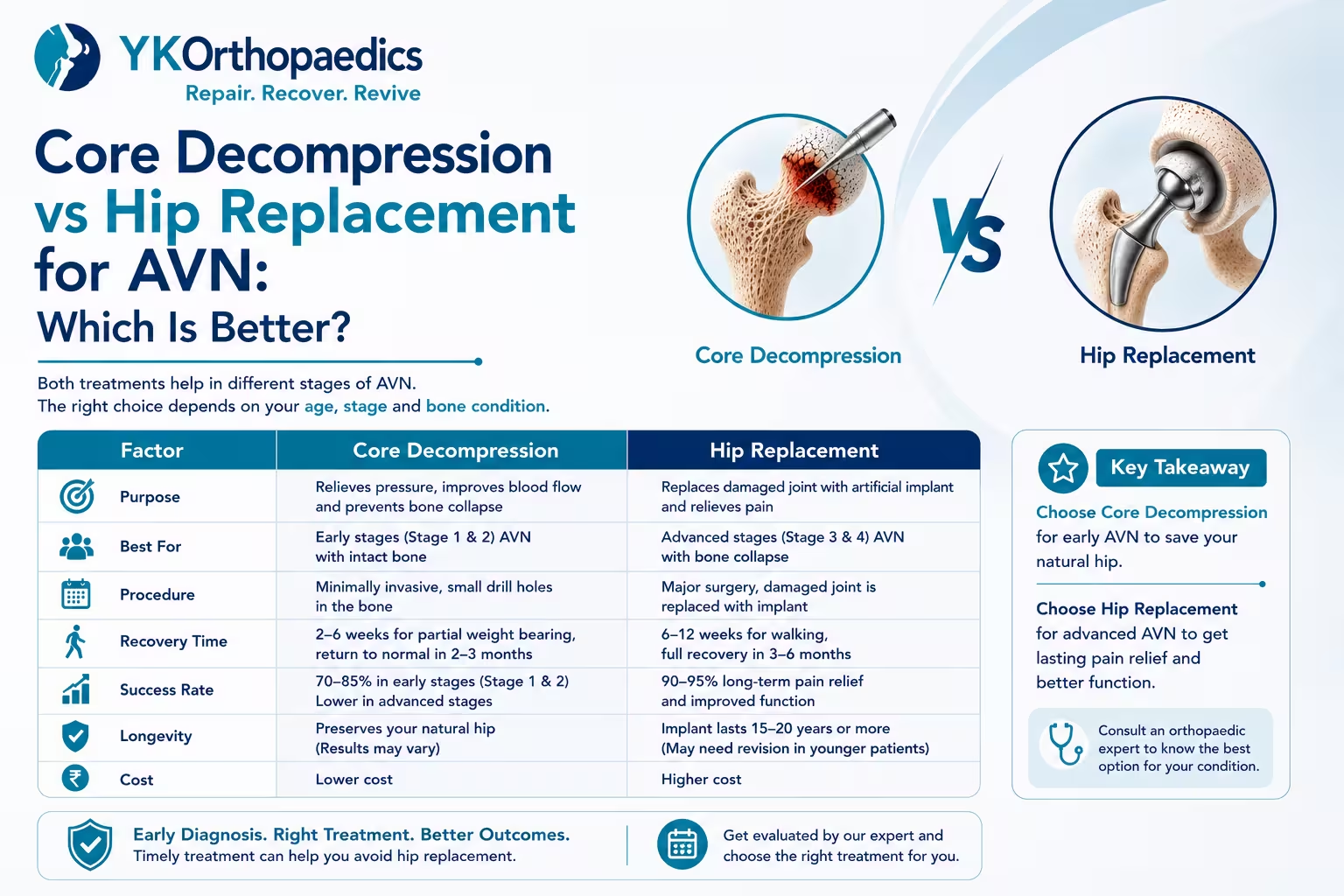
Core decompression and hip replacement are not competing treatments for the same stage of Avascular Necrosis (AVN). The better option depends mainly on whether the femoral head has collapsed and how much damage has occurred inside the hip joint.
Core decompression is generally considered for early, pre-collapse AVN, with the goal of preserving the patient's natural hip. Total hip replacement is generally preferred when AVN has progressed to significant femoral-head collapse, arthritis or advanced joint damage. AAOS specifically notes that early AVN before collapse may be suitable for hip-preserving procedures, while total hip replacement is the most successful treatment once the femoral head has collapsed.
So, in simple terms:
Early AVN → Core decompression may be better for preserving the natural hip.
Advanced AVN with collapse → Hip replacement is usually more predictable.
What Is Core Decompression for AVN?
Core decompression is a hip-preserving surgical procedure used mainly in early AVN.
The surgeon creates one or more channels through the affected portion of the femoral head. The purpose is to reduce pressure within the damaged bone and create pathways that may support blood-vessel growth and bone healing.
The overall objective is:
Preserve the femoral head → prevent or delay collapse → preserve the natural hip → potentially delay hip replacement.
Core decompression may sometimes be combined with bone grafting or biological augmentation such as bone-marrow-derived cells.
What Is Hip Replacement for AVN?
Total hip replacement (THR) removes the damaged femoral head and replaces it with an artificial femoral component. The damaged socket is also replaced with an artificial surface.
Unlike core decompression, hip replacement does not attempt to heal the necrotic femoral head.
Instead, it removes the damaged joint surfaces and restores hip function with an artificial joint.
AAOS identifies total hip replacement as the most successful treatment when osteonecrosis has progressed to femoral-head collapse.
Core Decompression vs Hip Replacement: Which Is Better?
The answer depends primarily on the stage of AVN.
Early AVN Without Collapse
Core decompression is generally the more appropriate joint-preserving option.
The objective is to treat the disease before the femoral head loses its shape.
AVN With Significant Collapse
Hip replacement is generally more predictable.
Once the femoral head has collapsed, simply decompressing the bone cannot reliably restore its original shape.
Advanced AVN With Arthritis
Hip replacement is usually the preferred definitive treatment.
At this point, the problem is no longer only bone death. The joint may also have substantial cartilage and structural damage.
Is Core Decompression Better for Stage 1 AVN?
Often, yes, when treatment is required.
Stage 1 AVN is an early stage, and the femoral head has not yet undergone significant structural collapse.
This creates an opportunity for joint preservation.
However, not every Stage 1 lesion automatically requires surgery.
The doctor should assess:
- Lesion size
- Lesion location
- Weight-bearing involvement
- Symptoms
- Risk of progression
- Underlying cause
For patients with pre-collapse AVN, professional guidance recognizes core decompression as an option, although the evidence for the optimal joint-preserving strategy remains limited.
Is Core Decompression Better for Stage 2 AVN?
Selected Stage 2 patients may benefit from core decompression, particularly when there is no significant femoral-head collapse.
However, Stage 2 does not mean the same thing for every patient.
A small lesion that does not significantly involve the weight-bearing surface may have a different prognosis from a large lesion affecting a substantial portion of the femoral head.
Therefore, treatment should be based on:
Stage + lesion size + lesion location + weight-bearing involvement
Is Hip Replacement Better for Stage 3 AVN?
It depends on how much collapse has occurred.
Stage 3 AVN commonly involves subchondral fracture and/or femoral-head collapse.
If collapse is significant, core decompression becomes less predictable.
If the hip remains relatively preserved, the orthopedic surgeon may still discuss joint-preserving options in selected cases.
But when structural damage is substantial, hip replacement may provide a more predictable result.
Is Hip Replacement Better for Stage 4 AVN?
Usually, yes, when Stage 4 AVN has caused significant arthritis and symptoms.
At this stage, the femoral head and joint may have undergone extensive structural damage.
Core decompression cannot reliably reverse an advanced collapsed and arthritic hip.
AAOS states that once osteonecrosis is diagnosed after collapse, total hip replacement is generally the best treatment.
Can Core Decompression Prevent Hip Replacement?
Yes, in some patients.
The procedure is specifically intended to preserve the femoral head and potentially prevent or delay progression to severe arthritis and hip replacement.
However, it does not work in every case.
A 2019 meta-analysis of 32 studies reported an overall core decompression success rate of approximately 65%, with outcomes differing significantly according to AVN stage and treatment approach.
A more recent database study of 3,025 patients who underwent core decompression found that 12.8% underwent total hip replacement within five years, with most conversions occurring during the first year.
These numbers should not be treated as an individual patient's predicted outcome because studies include different stages, lesion sizes and treatment techniques.
What Happens If Core Decompression Fails?
Failure does not necessarily mean that the patient immediately needs hip replacement.
The hip should be reassessed with clinical examination and appropriate imaging.
If the Femoral Head Is Still Preserved
The doctor may consider:
- Observation
- Activity modification
- Additional joint-preserving treatment
- Bone grafting
- Biological augmentation in selected cases
If Significant Collapse Has Developed
Treatment depends on:
- Degree of collapse
- Cartilage condition
- Arthritis
- Pain
- Functional limitation
If Advanced Arthritis Has Developed
Total hip replacement may become the most appropriate treatment.
Importantly, previous core decompression does not necessarily compromise later hip replacement. A systematic review found no significant difference in revision rates or postoperative hip scores between patients who had previous core decompression and those undergoing primary hip replacement, although certain complications require attention.
Can Hip Replacement Be Avoided After Core Decompression?
Sometimes.
The greatest opportunity to avoid hip replacement is generally when treatment is performed before significant femoral-head collapse.
Factors associated with better outcomes include:
- Early-stage AVN
- Smaller lesion
- Limited weight-bearing involvement
- No significant collapse
- Appropriate patient selection
A systematic review found that lesions involving less than 50% of the femoral head had better outcomes with core decompression.
What Is the Success Rate of Hip Replacement for AVN?
Hip replacement is generally a more predictable treatment for advanced AVN because it removes the damaged joint surfaces rather than attempting to preserve a severely compromised femoral head.
AAOS reports that total hip replacement is successful in relieving pain and restoring function in the majority of patients with osteonecrosis.
However, as with any major surgery, hip replacement has potential risks and the long-term outcome depends on the patient's age, activity level, implant, surgical technique and overall health.
Core Decompression or Hip Replacement for Young Patients?
This is one of the most important situations where the distinction matters.
A young patient with early AVN and no collapse may benefit from attempting to preserve the natural hip when appropriate.
A young patient with advanced collapse and severe arthritis, however, may still require hip replacement despite their age.
Being young does not automatically mean that core decompression is the right treatment.
The condition of the femoral head matters more than age alone.
Is Core Decompression Less Invasive Than Hip Replacement?
Generally, core decompression is less extensive than total hip replacement because the natural joint surfaces are not replaced.
However, it is still a surgical procedure and can require a significant period of protected weight-bearing.
Hip replacement is a larger reconstruction because the damaged femoral head and socket surfaces are replaced.
The choice should therefore not be based only on which operation sounds "smaller."
Core Decompression Recovery vs Hip Replacement Recovery
Core Decompression Recovery
Recovery focuses on protecting the femoral head while bone healing occurs.
Patients may need:
- Crutches or walker
- Restricted weight-bearing
- Physiotherapy
- Gradual strengthening
- Follow-up imaging
AAOS notes that successful core decompression patients typically return to walking without assistance at around three months, although recovery varies between individuals.
Hip Replacement Recovery
After hip replacement, patients generally begin walking and rehabilitation relatively early, followed by gradual improvement in strength and function.
The exact recovery timeline depends on:
- Surgical technique
- Patient health
- Muscle strength
- Age
- Activity level
- Rehabilitation
Which Has More Reliable Pain Relief?
For advanced AVN with femoral-head collapse and arthritis, hip replacement generally provides more predictable pain relief because the damaged joint is replaced.
Core decompression may relieve pain in successful early cases, but its primary purpose is joint preservation and preventing progression, rather than providing the same predictable result as replacing a severely damaged joint.
Which Is Better for Walking and Daily Activities?
For advanced AVN, hip replacement generally provides a more predictable restoration of walking and daily function.
For early AVN, successful core decompression may allow the patient to retain the natural hip and return to normal activities after recovery.
The important distinction is:
Core decompression tries to save the joint.
Hip replacement replaces the damaged joint.
Can Core Decompression and Hip Replacement Be Compared Directly?
Not completely.
They are usually used at different stages of the disease.
Comparing them as if they are two interchangeable options can be misleading.
The real treatment question is:
Can the natural hip still be preserved, or has the joint already been damaged enough that replacement is more predictable?
That is why MRI and X-rays are so important.
What Does MRI Show Before Choosing Treatment?
MRI can help determine:
- Location of AVN
- Lesion size
- Extent of bone involvement
- Weight-bearing involvement
- Bone marrow changes
- Subchondral fracture
- Early collapse
X-rays are also important for assessing structural changes and collapse.
The treatment decision should be based on the complete imaging picture, not simply the words "Stage 1," "Stage 2" or "Stage 3."
Can Stem Cells or BMAC Improve Core Decompression?
They may provide additional benefit in selected early-stage patients, but evidence is still evolving.
An AAOS evidence review notes that for pre-collapse AVN, adding bone-marrow concentrate to core decompression may reduce the risk of femoral-head collapse, although the evidence quality was rated low and the optimal treatment remains uncertain.
A 2025 systematic review also found that biological augmentation improved pain and functional scores, although it did not establish a significant reduction in radiological progression or conversion to total hip replacement.
So biological augmentation should be considered selectively, not as a guaranteed way to prevent hip replacement.
Can Core Decompression Be Done After Collapse?
It is generally much less effective after significant collapse.
Once the femoral head has structurally collapsed, decompressing the bone cannot reliably restore its original shape.
AAOS specifically notes that core decompression is generally not successful in preventing further collapse once osteonecrosis is diagnosed after collapse.
Can Hip Replacement Be Done After Failed Core Decompression?
Yes.
If AVN progresses despite core decompression, total hip replacement remains an option when the joint becomes severely damaged.
Research suggests that previous core decompression does not necessarily worsen subsequent hip replacement outcomes.
A 2024 database study also found no significant differences in several postoperative outcomes between patients who had prior core decompression and matched patients undergoing primary hip replacement.
What Are the Risks of Core Decompression?
Potential risks include:
- Infection
- Bleeding
- Blood clots
- Fracture
- Nerve or blood-vessel injury
- Persistent pain
- Continued AVN progression
- Femoral-head collapse
- Need for additional surgery
The risk of failure depends substantially on the stage and characteristics of AVN.
What Are the Risks of Hip Replacement?
Potential complications can include:
- Infection
- Blood clots
- Dislocation
- Fracture
- Nerve or blood-vessel injury
- Implant wear or loosening
- Leg-length difference
- Need for revision surgery
Despite these risks, total hip replacement is an established and highly effective treatment for advanced symptomatic AVN.
Which Treatment Is Better for Early AVN?
Core decompression is generally the more appropriate option to discuss for suitable early AVN if joint preservation is the goal.
The purpose is to treat the disease before the femoral head collapses.
Hip replacement would generally be excessive if the natural joint remains structurally healthy enough to preserve and symptoms can be managed with a joint-preserving approach.
Which Treatment Is Better for Advanced AVN?
Hip replacement is generally the more predictable option when there is significant femoral-head collapse, advanced arthritis and disabling symptoms.
Trying to preserve a severely damaged joint may result in prolonged pain and additional procedures.
What Should You Choose: Core Decompression or Hip Replacement?
A simple decision framework is:
Choose Core Decompression When:
- AVN is early
- Femoral head has not significantly collapsed
- Lesion is suitable for preservation
- Hip joint cartilage remains relatively preserved
- Joint preservation is realistic
Consider Hip Replacement When:
- Femoral head has significantly collapsed
- Advanced arthritis is present
- Pain is severe or persistent
- Walking and daily activities are significantly affected
- Joint-preserving treatment is unlikely to succeed
The final decision should be made after reviewing the patient's MRI, X-rays, symptoms and overall health.
Expert Opinion
According to Dr. Yugal Karkhur, a Best Orthopedic Doctor in Gurgaon, the choice between core decompression and hip replacement should be based primarily on the stage and structural condition of the AVN, not simply on age or a desire to avoid surgery.
For early, pre-collapse AVN, core decompression can offer an opportunity to preserve the patient's natural hip and potentially delay or prevent total hip replacement. For advanced AVN with significant femoral-head collapse and arthritis, hip replacement generally offers a more predictable way to relieve pain and restore function.
If core decompression does not succeed, hip replacement remains a viable option. Available evidence suggests that prior decompression does not necessarily compromise the results of subsequent total hip replacement.
The best treatment is therefore the one that matches the stage of AVN and condition of the hip.
Conclusion
Core decompression is generally better suited to early AVN when the femoral head has not significantly collapsed, while hip replacement is generally the better-established option for advanced AVN with collapse and joint damage.
Core decompression aims to save the natural hip, but it does not guarantee that AVN will stop progressing. Hip replacement does not preserve the natural femoral head, but it provides a more predictable solution once the joint has become severely damaged.
If core decompression eventually fails, hip replacement can still be performed, and current evidence suggests that previous decompression does not necessarily compromise subsequent replacement outcomes.
If you are looking for a Best Orthopedic Doctor in Gurgaon, Dr. Yugal Karkhur can evaluate your MRI and X-rays, determine the stage and extent of AVN and explain whether hip preservation or hip replacement is more appropriate for your condition.
FAQs
Is core decompression better than hip replacement for AVN?
For early, pre-collapse AVN, core decompression may be preferable because it attempts to preserve the natural hip. For advanced AVN with significant collapse and arthritis, hip replacement is generally more predictable.
Can core decompression prevent hip replacement?
Yes, it can prevent or delay hip replacement in some patients with early AVN, but it is not guaranteed to work.
When is hip replacement better for AVN?
Hip replacement is generally considered when the femoral head has significantly collapsed, arthritis has developed or pain and disability are substantial.
Is core decompression suitable for Stage 1 AVN?
Yes. Stage 1 AVN is an early stage where joint-preserving treatment may be considered, depending on lesion size and other MRI findings.
Is core decompression suitable for Stage 2 AVN?
Selected Stage 2 patients without significant collapse may be candidates for core decompression.
Is hip replacement necessary for Stage 3 AVN?
Not necessarily in every case. The decision depends on the degree of collapse, cartilage condition, arthritis, symptoms and functional limitations.
Is hip replacement the only option for Stage 4 AVN?
When Stage 4 AVN has caused significant collapse and arthritis, total hip replacement is generally the most predictable treatment.
Can core decompression work after femoral-head collapse?
Its effectiveness becomes much less predictable after significant collapse. AAOS notes that core decompression is generally not successful in preventing further collapse once collapse has occurred.
What is the success rate of core decompression?
Published studies vary considerably. A meta-analysis reported an overall success rate of about 65%, with significant differences according to AVN stage and treatment technique.
Can core decompression delay hip replacement?
Yes. Successful joint preservation can delay the need for total hip replacement in selected patients.
If core decompression fails, can I still have hip replacement?
Yes. Previous core decompression does not necessarily prevent successful total hip replacement later.
Is hip replacement more painful than core decompression?
Pain and recovery vary between individuals. The procedures are different, and pain should not be the only factor used to choose between them.
Which treatment is better for young AVN patients?
For a young patient with early AVN and no significant collapse, preserving the natural hip with an appropriate joint-preserving procedure may be considered. Advanced collapse may still require hip replacement.
Can stem cells be added to core decompression?
Yes. BMAC and other biological augmentation techniques have been studied with core decompression, particularly for pre-collapse AVN. Evidence suggests potential benefits, but the quality and consistency of evidence remain limited.
What is more important than choosing between the two treatments?
AVN stage, lesion size, lesion location, weight-bearing involvement, femoral-head collapse and joint condition are critical factors in choosing the appropriate treatment.