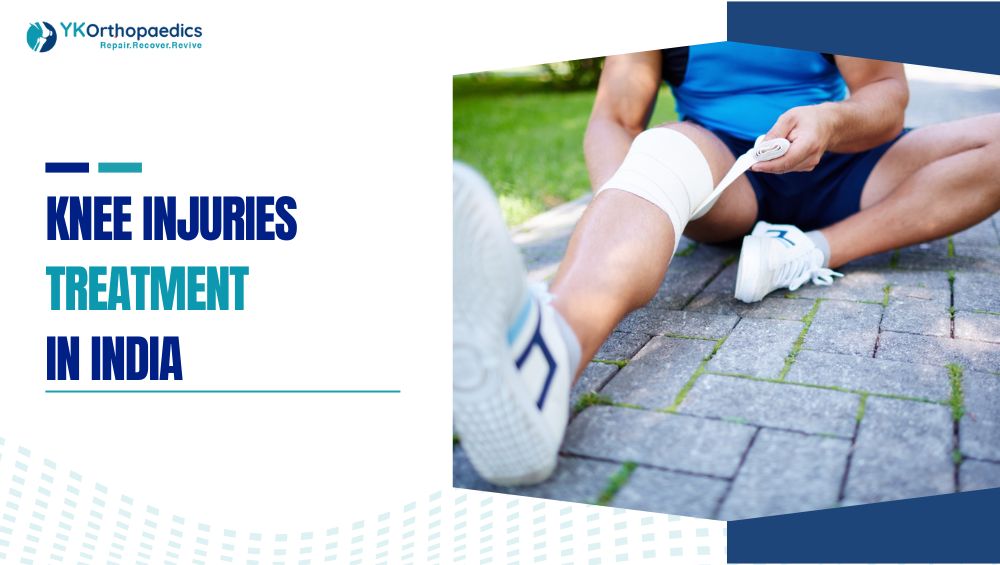
Knee injuries are among the most common orthopedic problems affecting people of all ages — from athletes to elderly patients. The knee is the largest weight-bearing joint in the body, making it highly vulnerable to ligament tears, cartilage damage, fractures, and overuse injuries.
Early diagnosis and timely treatment are crucial. Ignoring knee pain or instability can lead to chronic damage, arthritis, or long-term mobility issues. Orthopedic specialists like Dr. Yugal Karkhur provide advanced diagnosis and treatment for all types of knee injuries in Gurgaon.
How the Knee Joint Works
The knee joint connects three major bones:
-
Femur (thigh bone)
-
Tibia (shin bone)
-
Patella (kneecap)
Cartilage covers bone ends to reduce friction, while the meniscus acts as a shock absorber. Ligaments and tendons stabilize the joint and enable smooth movement like bending and straightening.
What is a Knee Injury?
A knee injury occurs when any structure of the knee gets damaged:
-
Ligaments
-
Cartilage
-
Tendons
-
Bones
These injuries may be mild (sprain) or severe (ligament tear or fracture).
Common Types of Knee Injuries
Ligament Injuries
-
ACL Tear
-
PCL Tear
-
MCL/LCL Injury
Meniscus Tear
Damage to the cushioning cartilage between bones.
Cartilage Damage
Leads to pain, stiffness, and locking.
Patellar Injuries
Kneecap dislocation or irritation.
Fractures
Broken bones around the knee joint.
Causes of Knee Injuries
Knee injuries often occur due to:
-
Sports trauma (football, basketball, cricket)
-
Sudden twisting while weight-bearing
-
Road accidents or falls
-
Overuse injuries
-
Osteoarthritis
-
Rheumatoid arthritis
-
Previous knee surgery
Athletes and elderly patients are at higher risk.
When to See an Orthopaedic Doctor
Consult Dr. Yugal Karkhur if you experience:
-
Severe knee pain
-
Inability to walk
-
Knee instability
-
Locking or clicking
-
Swelling
-
Deformity
-
Limited bending/straightening
Early treatment prevents complications.
Diagnosis of Knee Injuries
Evaluation includes:
-
Physical examination
-
Injury history
-
Swelling assessment
Imaging Tests
-
X-ray – Detects fractures
-
MRI – Ligament & meniscus tears
-
CT Scan – Complex injuries
Treatment of Knee Injuries
1. Initial Care
-
Rest / Protection
-
Ice
-
Compression
-
Elevation
Helps reduce swelling and pain.
2. Physiotherapy & Rehabilitation
-
Strengthening exercises
-
Mobility training
-
Balance improvement
Essential for ligament and meniscus recovery.
Medications
-
Painkillers
-
Anti-inflammatory drugs
Surgical Treatment
Required in severe injuries:
-
ACL Reconstruction
-
Meniscus Repair
-
Arthroscopy
-
Fracture Fixation
Complications if Untreated
Ignoring knee injuries may lead to:
-
Chronic pain
-
Joint instability
-
Osteoarthritis
-
Cartilage degeneration
-
Reduced mobility
FAQs
What are the most common knee injuries?
ACL tears, meniscus tears, ligament sprains, cartilage damage, and fractures are the most common knee injuries.
How do I know if my knee injury is serious?
Severe pain, swelling, instability, locking, or inability to walk indicates a serious knee injury requiring medical evaluation.
Can knee injuries heal without surgery?
Yes, mild ligament injuries and meniscus tears can heal with rest, physiotherapy, and medications.
How long does it take to recover from a knee injury?
Recovery ranges from 2 weeks (minor sprain) to 6–9 months (ACL surgery), depending on severity.
When should I see an orthopaedic doctor for knee pain?
If pain lasts more than a few days, worsens, or affects walking, consult an orthopedic specialist immediately.