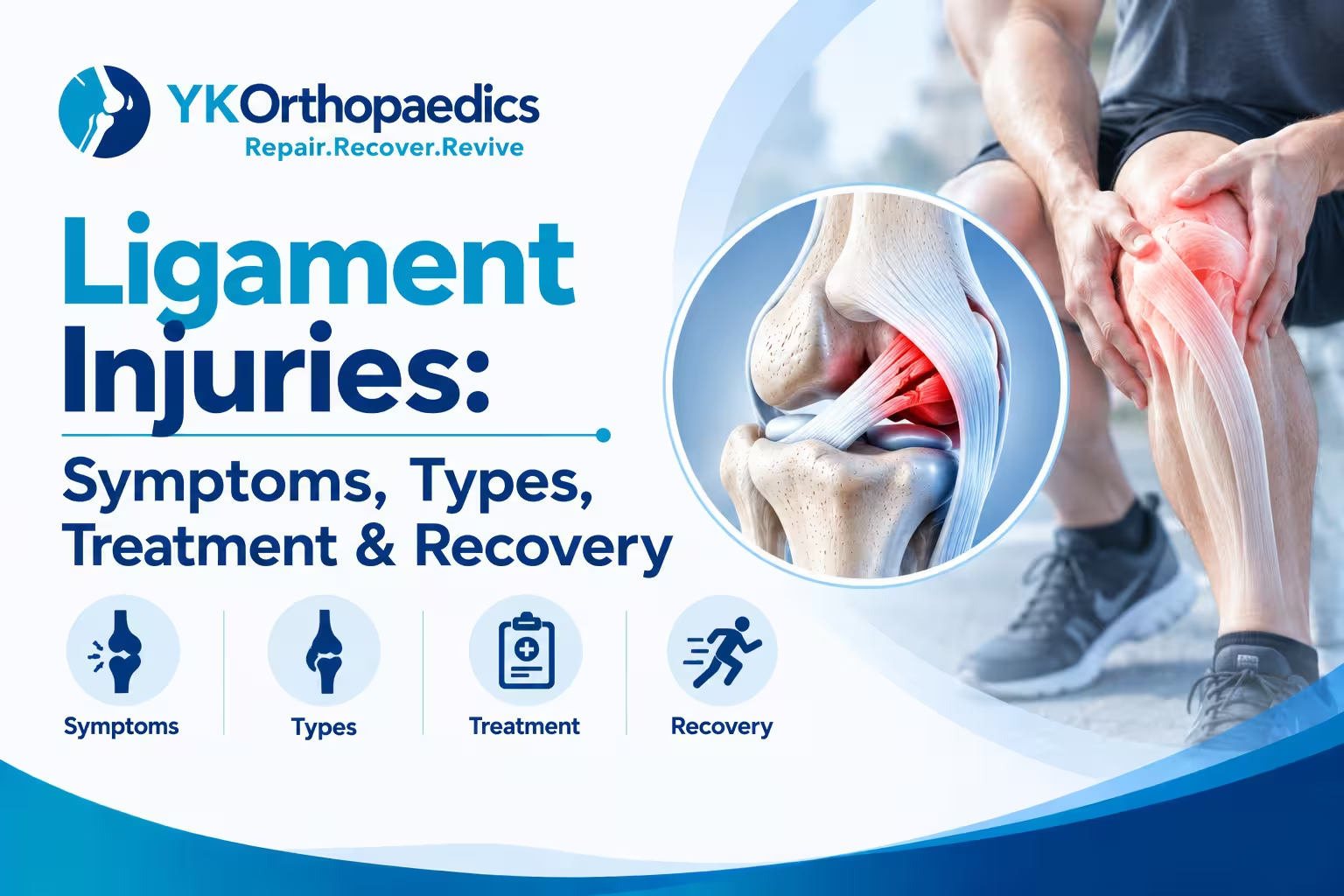
Ligament injuries are common orthopedic problems that can occur during sports, exercise, falls, or sudden twisting movements. Ligaments are strong bands of tissue that connect bones and help stabilize joints. When a ligament is stretched or torn, it can cause pain, swelling, weakness, and joint instability.
What Are Ligament Injuries?
A ligament injury occurs when a ligament is stretched beyond its normal range or tears. The severity can range from a mild stretch to a complete tear.
Ligament injuries commonly affect the knee, ankle, shoulder, and wrist. In the knee, injuries to the ACL, PCL, MCL, and LCL are particularly important because they can affect joint stability and sports performance.
Common Causes of Ligament Injuries
Ligament injuries may occur because of:
- Sudden twisting or turning of a joint
- Sports-related movements or collisions
- Falls or direct impact
- Incorrect landing after jumping
- Sudden changes in direction
- Overstretching of the joint
Symptoms of a Ligament Injury
Common symptoms include:
- Sudden pain after an injury
- Swelling around the joint
- Difficulty walking or putting weight on the affected leg
- Reduced range of motion
- Joint instability or a feeling that the joint is giving way
- Bruising or tenderness
- A popping sensation at the time of injury, particularly with some knee ligament injuries
Types of Ligament Injuries
ACL Injury
The anterior cruciate ligament (ACL) is one of the major stabilizing ligaments of the knee. ACL injuries are common in sports involving jumping, pivoting, and sudden changes in direction.
PCL Injury
The posterior cruciate ligament (PCL) helps stabilize the knee and can be injured following a strong impact or forceful movement.
MCL and LCL Injuries
The medial collateral ligament (MCL) and lateral collateral ligament (LCL) help provide side-to-side stability to the knee. They can be injured by direct blows or excessive sideways stress.
Ankle Ligament Injuries
Ankle sprains commonly involve stretching or tearing of the ligaments that stabilize the ankle.
How Are Ligament Injuries Diagnosed?
An orthopedic doctor will examine the injured joint and assess its movement and stability. Depending on the injury, X-rays or MRI scans may be recommended. MRI can provide detailed information about ligaments and associated cartilage or soft-tissue injuries.
Treatment for Ligament Injuries
Treatment depends on the ligament involved, severity of the tear, activity level, and overall stability of the joint.
Non-Surgical Treatment
Some ligament injuries can be managed with:
- Rest and activity modification
- Ice and swelling control
- Physiotherapy
- Strengthening and mobility exercises
- Bracing when appropriate
Surgical Treatment
A complete ligament tear does not always require surgery. However, surgery may be considered when there is significant instability, associated injuries, or a need to return to activities that place high demands on the joint.
For suitable patients with an ACL tear, arthroscopic ACL reconstruction may be recommended to restore knee stability.
Recovery From Ligament Injuries
Recovery depends on the type and severity of the injury and the treatment provided. Rehabilitation generally focuses on reducing swelling, restoring movement, rebuilding strength, and gradually returning to normal activities or sports.
Returning to demanding activities before adequate recovery can increase the risk of further injury.
When Should You See an Orthopedic Doctor?
You should seek an orthopedic evaluation if you experience significant pain or swelling after an injury, difficulty bearing weight, persistent instability, restricted movement, or symptoms that do not improve with initial care.
Early assessment can help identify the extent of ligament damage and whether conservative treatment or surgery is appropriate.
Expert Opinion
According to Dr. Yugal Karkhur, one of the best orthopedic doctors in Gurgaon and a fellowship-trained joint replacement surgeon, ligament injuries should be evaluated based on the specific ligament involved, the degree of instability, and the patient's activity requirements. Appropriate rehabilitation is an important part of recovery, while surgical treatment may be considered for selected injuries.
Frequently Asked Questions
Can ligament injuries heal without surgery?
Some ligament injuries can heal with rehabilitation and supportive treatment. The need for surgery depends on the ligament, severity of the injury, joint stability, and the patient's functional requirements.
How long does a ligament injury take to heal?
Recovery time varies significantly. Mild injuries may improve within weeks, while complete tears and surgically treated injuries can require several months of rehabilitation.
Is surgery always required for an ACL tear?
No. Treatment depends on factors such as knee instability, associated injuries, activity level, and the patient's goals.
Can I exercise with a ligament injury?
Exercise should be modified according to the injury. A structured rehabilitation program guided by an orthopedic doctor or physiotherapist is generally safer than returning directly to strenuous activity.