An ACL tear is one of the most frequent serious knee injuries. Most often, it is caused by intense swelling and pain; however, as the initial discomfort goes away, the majority of people think that it will "heal on its own." The question that remains is what will happen when the ACL tear is not treated? In the end, that ligament is not able to heal itself and will likely cause severe long-term stability and degradation problems. A few people are interested in whether the ACL tear can heal on its own and without any surgery. However, the truth of the truth is that when you do not seek treatment, certain issues are sure to develop. There are some who may benefit from the physiotherapy field, and discussing your options with a doctor is important for the well-being of the knees.
The Immediate Reality: Can an ACL Tear Heal Without Surgery?
The most straightforward answer is that ACL tears that are complete rarely recover with surgery. The ligament has a low blood supply and, after tearing, it is unable to reconnect. One of the things that confuses people is that, after a couple of weeks, swelling and discomfort reduce. This isn't the situation. If your knee seems "fine" when resting, the stability of your knee's internal structure has already been impaired. This unstable joint is the base for many long-term effects of ACL tear without surgery, without surgery, from arthritis to instability.
The Primary Long-Term Effects of ACL Tear Without Surgery
Chronic Knee Instability & “Giving Way”
One of the major risks of not getting ACL surgery is persistent instability. The ACL is the one that prevents the hind shinbone from moving forward, particularly when turning, fast pivoting, abrupt stops, or abrupt stoppages. If it is injured, the knee could "give way" unexpectedly. This doesn't just happen in sporting events; it could happen when walking on uneven ground or stepping off the curb, or climbing a staircase. In time, this repetitive buckling can become a long-term effects of ACL tear without surgery.
Secondary Damage (Meniscus and Cartilage Tears)
A knee that is unstable doesn't function normally. Every movement causes excessive pressure in the joint. This puts extra strain on the meniscus, which is the shock absorber in the knee. A lot of neglected ACL tears will eventually result in meniscus tears, particularly those in the medial meniscus. When a patient suffers for a long time, the cartilage lining the knee can also be damaged. The secondary injury is usually the reason why people suffer ACL tear pain years later after the fact, even though the initial injury has not ceased to bother them. When cartilage damage starts, the cartilage is not able to fully heal, which can lead to irreparable joint damage.
Early-Onset Osteoarthritis (OA)
The most significant long-term effect of a surgically addressed ACL tear would be the risk of osteoarthritis that occurs early. A majority of patients who suffer from an untreated ACL tear will develop arthritis over the course of between 10 and 20 years, research demonstrates. In the absence of an ACL that can stabilize the movement, the cartilage and bones are more prone to friction than they ought to be, and cause progressive degeneration. The outcome of this degeneration can be swelling, stiffness, constant pain, and decreased mobility. Many who do not undergo surgery in the beginning of their lives have knee replacements that are decades ahead of time.
Activity Limitations and Lifestyle Changes
ACL tears that are not treated typically have to stop things they love. The activities of football, basketball, or dancing can be risky as they require quick and fast movements. As time passes, inactivity results in muscle weakness, particularly in the quadriceps muscles and the hamstrings. The weakness may make the knee weaker. In extreme cases, the daily activities like walking at a fast pace or climbing stairs can become difficult. These lifestyle changes are another way to show how knee injuries that last for a long time, such as ACL, can trigger an unintended chain reaction of problems.
Managing an ACL Tear Without Surgery: The Role of Physiotherapy
Non-Surgical Treatment Approach (Conservative Management)
Surgical intervention is not a must for everyone suffering from an ACL tear. In the case of older people or people with little physical activity, physiotherapy can be an effective option. However, this kind of treatment is not for the faint-hearted and still requires commitment. "No operation" does not imply "no therapy". It is very important to train and strengthen the quadriceps, hamstrings, glute muscles, and core.
Focus on Rehab
The consistent physiotherapy program helps prepare the body to compensate for the loss of the ligament. The ACL tear physiotherapy results may increase stability, balance, and flexibility. For some, especially non-athletes, the results can be adequate enough to carry on regular activities with ease.
A Necessary Caveat
However, the effectiveness of physiotherapy is wholly reliant on long-term engagement. If the exercises are stopped, then, generally, instability and symptoms reappear.
Who Needs Surgery vs. Who Can Go Without?
A Personalized Decision
The decision to undergo surgery isn't identical for each patient. Doctors evaluate several factors, including:
- Age: Younger, more active people usually require procedures to avoid permanent damage.
- Level of activity: Athletics and those who have physical demands work benefit the most from rehabilitation.
- Associated injuries: Injuries that are a result of tears in cartilage or meniscus are in the area, and surgery becomes more pressing.
- Individual goals: This choice will depend on the type of activities you'd like to continue to do.
Understanding these factors helps weigh the risks of not getting ACL surgery versus the benefits of reconstruction.
Conclusion
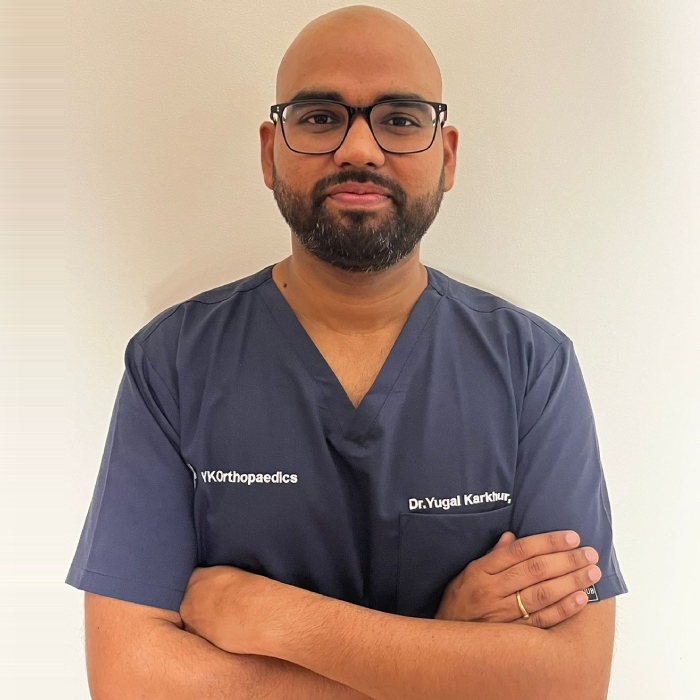
If the ACL tear is not treated, the patient has to bear the knee issues such as instability, injuries to the meniscus, and even osteoarthritis at an earlier age. Such problems in the long run are going to haunt the patient via their daily activities, mobility, and comfort. An early visit to the doctor for an opinion regarding the torn ACL can help one select the proper treatment instead of suffering for years with the pain of an ACL tear. Consult the best orthopaedic surgeon in Delhi NCR, like Dr. Yugal Karkhur, to understand whether physiotherapy alone is enough or if ACL reconstruction in Delhi NCR is the safer long-term solution.