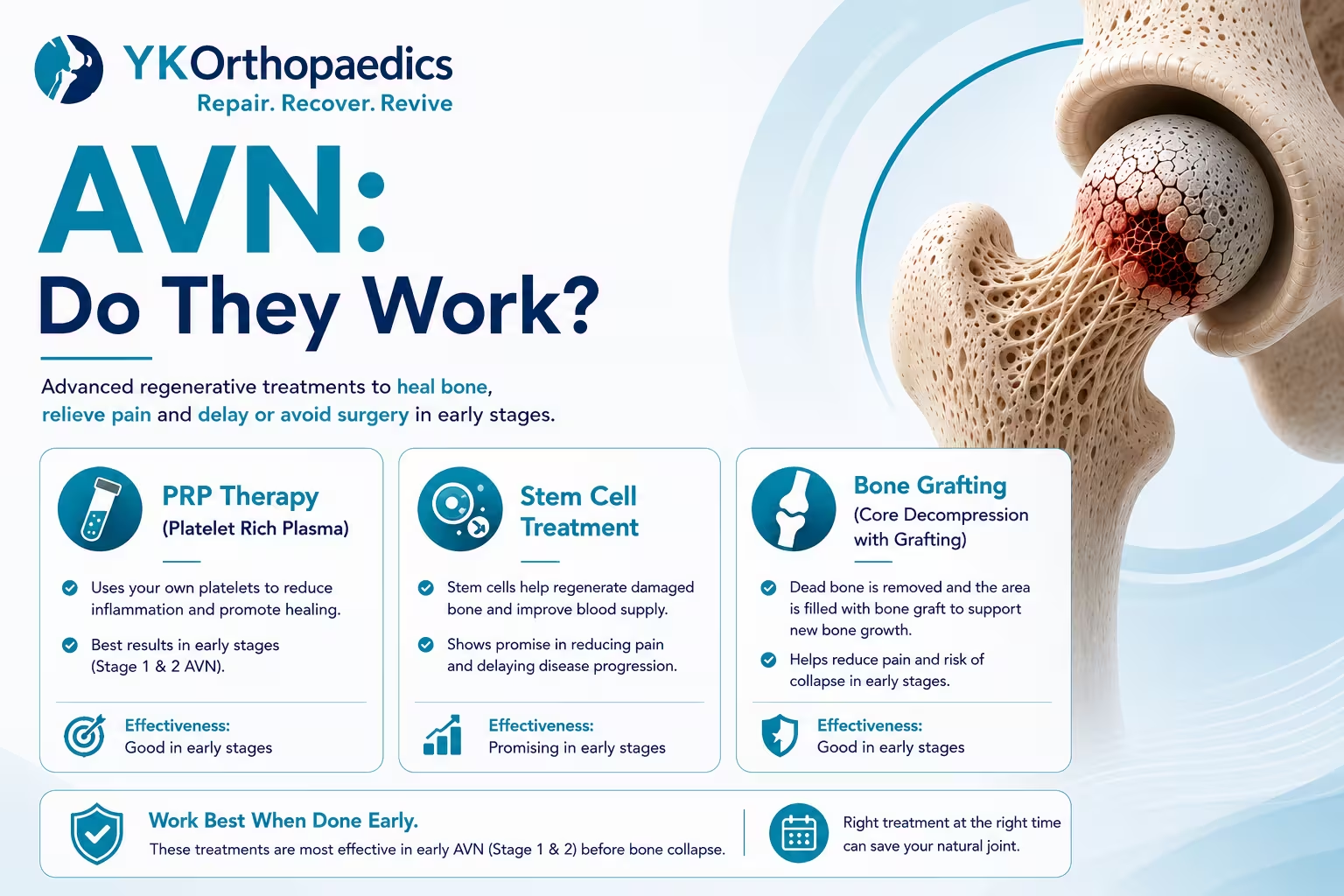
PRP, stem cell-based treatment and bone grafting may help selected patients with early Avascular Necrosis (AVN), but none should be considered a guaranteed cure. These treatments are mainly discussed as joint-preserving or regenerative approaches, particularly before significant femoral-head collapse occurs.
Current research is more encouraging for bone-marrow-derived cell therapies such as BMAC or mesenchymal stem cells when combined with core decompression than for stem-cell treatment used alone. PRP has also been studied, particularly as an addition to core decompression and bone grafting, but evidence remains variable. Bone grafting can be combined with core decompression to support bone repair, although the benefit over core decompression alone is not consistently established.
The suitability of any of these treatments depends on AVN stage, lesion size, lesion location, weight-bearing involvement and whether femoral-head collapse has occurred.
What Is PRP Treatment for AVN?
PRP stands for Platelet-Rich Plasma.
It is prepared from the patient's own blood and contains a higher concentration of platelets and associated growth factors.
The idea behind PRP is to support the body's healing response. In AVN, PRP has been investigated mainly as an adjunct to procedures such as core decompression and bone grafting, rather than as a simple injection that can independently restore a damaged femoral head.
Does PRP Work for AVN?
PRP may help some patients, but it should not be presented as a proven standalone cure for AVN.
Research has produced encouraging findings in some treatment combinations. For example, a 2024 systematic review and meta-analysis of 11 studies involving 742 hips found that core decompression and bone grafting combined with PRP showed better functional and pain outcomes and lower radiographic progression than core decompression and bone grafting without PRP. However, the authors also noted that higher-quality research is needed because treatment methods and study quality varied.
Therefore:
PRP may be useful as an adjunct in selected early AVN, but it is not a guaranteed cure.
Can PRP Reverse Femoral-Head Collapse?
There is no reliable evidence that PRP can reverse significant femoral-head collapse.
Once the femoral head has structurally collapsed, the problem is no longer simply a biological healing issue. The shape and mechanical integrity of the joint have been altered.
Treatment at that stage depends on:
- Amount of collapse
- Cartilage condition
- Joint degeneration
- Pain
- Functional limitation
Advanced collapse may eventually require total hip replacement.
Is PRP Better for Early AVN?
If PRP is considered, its potential role is more relevant to early AVN before significant collapse.
However, the treatment should be based on the complete clinical and MRI picture rather than simply the stage number.
Important factors include:
- Lesion size
- Lesion location
- Weight-bearing involvement
- Symptoms
- Presence or absence of collapse
What Is Stem Cell Treatment for AVN?
Stem-cell treatment attempts to use cells with regenerative potential to support repair of damaged bone.
One commonly studied approach uses bone marrow-derived cells, including bone marrow aspirate concentrate (BMAC), sometimes introduced during or after core decompression.
The goal is to combine decompression of the affected bone with a biological stimulus that may support bone repair.
This is different from the broad marketing term "stem cell therapy," because different clinics may use very different cell sources, preparation methods and techniques.
Do Stem Cells Work for AVN?
Stem-cell treatment is promising, particularly for selected early AVN, but the evidence is not strong enough to describe it as a guaranteed cure.
A 2025 systematic review and meta-analysis of 10 randomized controlled trials involving 545 hips found that stem-cell therapy alone did not consistently produce significant benefits across most outcomes. However, when combined with mechanical support or bone grafting, it showed more promising functional outcomes and a trend toward reduced total hip replacement risk.
Earlier randomized-trial evidence has also suggested that cell therapy may reduce femoral-head collapse and delay conversion to total hip replacement in early-stage disease.
So the most accurate answer is:
Stem cells may help selected patients, but they are not a guaranteed AVN cure.
What Is BMAC?
BMAC means Bone Marrow Aspirate Concentrate.
It is obtained from the patient's own bone marrow and contains a mixture of cells and biological components.
BMAC has been studied particularly as an adjunct to core decompression for early AVN.
A 2024 network meta-analysis found BMAC and expanded mesenchymal stem cells to be among the regenerative approaches associated with lower progression and lower conversion to total hip replacement compared with core decompression alone.
However, results vary between studies and treatment protocols.
Is Stem Cell Treatment Better Than Core Decompression Alone?
Some evidence suggests that adding certain bone-marrow-derived cell therapies to core decompression may provide additional benefits.
The 2024 network meta-analysis found favorable results for BMAC and mesenchymal stem cells compared with core decompression alone for progression and conversion to total hip replacement.
However, the evidence should be interpreted carefully because studies differ in:
- Cell source
- Cell concentration
- Preparation technique
- Patient selection
- AVN stage
- Lesion size
- Core decompression technique
- Follow-up duration
Therefore, this does not mean that every patient with AVN should receive stem cells.
What Is Bone Grafting for AVN?
Bone grafting is a surgical technique used to provide structural or biological support to damaged bone.
A graft may come from:
- The patient's own bone
- Donor bone
- Synthetic material
Bone grafting is often considered alongside core decompression, particularly in selected early cases. NIAMS notes that core decompression is commonly combined with bone grafting to promote bone repair.
Some vascularized bone graft techniques also transfer bone together with its blood supply.
Does Bone Grafting Work for AVN?
Bone grafting can be useful in selected patients, but there is no single grafting technique that has been proven best for every AVN patient.
A network meta-analysis of bone-grafting techniques found that different grafting approaches may reduce AVN progression, but there were no significant differences between the studied approaches for preventing conversion to total hip replacement or improving hip scores.
More recent evidence on synthetic bone grafts also found no clear evidence that adding synthetic bone graft improves outcomes over core decompression alone, although the research remains limited.
Therefore, bone grafting should be selected according to the individual lesion rather than offered as a universal treatment.
Is Bone Grafting Better Than Core Decompression?
Not necessarily.
Core decompression remains an important joint-preserving procedure for selected early AVN. It may be performed alone or combined with bone grafting or biological augmentation.
NIAMS describes core decompression as the most common surgery for osteonecrosis and notes that it is usually used in earlier stages and is often combined with bone grafting.
The benefit of adding a graft depends on the technique and characteristics of the AVN lesion.
Can Stem Cells and Bone Grafting Be Used Together?
Yes.
Research has examined combinations such as:
Core decompression + bone graft + bone-marrow-derived cells
The idea is to combine:
- Decompression
- Structural support
- Biological stimulation
- Bone repair
A 2025 systematic review found that stem-cell therapy combined with mechanical support or bone grafting appeared more promising than stem-cell therapy alone, although the certainty of evidence varied.
Can PRP, Stem Cells or Bone Grafting Prevent Hip Replacement?
They may reduce the risk of progression or delay hip replacement in selected early cases, but there is no guarantee.
The best evidence is currently more encouraging for BMAC or mesenchymal stem cells combined with core decompression than for PRP or bone grafting alone.
The outcome depends heavily on:
- Early diagnosis
- Lesion size
- Lesion location
- Weight-bearing involvement
- Femoral-head integrity
Which Is Better: PRP or Stem Cells for AVN?
Based on current evidence, stem-cell/BMAC approaches have more encouraging evidence than PRP alone for selected early AVN, particularly when used with core decompression.
The 2024 network meta-analysis found significant benefits for BMAC and mesenchymal stem cells, while PRP did not show a significant difference from core decompression alone for the main progression and total hip replacement outcomes studied.
However, PRP combined with core decompression and bone grafting has shown promising results in another meta-analysis, particularly for pain, function and radiographic progression.
So the evidence is promising but not definitive.
Which Treatment Is Best for Early AVN?
There is no single best regenerative treatment for everyone.
Small, Low-Risk Lesion
Depending on the case, the doctor may consider:
- Monitoring
- Activity modification
- Protected weight-bearing
- Symptom management
Larger or Higher-Risk Lesion Without Collapse
The doctor may discuss:
- Core decompression
- Bone grafting
- BMAC or other cell-based augmentation
- Other joint-preserving approaches
Significant Collapse
Joint-preserving treatment becomes less predictable.
Advanced Collapse With Arthritis
Total hip replacement may become the more appropriate option.
The treatment decision should be based on the individual MRI findings rather than the patient's preference for a particular regenerative treatment alone.
Can These Treatments Work After AVN Has Collapsed?
Their effectiveness is generally less predictable once substantial femoral-head collapse has developed.
Joint-preserving and regenerative approaches are mainly intended to preserve the femoral head before significant structural failure occurs.
Once the femoral head has significantly collapsed and secondary arthritis has developed, treatment often needs to focus on restoring joint function.
What Does MRI Have to Do With Choosing Treatment?
MRI is extremely important because it can show:
- AVN location
- Lesion size
- Weight-bearing involvement
- Bone marrow changes
- Subchondral fracture
- Femoral-head collapse
- Joint damage
MRI can also detect early osteonecrosis before it becomes visible on X-ray.
Therefore, the decision to use PRP, stem cells or bone grafting should not be made simply because the MRI says "AVN."
The complete lesion characteristics matter.
Can PRP or Stem Cells Cure Stage 1 AVN?
They should not be described as guaranteed cures.
Stage 1 is an early phase in which some small lesions may remain stable or heal.
Selected patients may be considered for conservative management or joint-preserving treatment depending on lesion characteristics.
Can PRP or Stem Cells Cure Stage 2 AVN?
Selected Stage 2 patients may be candidates for joint-preserving treatment, particularly when the femoral head has not significantly collapsed.
Cell-based treatments combined with core decompression have shown encouraging results in some studies of early-stage AVN.
However, a large Stage 2 lesion involving the weight-bearing surface is very different from a small lesion in a lower-risk location.
Can Bone Grafting Treat Stage 2 AVN?
Bone grafting may be considered in selected early-stage cases, often together with core decompression.
The purpose is to provide support for bone repair and help preserve the femoral head.
Whether it is appropriate depends on:
- Lesion size
- Lesion location
- Stage
- Structural integrity
- Weight-bearing involvement
What About Stage 3 or Stage 4 AVN?
Once significant femoral-head collapse has developed, regenerative and joint-preserving treatments become less predictable.
Stage 3
Treatment depends on:
- Amount of collapse
- Cartilage condition
- Lesion size
- Symptoms
- Functional limitation
Stage 4
When advanced collapse is accompanied by significant arthritis and symptoms, total hip replacement may be considered.
Are PRP and Stem Cell Treatments Safe?
The safety depends on the specific procedure, cell source, preparation and technique.
Potential procedure-related risks include:
- Infection
- Bleeding
- Pain
- Anesthesia-related complications where applicable
- Other surgical complications
Patients should also understand exactly what is being offered because "stem cell treatment" can refer to very different techniques.
Before proceeding, ask:
- What type of cells are being used?
- Where are they obtained from?
- Are they being used with core decompression?
- What stage of AVN is being treated?
- What evidence supports this specific technique?
Should You Choose a "Stem Cell Clinic" for AVN?
Be cautious about clinics that guarantee a cure or promise that hip replacement will always be avoided.
Claims such as:
- "100% cure"
- "Regrow the femoral head"
- "Permanent cure with one injection"
- "No surgery required"
- "Hip replacement can always be avoided"
are not supported by the current evidence.
Stem-cell-based approaches may have a role in selected early AVN, but research is still evolving and treatment methods are not standardized.
What Should You Ask Your Orthopedic Doctor?
If you are considering regenerative treatment, ask:
- What stage of AVN do I have?
- Has the femoral head collapsed?
- How large is the lesion?
- Does it involve the weight-bearing area?
- Would core decompression be appropriate?
- Would bone grafting add meaningful benefit in my case?
- Is BMAC or another cell-based treatment supported for my stage?
- Is PRP appropriate for my condition?
- What is the realistic chance of avoiding hip replacement?
- What are the alternatives if this treatment does not work?
These questions can help you make a more informed decision.
When Should You See an Orthopedic Doctor?
An orthopedic evaluation is particularly important if you have:
- MRI-confirmed AVN
- Persistent hip or groin pain
- Stage 1 or Stage 2 AVN
- A large AVN lesion
- Weight-bearing area involvement
- Subchondral fracture
- Femoral-head collapse
- Bilateral AVN
- Increasing difficulty walking
Early AVN is the stage where joint-preserving options are generally most relevant.
Expert Opinion
According to Dr. Yugal Karkhur, a Best Orthopedic Doctor in Gurgaon, PRP, stem-cell-based treatments and bone grafting should not be viewed as interchangeable treatments or guaranteed alternatives to hip replacement.
The current evidence is particularly encouraging for bone-marrow-derived cell therapies such as BMAC or mesenchymal stem cells when combined with core decompression in selected early-stage AVN. PRP may also have a role as an adjunct to core decompression and bone grafting, but evidence remains less consistent.
The most important consideration is early diagnosis and accurate assessment of the lesion. Size, location, weight-bearing involvement and femoral-head collapse determine whether a joint-preserving approach is reasonable.
Conclusion
PRP, stem-cell-based treatments and bone grafting may help selected patients with early AVN, but none should be presented as a guaranteed cure.
Current evidence is more encouraging for BMAC and mesenchymal stem cells used alongside core decompression than for stem-cell treatment alone. PRP may also provide benefits when combined with core decompression and bone grafting, although more high-quality research is needed. Bone grafting can support selected joint-preserving procedures, but its additional benefit over core decompression alone is not consistently established.
The stage and MRI characteristics of AVN are more important than choosing a particular regenerative treatment by name. Early disease without significant collapse provides the greatest opportunity for joint preservation. Once advanced collapse and arthritis develop, hip replacement may become the more appropriate treatment.
If you are looking for a Best Orthopedic Doctor in Gurgaon, Dr. Yugal Karkhur can evaluate your MRI, assess the size and location of the AVN lesion and determine whether conservative management, core decompression with or without regenerative augmentation, or hip replacement is appropriate.
FAQs
Does PRP cure AVN?
No. PRP should not be considered a guaranteed cure. Some studies suggest benefits when PRP is combined with core decompression and bone grafting, but more high-quality evidence is needed.
Does stem cell treatment cure AVN?
Stem-cell-based treatment may benefit selected early-stage patients, particularly when combined with core decompression, but it is not a guaranteed cure.
Is BMAC effective for AVN?
BMAC has shown promising results when combined with core decompression, including lower progression and conversion to total hip replacement in some analyses.
Is PRP better than stem cells for AVN?
Current evidence is more encouraging for BMAC and mesenchymal stem cells combined with core decompression, although PRP combined with certain procedures has also shown promising results.
Does bone grafting work for AVN?
Bone grafting can be used as part of selected joint-preserving procedures, particularly with core decompression. However, the benefit varies according to the grafting technique and patient characteristics.
Can bone grafting prevent hip replacement?
It may help preserve the femoral head in selected early cases, but there is no guarantee that hip replacement will ultimately be avoided.
Can stem cells repair a collapsed femoral head?
Significant established collapse is difficult to reverse with regenerative treatment. Joint-preserving approaches are generally more relevant before substantial collapse.
Is PRP suitable for Stage 1 AVN?
PRP may be considered as an adjunct in some treatment protocols, but it should not be presented as a proven standalone treatment for Stage 1 AVN.
Is stem cell treatment suitable for Stage 2 AVN?
Selected Stage 2 patients may be candidates for cell-based treatment, particularly alongside core decompression, depending on lesion size, location and the absence of significant collapse.
Can regenerative treatment replace hip replacement?
Not always. Regenerative and joint-preserving treatments are mainly considered before advanced collapse. When severe collapse and arthritis develop, hip replacement may be more appropriate.
What is more important than choosing PRP or stem cells?
AVN stage, lesion size, lesion location, weight-bearing involvement and whether femoral-head collapse has occurred are critical when deciding treatment.
Should every AVN patient get stem cells?
No. Stem-cell treatment is not appropriate for every patient. The decision should be based on the individual's MRI findings, stage, lesion characteristics and overall health.