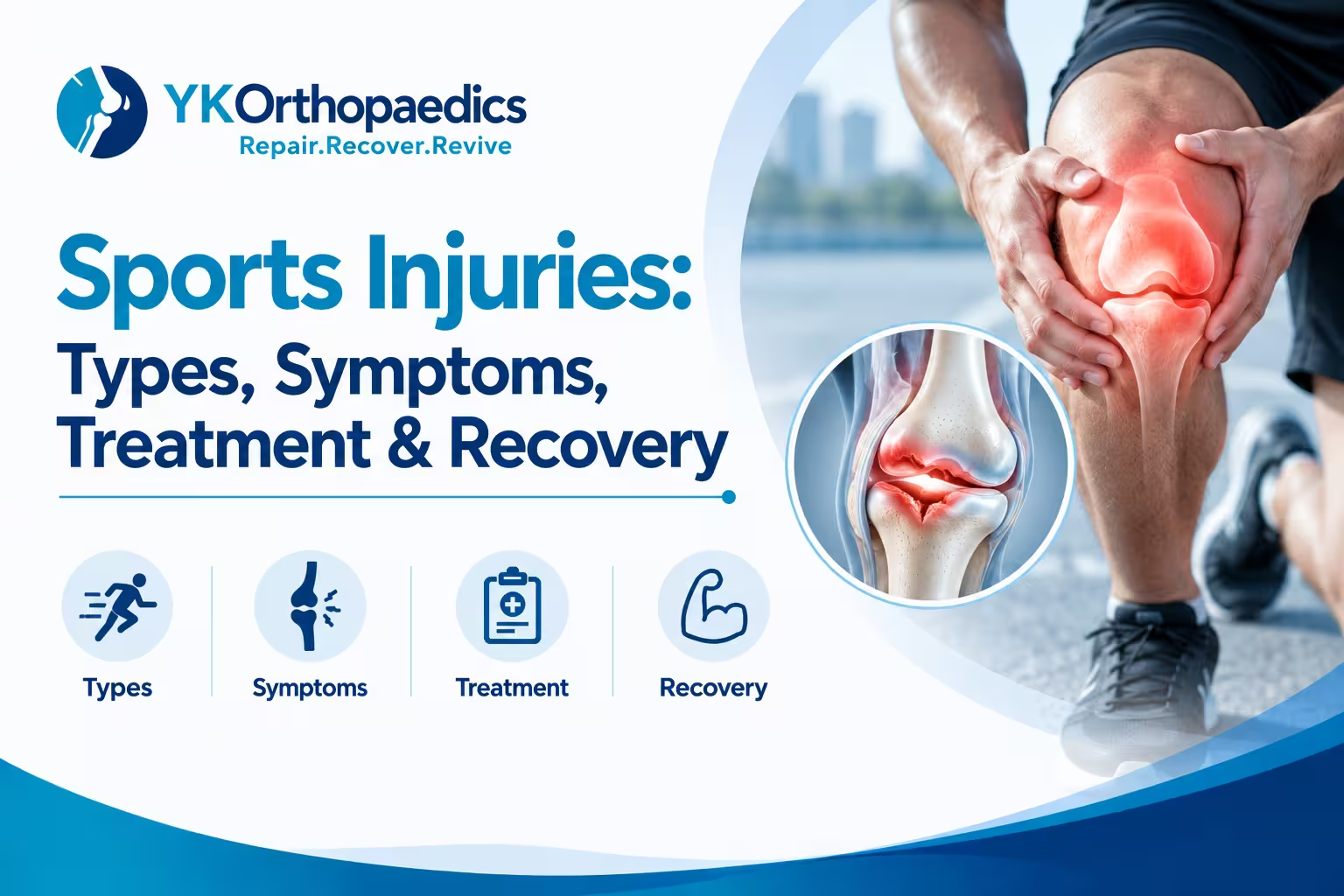
Sports injuries are injuries that occur during exercise, training, or participation in sports. They can affect the knees, shoulders, ankles, muscles, ligaments, tendons, and other parts of the body. Some injuries are minor and improve with rest and rehabilitation, while others may require specialist treatment or surgery.
Common Types of Sports Injuries
Some of the most common sports injuries include:
- ACL injuries – Often occur during sudden changes in direction, jumping, or twisting of the knee.
- Meniscus injuries – Damage to the cartilage that cushions the knee joint.
- Muscle strains – Stretching or tearing of a muscle.
- Ligament sprains – Stretching or tearing of a ligament.
- Tendon injuries – Such as tendinitis or tendon tears.
- Shoulder injuries – Common in sports involving throwing, lifting, or repetitive overhead movements.
- Ankle injuries – Often caused by twisting or landing awkwardly.
Symptoms of a Sports Injury
Symptoms depend on the type and severity of the injury but may include:
- Pain during or after activity
- Swelling or bruising
- Difficulty putting weight on a joint
- Reduced range of motion
- Joint instability
- Weakness
- Clicking or locking of the joint
A sudden injury accompanied by severe pain, significant swelling, deformity, or inability to use the affected limb should be evaluated promptly.
Causes of Sports Injuries
Sports injuries may occur because of:
- Sudden twisting or impact
- Incorrect landing
- Overuse or repetitive movements
- Poor training technique
- Inadequate warm-up
- Muscle weakness or imbalance
- Returning to sport before an earlier injury has healed
Treatment for Sports Injuries
Treatment depends on the injured structure and severity of the injury.
Conservative Treatment
Many sports injuries can initially be managed with appropriate rest, activity modification, physiotherapy, strengthening exercises, and pain management.
Surgical Treatment
Some injuries, particularly significant ligament or cartilage injuries, may require surgery when there is persistent instability, mechanical symptoms, or failure to improve with appropriate non-surgical treatment.
For example, arthroscopic ACL reconstruction may be considered for suitable patients with significant ACL injuries who want to return to sports or have ongoing knee instability.
Recovery and Rehabilitation
Rehabilitation is an important part of sports injury treatment. A structured program may focus on:
- Restoring joint movement
- Reducing pain and swelling
- Improving muscle strength
- Developing balance and stability
- Gradually returning to sports-specific activities
Returning to sports too quickly can increase the risk of reinjury, so progression should be based on recovery and functional readiness rather than time alone.
When Should You See an Orthopedic Doctor?
You should consider an orthopedic evaluation if pain persists after an injury, the joint feels unstable, swelling continues, movement is restricted, or you cannot return to your normal activities.
Early assessment can help identify injuries such as ACL tears, meniscus injuries, ligament damage, or cartilage problems and guide appropriate treatment.
Expert Opinion
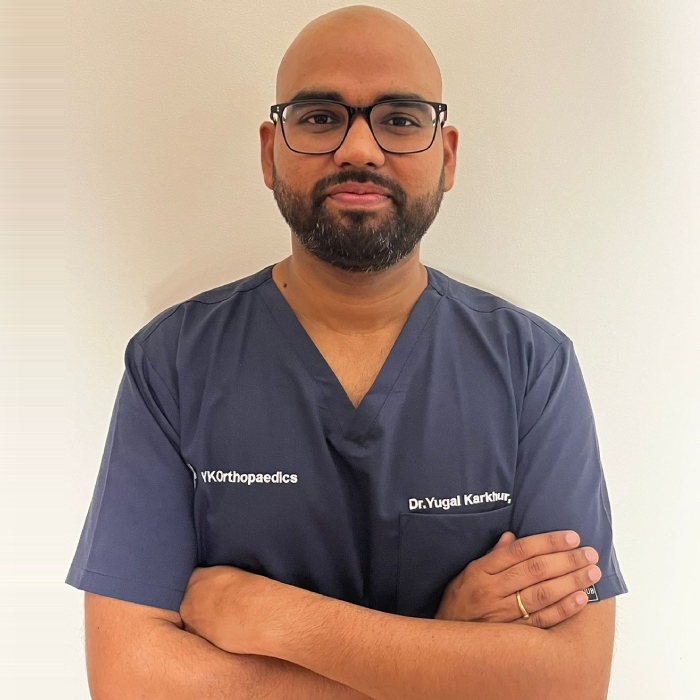
According to Dr. Yugal Karkhur, one of the best orthopedic doctors in Gurgaon and a fellowship-trained joint replacement surgeon, sports injuries should be evaluated according to the type of injury, activity level, and functional requirements of the patient. Appropriate rehabilitation and a gradual return to activity can play an important role in achieving a safe recovery.
Frequently Asked Questions
What is the most common sports injury?
Sprains, strains, muscle injuries, knee injuries, and ankle injuries are among the common sports-related injuries.
Can sports injuries heal without surgery?
Yes. Many sports injuries can improve with rest, physiotherapy, and appropriate rehabilitation. Surgery is considered only when clinically necessary.
How can sports injuries be prevented?
Proper warm-up, strength and conditioning, correct technique, appropriate equipment, and gradual increases in training intensity can help reduce injury risk.
How long does a sports injury take to heal?
Recovery varies significantly depending on the type and severity of the injury. Minor injuries may improve within weeks, while ligament or cartilage injuries can require a longer rehabilitation period.