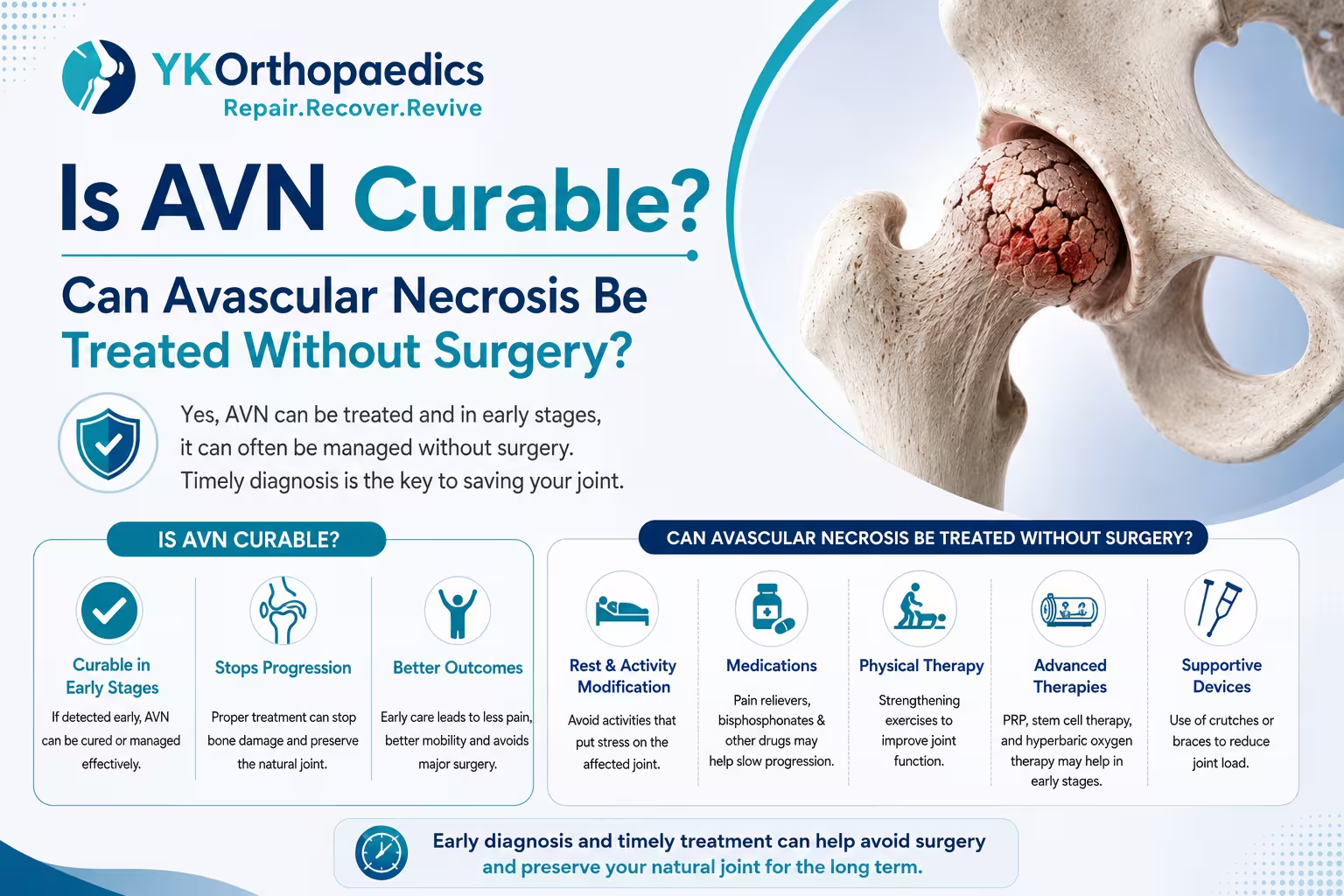
Yes, early AVN can sometimes be treated without surgery, particularly when the affected area is small and the bone has not collapsed. Treatment may include activity modification, protected weight-bearing, pain management and physiotherapy. However, these measures do not reliably cure AVN. Selected early-stage patients may benefit from joint-preserving surgery such as core decompression, while advanced AVN with bone collapse may require joint replacement.
Can AVN Be Cured Without Surgery?
The answer depends mainly on the stage and extent of AVN.
If AVN is detected very early and the affected area is small and not located in a major weight-bearing region, the bone may sometimes heal without surgery.
However, once a significant area of bone has been damaged, particularly in the femoral head of the hip, non-surgical treatment may not be enough to prevent progression.
This is why early diagnosis is so important.
AVN Treatment Without Surgery
1. Activity Modification
Reducing activities that put excessive stress on the affected joint can help manage pain and protect the damaged bone.
Depending on the location and severity of AVN, your doctor may recommend temporarily avoiding:
- Running
- Jumping
- Heavy lifting
- High-impact exercise
- Prolonged standing or walking
2. Protected Weight-Bearing
If AVN affects a weight-bearing bone, a cane, crutches or walker may be recommended to reduce pressure on the affected joint.
However, limited weight-bearing by itself has not been shown to reliably improve long-term outcomes in osteonecrosis.
3. Pain-Relieving Medicines
Doctors may prescribe anti-inflammatory or pain-relieving medicines to control symptoms.
These medicines can make movement more comfortable but do not restore the blood supply or reverse established bone damage.
4. Physiotherapy
Physiotherapy can help:
- Maintain joint movement
- Reduce stiffness
- Strengthen surrounding muscles
- Improve mobility
- Support overall joint function
The exercise plan should be adjusted according to the affected joint and AVN stage.
5. Treating the Underlying Cause
If AVN is associated with a modifiable risk factor, addressing it is an important part of treatment.
For example, your doctor may review long-term corticosteroid use or recommend stopping excessive alcohol or tobacco use where appropriate. Do not stop prescribed corticosteroids suddenly without medical advice.
Can Medicines Cure AVN?
At present, there is no universally proven medication that reliably reverses established AVN.
Some medicines and physical treatments have been studied, but evidence is limited and they are not routinely used as definitive treatment for osteonecrosis.
Therefore, patients should be cautious about claims that a particular tablet, supplement or injection can permanently cure AVN.
What Is the Role of Core Decompression?
Core decompression is a surgical, joint-preserving treatment, not a non-surgical treatment.
It is generally considered for selected patients with early AVN before significant bone collapse. The procedure creates channels through the affected bone with the aim of reducing pressure and stimulating repair.
The goal is to preserve the natural joint and potentially delay or avoid joint replacement in appropriately selected patients.
AVN Treatment According to Stage
| AVN Stage | Typical Treatment Approach |
|---|---|
| Very early / small lesion | Observation or non-surgical management in selected cases |
| Early AVN without collapse | Non-surgical measures or joint-preserving treatment may be considered |
| AVN with structural changes | Treatment depends on lesion size, location and symptoms |
| AVN with bone collapse | Joint-preserving options become less suitable; surgery may be needed |
| Advanced AVN with arthritis | Joint replacement may be the most reliable option |
The exact stage and treatment plan should be determined from clinical assessment and imaging rather than symptoms alone.
Why Is MRI Important in Early AVN?
An X-ray can sometimes appear normal during the early stages of AVN.
MRI is much more sensitive for detecting early osteonecrosis and can show the extent of bone damage before changes become visible on an X-ray.
This makes MRI particularly important when AVN is suspected or when a patient has significant risk factors and unexplained joint pain.
When Does AVN Require Surgery?
Surgery becomes more likely when:
- The damaged area is large.
- AVN affects a major weight-bearing area.
- Pain continues despite conservative treatment.
- The bone has started to collapse.
- Joint movement is significantly restricted.
- Secondary arthritis has developed.
Once substantial collapse has occurred, joint replacement may provide the most reliable way to relieve pain and restore function, particularly in advanced hip AVN.
Does Everyone With AVN Need a Hip Replacement?
No.
A diagnosis of AVN does not automatically mean that you need a hip replacement.
Patients diagnosed before significant femoral-head collapse may be considered for joint-preserving treatment such as core decompression, depending on the size and location of the lesion and other individual factors.
If the femoral head has already collapsed and the joint is severely damaged, however, total hip replacement may become the more appropriate option.
Can Early AVN Heal on Its Own?
Sometimes.
Small, early and asymptomatic lesions—particularly those outside major weight-bearing areas—may heal spontaneously.
But this cannot be assumed for every patient. Larger lesions and symptomatic AVN, especially in the femoral head, have a greater risk of progression.
Can AVN Be Reversed?
It depends on what is meant by "reversed."
Early disease may sometimes stabilize or heal, and joint-preserving treatment may help prevent further structural damage. However, once substantial bone collapse has occurred, the structural damage generally cannot simply be reversed with medicines or home treatment. Advanced disease may require reconstructive surgery or joint replacement.
What Should You Do After an AVN Diagnosis?
The most important questions to ask your orthopedic specialist are:
- What stage of AVN do I have?
- Has the bone collapsed?
- How much of the bone is affected?
- Is the affected area weight-bearing?
- Can joint-preserving treatment be considered?
- What happens if I delay treatment?
Getting these answers is more useful than simply asking whether AVN is "curable."
Expert Opinion
According to Dr. Yugal Karkhur, a Orthopedic Doctor, the treatment approach for AVN should be based on the stage and extent of bone damage rather than the diagnosis alone.
Early-stage AVN without significant collapse may provide an opportunity to consider joint-preserving treatment. Once substantial collapse has occurred, preserving the natural joint becomes more difficult and joint replacement may be required. Therefore, timely diagnosis and accurate staging are important when planning AVN treatment.
Related Services
- Knee Replacement
- Hip Replacement
- ACL Reconstruction
- Meniscus Repair
- Carpal Tunnel Surgery
- Partial Knee Replacement
- Knee Arthroscopic Surgery
- AVN Treatment
Related Articles
- AVN (Avascular Necrosis): Causes, Symptoms, Stages & Treatment
- Why Did I Get AVN? Causes and Risk Factors of Avascular Necrosis
- Is AVN Dangerous or Serious? What Happens If AVN Gets Worse?
- Can AVN Affect Young People? Causes, Symptoms & Treatment
- Can AVN Affect Both Hips? Causes and Treatment of Bilateral AVN
Conclusion
AVN is not always an irreversible condition, but there is no guaranteed non-surgical cure for established AVN. Very early and small lesions may sometimes heal or remain stable, while non-surgical treatments can help manage symptoms and protect the joint.
If AVN progresses to bone collapse, treatment becomes more complex. Selected patients with early disease may be candidates for core decompression, while advanced AVN with significant joint damage may require joint replacement.
If you are looking for a Best Orthopedic Doctor in Gurgaon, Dr. Yugal Karkhur can assess your AVN stage, review your imaging and discuss whether non-surgical or joint-preserving treatment may be appropriate.
FAQs
Is AVN completely curable?
Not always. Very early and small lesions may sometimes heal or remain stable, but established AVN cannot reliably be reversed with non-surgical treatment.
Can AVN be treated without surgery?
Yes, selected early cases may be managed with activity modification, protected weight-bearing, pain management and physiotherapy. However, these treatments generally manage symptoms rather than cure AVN.
Can AVN be cured with medicines?
There is currently no medication that reliably cures established AVN. Some medical treatments have been studied, but they are not routinely used as definitive therapy.
Is core decompression a non-surgical treatment?
No. Core decompression is a surgical joint-preserving procedure, generally considered for selected AVN cases before significant bone collapse.
Can early-stage AVN heal naturally?
Yes, some small early lesions may heal on their own, particularly when they are not in weight-bearing areas.
When does AVN require hip replacement?
Hip replacement may be considered when AVN has caused significant femoral-head collapse, joint damage and pain or loss of function that cannot be adequately managed with joint-preserving treatment.
Does AVN always get worse?
No. The progression varies between patients. Small lesions may remain stable or heal, while larger or weight-bearing lesions have a greater risk of progression.