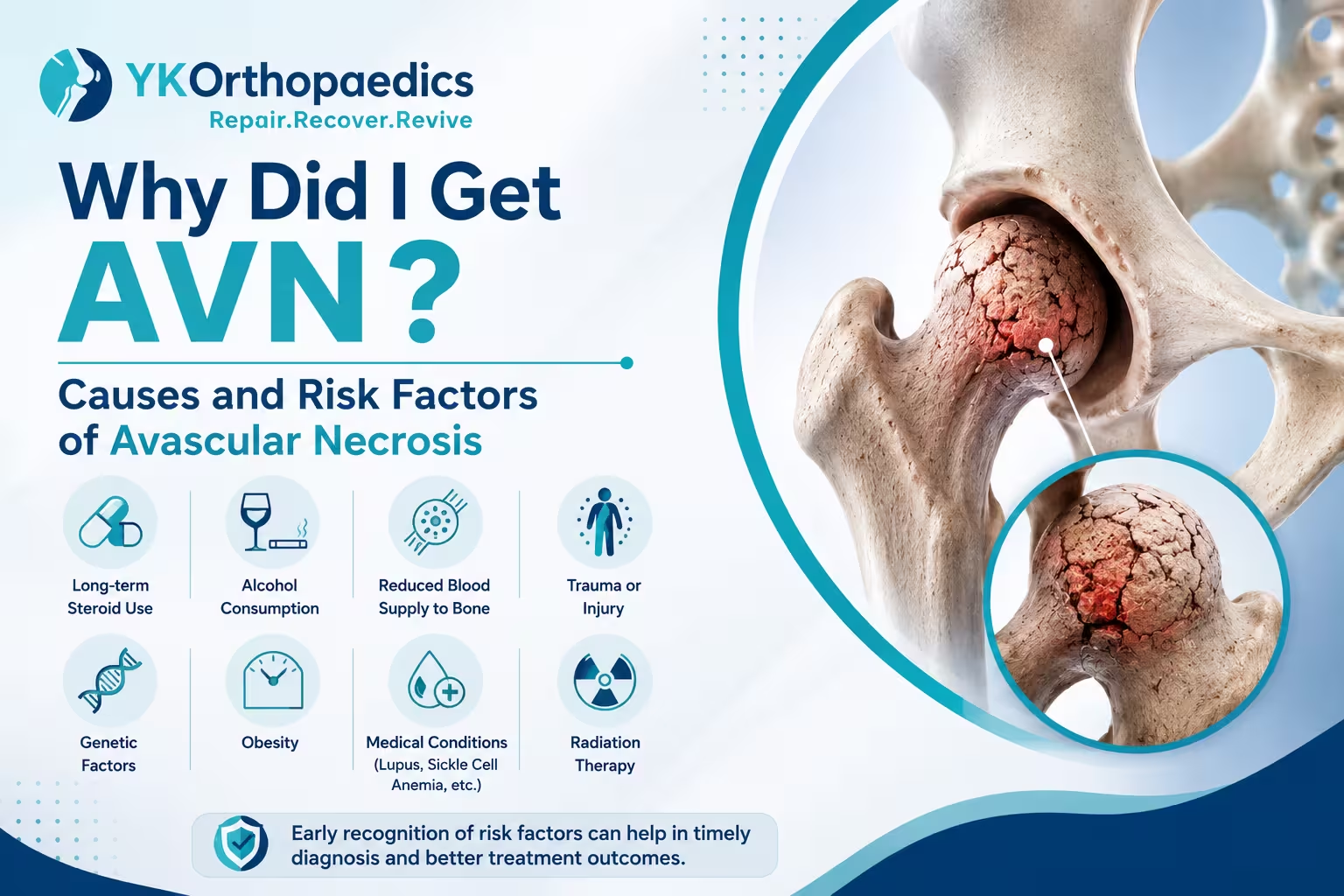
The most recognized AVN risk factors include long-term or high-dose corticosteroid use, excessive alcohol or tobacco use, previous fracture or joint dislocation, sickle cell disease, lupus, certain cancers, Gaucher disease, gout, HIV infection, pancreatitis and some other medical conditions. In some patients, no specific cause can be found.
What Actually Causes AVN?
The underlying problem in AVN is loss of blood supply to the bone.
Bones are living tissues that require continuous blood flow. When that blood supply is disrupted, bone cells can become damaged or die. If the affected area is large or located in a weight-bearing part of the joint, the weakened bone may eventually develop structural damage and collapse.
The exact mechanism can vary depending on the cause.
Traumatic AVN
A fracture, dislocation or serious joint injury can damage the blood vessels supplying the bone. This can reduce blood flow and lead to AVN.
This is particularly important when the blood supply to the femoral head is affected.
Non-Traumatic AVN
When there is no history of injury, AVN may be associated with medications, alcohol use, blood disorders, autoimmune diseases or other medical conditions.
In some cases, the exact reason for reduced blood flow is still not completely understood.
Major Risk Factors for AVN
1. Long-Term or High-Dose Steroid Use
Corticosteroids are one of the most important recognized risk factors for non-traumatic AVN.
They are commonly prescribed for conditions such as asthma, arthritis and lupus. The risk is associated particularly with long-term use and higher doses. Short-term use at lower doses carries a much lower risk.
Important: Do not stop prescribed steroids suddenly without medical advice. If you are concerned about AVN risk, discuss your medication and treatment duration with the doctor who prescribed it.
2. Excessive Alcohol Consumption
Long-term excessive alcohol use is another recognized risk factor for AVN. The exact mechanism is not completely understood, but alcohol may affect blood vessels and the processes involved in maintaining healthy bone tissue.
3. Previous Fracture or Joint Dislocation
A fracture or dislocation can directly damage the blood vessels supplying a bone.
This type of AVN is called traumatic osteonecrosis and may occur after significant injuries.
4. Sickle Cell Disease and Other Blood Disorders
Certain blood disorders can interfere with circulation and increase the risk of bone damage.
Sickle cell disease is a well-recognized medical risk factor for osteonecrosis.
5. Lupus and Other Autoimmune Diseases
Conditions such as systemic lupus erythematosus (SLE) have been associated with AVN.
The relationship can also be complicated because people with autoimmune diseases may require corticosteroid treatment, which itself is an AVN risk factor.
6. Certain Cancers
Some blood-related cancers, including leukemia, have been associated with osteonecrosis.
7. Gaucher Disease
Gaucher disease is a rare inherited disorder that can affect bones and is associated with an increased risk of osteonecrosis.
8. Gout
Gout has also been identified as a medical condition associated with an increased risk of osteonecrosis.
9. Pancreatitis
Pancreatitis is another condition that has been associated with AVN.
10. HIV Infection
HIV infection has been identified among medical conditions associated with an increased risk of osteonecrosis.
11. Tobacco Use
Excessive tobacco use is also considered a risk factor for osteonecrosis.
Can AVN Happen Without Any Known Cause?
Yes.
This is one of the most important things patients should understand after an AVN diagnosis.
Some people have no obvious history of injury, steroid use, excessive alcohol consumption or an associated medical condition. These cases are often described as idiopathic or non-traumatic AVN.
Researchers are still studying why some people develop osteonecrosis without an identifiable risk factor. Genetics may play a role in some cases.
So, not knowing why you developed AVN does not mean you did something wrong.
Can Steroids Cause AVN Even If I Took Them for a Medical Condition?
Yes. Corticosteroids are used to treat many important medical conditions, including asthma, arthritis and lupus.
The risk is particularly associated with higher doses and longer treatment periods, but the exact risk for an individual patient depends on several factors.
If you have taken steroids and are worried about AVN, discuss your history with your doctor rather than stopping medication on your own.
Can Alcohol Cause AVN?
Excessive long-term alcohol consumption is a recognized risk factor for AVN.
However, simply having AVN does not prove that alcohol was the cause. AVN can develop from several different risk factors, and some patients have no identifiable cause.
Can an Old Injury Cause AVN Years Later?
It can.
A previous fracture or joint dislocation may damage the blood vessels supplying the bone. Depending on the injury and the affected bone, osteonecrosis can develop after the original trauma.
If you have a history of a significant hip injury and later develop unexplained hip pain, an orthopedic evaluation is important.
Who Is More Likely to Develop AVN?
AVN can occur at any age, but NIAMS notes that it is most common in adults in their 30s and 40s.
Risk may be higher in people with:
- Long-term or high-dose corticosteroid exposure
- Excessive alcohol use
- Previous fracture or joint dislocation
- Certain blood disorders
- Lupus or other associated autoimmune conditions
- Certain cancers
- Gout
- Pancreatitis
- HIV infection
- Heavy tobacco use
Why Does AVN Often Affect the Hip?
The femoral head, which forms the ball of the hip joint, is the most common site of osteonecrosis. The knee and shoulder can also be affected.
Because the hip is a major weight-bearing joint, damage to the femoral head can eventually affect the structure of the bone and joint function.
What Symptoms Should You Watch For?
AVN may cause no symptoms in the early stage.
As the condition progresses, symptoms can include:
- Hip or joint pain
- Pain while walking or standing
- Pain that becomes more frequent
- Reduced joint movement
- Difficulty walking
- Limping
- Pain that eventually occurs even at rest
For hip AVN, pain is commonly felt around the groin, although it can also occur around the buttock or thigh.
How Is AVN Diagnosed?
If AVN is suspected, an orthopedic doctor may perform a physical examination and recommend imaging.
X-Ray
X-rays are commonly used initially, but early AVN may not be visible on an X-ray.
MRI
MRI is particularly important for early AVN because it can detect changes before they become visible on an X-ray and may identify osteonecrosis even before symptoms develop.
CT Scan
A CT scan can provide detailed information about structural bone damage and may be useful in selected cases, although MRI is generally more sensitive for early disease.
What Should I Do If I Have AVN?
The first step is to determine:
- Which bone is affected?
- What stage is the AVN?
- How large is the affected area?
- Has the bone collapsed?
- Is there an identifiable risk factor?
Treatment depends on these factors. Early diagnosis may provide more opportunities for joint-preserving treatment, while advanced disease with bone collapse may require joint replacement.
Can AVN Be Prevented?
Not every case can be prevented, especially when the cause is unknown.
However, some risk factors can be addressed:
- Avoid excessive alcohol consumption.
- Avoid tobacco use.
- Take corticosteroids only as prescribed.
- Discuss long-term steroid treatment with your treating doctor.
- Manage underlying medical conditions properly.
- Seek medical evaluation after significant fractures or joint dislocations.
- Do not ignore persistent unexplained joint pain.
Expert Opinion
According to Dr. Yugal Karkhur, a Orthopedic Doctor, understanding why AVN developed is important, but the next step is equally important—determining the stage and extent of bone damage.
If AVN is detected before significant bone collapse, joint-preserving treatment may be possible in appropriately selected patients. Once the affected bone has collapsed and the joint has developed significant damage, joint replacement may become necessary. Early evaluation can therefore make a meaningful difference in treatment planning.
Related Services
- Knee Replacement
- Hip Replacement
- ACL Reconstruction
- Meniscus Repair
- Carpal Tunnel Surgery
- Partial Knee Replacement
- Knee Arthroscopic Surgery
- AVN Treatment
Related Articles
- AVN (Avascular Necrosis): Causes, Symptoms, Stages & Treatment
- Is AVN Dangerous or Serious? What Happens If AVN Gets Worse?
- Is AVN Curable? Can Avascular Necrosis Be Treated Without Surgery?
- Can AVN Affect Young People? Causes, Symptoms & Treatment
- Can AVN Affect Both Hips? Causes and Treatment of Bilateral AVN
Conclusion
AVN occurs when blood supply to part of a bone is disrupted, but the reason for that disruption can vary from person to person. Steroids, excessive alcohol use, previous injuries, blood disorders, autoimmune diseases and several other medical conditions can increase the risk.
At the same time, some people develop AVN without any identifiable risk factor. So if you have been diagnosed with AVN, it does not necessarily mean that you caused the condition yourself.
What matters most now is identifying the affected joint, determining the stage of AVN, checking whether bone collapse has occurred and choosing treatment accordingly.
If you are looking for a Best Orthopedic Doctor in Gurgaon, Dr. Yugal Karkhur can evaluate your AVN and help determine an appropriate treatment approach.
FAQs
What is the most common cause of AVN?
Long-term or high-dose corticosteroid use and excessive alcohol consumption are important recognized risk factors. Previous fractures or joint dislocations can also cause traumatic AVN.
Can AVN happen without taking steroids?
Yes. AVN can occur because of trauma, alcohol use, blood disorders, autoimmune conditions and other medical conditions. Some cases have no identifiable cause.
Can one-time steroid use cause AVN?
The risk is much more strongly associated with prolonged use and higher doses. Short-term, lower-dose corticosteroid use carries a much lower risk, although individual circumstances vary.
Can alcohol cause hip AVN?
Yes. Excessive alcohol consumption is a recognized risk factor for osteonecrosis of the hip and other bones.
Can an old fracture cause AVN?
Yes. A fracture or dislocation can damage blood vessels supplying the bone and lead to traumatic osteonecrosis.
Why did I get AVN if I have none of these risk factors?
Some patients develop idiopathic or non-traumatic AVN without an identifiable risk factor. Researchers believe genetics and other mechanisms may contribute in some cases.
Can AVN be detected early?
Yes. MRI can detect early osteonecrosis even when an X-ray is normal and, in some cases, before symptoms appear.