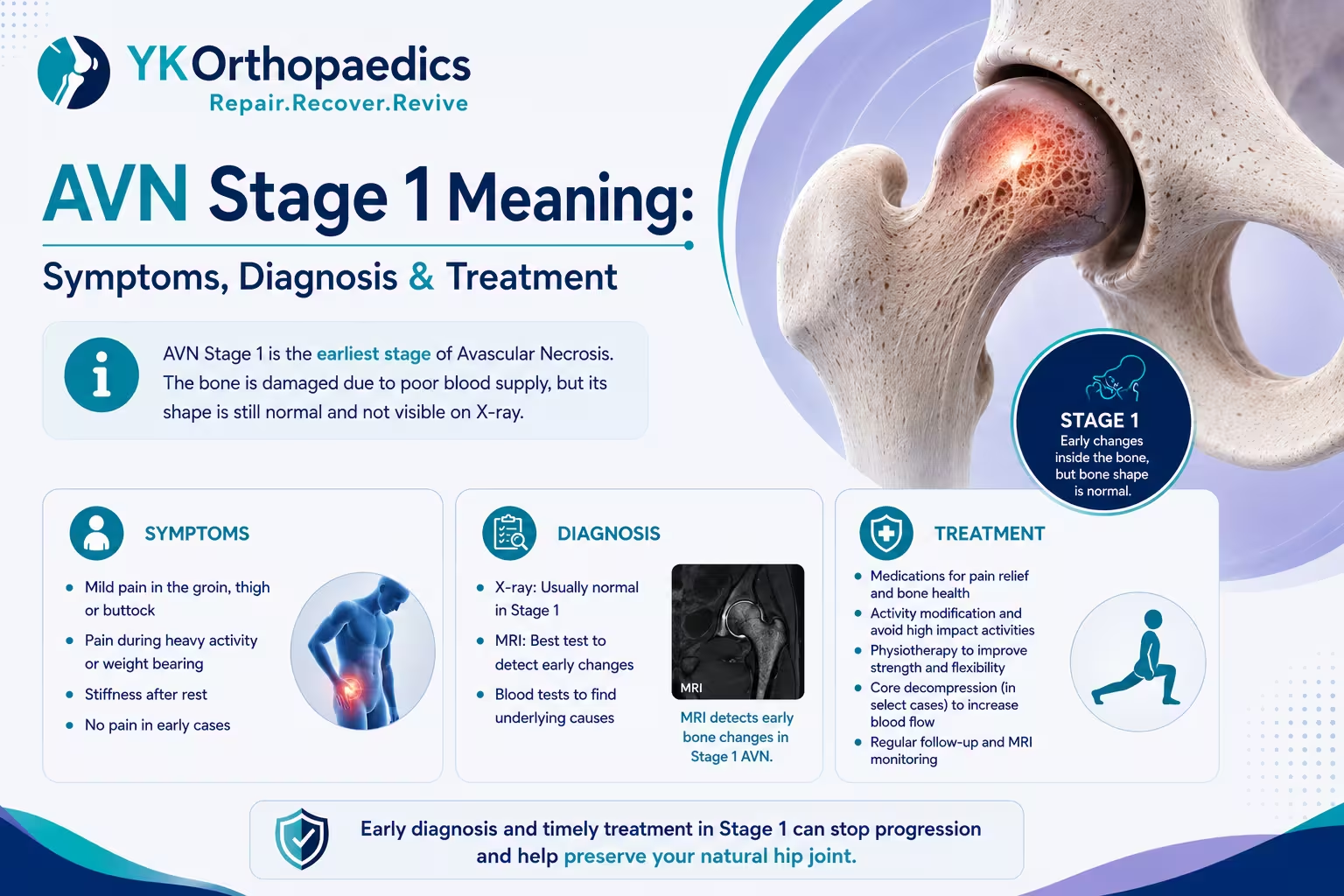
Stage 1 AVN is an early stage of bone damage without significant collapse. It may cause mild hip or groin pain, although some people have no symptoms. MRI can detect Stage 1 AVN even when an X-ray is normal. Treatment depends on the size and location of the affected area and may include activity modification, protected weight-bearing, symptom management and, in selected patients, core decompression.
What Happens in Stage 1 AVN?
AVN occurs when part of a bone does not receive enough blood supply. The affected bone tissue can become damaged because it does not receive adequate oxygen and nutrients.
In Stage 1:
- Blood supply has been disrupted.
- Early bone damage has occurred.
- The joint surface is generally still intact.
- Significant bone collapse has not occurred.
- X-rays may still appear normal.
- MRI can reveal the disease.
This makes Stage 1 an important point for early evaluation and treatment planning.
AVN Stage 1 Symptoms
Some people with Stage 1 AVN have no symptoms at all.
When symptoms occur, they may include:
- Mild hip pain
- Groin pain
- Pain while walking or standing
- Pain after physical activity
- Occasional thigh or buttock discomfort
- Mild stiffness
For hip AVN, pain is commonly experienced around the groin, although it can also be felt in the thigh or buttock.
Can Stage 1 AVN Have No Pain?
Yes.
Early AVN can be asymptomatic. This is one reason AVN may sometimes be discovered during imaging performed because of risk factors or problems involving another joint.
Therefore, the amount of pain does not tell you the exact stage of AVN.
Is Stage 1 AVN Serious?
Stage 1 is considered an early stage, but it should not be ignored.
The main concern is progression. If the affected bone weakens further, it may eventually develop structural damage and collapse. Once significant collapse occurs, preserving the natural joint becomes more difficult.
The risk of progression depends on factors such as:
- Size of the AVN lesion
- Location of the lesion
- Whether it involves a weight-bearing area
- Underlying cause
- Age
- Overall joint condition
Small lesions may sometimes remain stable or heal, while larger weight-bearing lesions have a greater risk of progression.
How Is Stage 1 AVN Diagnosed?
X-Ray
An X-ray is often performed during the initial evaluation.
However, Stage 1 AVN may not be visible on an X-ray. A normal X-ray therefore does not always rule out early AVN.
MRI
MRI is the most useful imaging test for detecting early AVN.
It can identify changes in the bone before they become visible on an X-ray and can help determine how much of the bone is affected.
CT Scan
CT may sometimes be used to evaluate bone structure and determine whether structural changes or collapse are present. However, MRI is generally more useful for detecting early disease.
What Does an MRI Show in Stage 1 AVN?
An MRI can identify characteristic changes within the affected bone even when the external shape of the femoral head remains intact.
Your radiology report may use terms such as:
- Osteonecrosis
- Avascular necrosis
- Bone marrow changes
- AVN lesion
- No collapse
- No subchondral fracture
The exact terminology depends on the radiologist and the staging system being used.
Stage 1 AVN Treatment
There is no single treatment that is appropriate for every Stage 1 AVN patient.
The treatment plan depends on the lesion's size, location, symptoms, underlying cause and risk of progression.
1. Activity Modification
Your doctor may recommend reducing activities that place excessive stress on the affected joint.
This may include temporarily avoiding:
- Running
- Jumping
- High-impact exercise
- Heavy lifting
- Prolonged standing
2. Protected Weight-Bearing
In selected cases, a doctor may recommend reducing weight-bearing through the affected hip using crutches, a cane or another walking aid.
The purpose is to reduce stress on the affected bone and help control symptoms.
3. Pain Management
Pain-relieving medicines may be recommended when necessary.
These can help control symptoms but do not restore the blood supply or reverse established bone damage.
4. Physiotherapy
A carefully designed physiotherapy program may help maintain:
- Hip mobility
- Muscle strength
- Flexibility
- Functional movement
High-impact exercises should generally be avoided unless your orthopedic specialist considers them appropriate.
Core Decompression for Stage 1 AVN
Core decompression is a surgical joint-preserving procedure, not a non-surgical treatment.
It may be considered for selected patients with early-stage AVN before significant bone collapse.
The procedure creates channels within the affected bone with the aim of reducing pressure and encouraging healing.
Whether core decompression is appropriate depends on factors such as:
- Lesion size
- Lesion location
- Symptoms
- Patient age
- Overall health
- Presence or absence of collapse
Not every patient with Stage 1 AVN requires surgery.
Can Stage 1 AVN Be Treated Without Surgery?
Yes, selected patients can initially be managed without surgery.
Depending on the individual case, this may involve:
- Activity modification
- Protected weight-bearing
- Pain management
- Physiotherapy
- Treating the underlying cause
- Regular follow-up and imaging
However, non-surgical treatment does not guarantee that AVN will stop progressing. The patient may need follow-up imaging to monitor the condition.
Can Stage 1 AVN Heal Completely?
Sometimes small early lesions may heal or remain stable, particularly when they do not involve an important weight-bearing portion of the bone.
However, this cannot be predicted simply from the stage.
The size and location of the lesion are important when estimating the risk of progression.
Does Stage 1 AVN Need Hip Replacement?
Usually, the goal at Stage 1 is to preserve the natural hip rather than replace it.
Hip replacement is generally considered when AVN has progressed to significant femoral-head collapse and joint damage, particularly when pain and functional limitations are substantial.
Therefore, being diagnosed with Stage 1 AVN does not mean you need a hip replacement.
What Causes Stage 1 AVN?
The causes and risk factors are the same as those associated with AVN generally.
Important risk factors include:
- Long-term or high-dose corticosteroid use
- Excessive alcohol consumption
- Previous fracture or hip dislocation
- Sickle cell disease and certain blood disorders
- Lupus and other autoimmune conditions
- Certain cancers
- Gout
- Pancreatitis
- HIV infection
- Tobacco use
Some patients develop AVN without any identifiable cause.
What Should You Avoid With Stage 1 AVN?
If you have been diagnosed with Stage 1 AVN, discuss your activity level with your orthopedic specialist.
Depending on your condition, you may need to limit:
- Running
- Jumping
- High-impact sports
- Heavy weight-bearing activity
- Activities that significantly increase hip pain
Avoiding excessive alcohol and tobacco use may also help address recognized risk factors.
Do not stop prescribed steroid medication on your own. Discuss any concerns about long-term corticosteroid treatment with your treating doctor.
Can Stage 1 AVN Progress to Stage 2 or 3?
Yes, AVN can progress, although the rate varies between patients.
Larger lesions involving weight-bearing areas generally have a greater risk of progression than small lesions.
This is why follow-up is important even when symptoms are mild.
When Should You See an Orthopedic Doctor?
You should seek an orthopedic evaluation if you have:
- Persistent hip or groin pain
- Pain while walking or standing
- Unexplained hip stiffness
- Difficulty walking
- A history of long-term steroid use
- Previous hip fracture or dislocation
- A known diagnosis of AVN
- AVN in one hip and symptoms in the other
Early assessment is important because MRI can detect AVN before significant structural collapse occurs.
Expert Opinion
According to Dr. Yugal Karkhur, a Best Orthopedic Doctor in Gurgaon, Stage 1 AVN should be evaluated carefully rather than judged only by the level of pain. The key factors are the size and location of the AVN lesion and whether the femoral head remains structurally intact.
When AVN is identified before significant collapse, selected patients may have an opportunity for joint-preserving treatment. The appropriate approach should be decided after reviewing the patient's MRI, symptoms, risk factors and overall joint condition.
Related Services
- Knee Replacement
- Hip Replacement
- ACL Reconstruction
- Meniscus Repair
- Carpal Tunnel Surgery
- Partial Knee Replacement
- Knee Arthroscopic Surgery
- AVN Treatment
Related Articles
- What Stage of AVN Do I Have?
- AVN Stage 2 Meaning
- AVN Stage 3 Meaning
- AVN Stage 4 Meaning
- How Quickly Does AVN Progress?
Conclusion
Stage 1 AVN is an early stage of avascular necrosis in which bone damage has started but significant collapse has not yet occurred. It may cause mild pain or no symptoms, and an X-ray can sometimes appear normal. MRI is particularly useful for confirming early disease and assessing the affected area.
Treatment depends on the size and location of the lesion and the patient's individual risk of progression. Some patients can initially be managed without surgery, while selected patients may benefit from a joint-preserving procedure such as core decompression.
If you are looking for a Best Orthopedic Doctor in Gurgaon, Dr. Yugal Karkhur can evaluate your MRI, determine the extent of AVN and discuss whether conservative or joint-preserving treatment is appropriate.
FAQs
What does Stage 1 AVN mean?
Stage 1 AVN means early osteonecrosis where the bone has been affected but there is no significant collapse of the joint surface.
Is Stage 1 AVN curable?
Some small early lesions may heal or remain stable, but there is no guaranteed cure for every patient. Prognosis depends on lesion size, location and other factors.
Can Stage 1 AVN be treated without surgery?
Yes. Selected patients may initially be managed with activity modification, protected weight-bearing, pain management and physiotherapy.
Is surgery necessary for Stage 1 AVN?
No. Not every Stage 1 AVN patient requires surgery. Core decompression may be considered in selected cases, particularly when the lesion has a significant risk of progression.
Can Stage 1 AVN cause pain?
Yes, but some people have no symptoms. Pain severity does not reliably indicate the stage of AVN.
Can an X-ray detect Stage 1 AVN?
An X-ray may be normal in early AVN. MRI is more sensitive for detecting early osteonecrosis.
Can Stage 1 AVN progress?
Yes. Some lesions can progress, particularly larger lesions involving weight-bearing areas. Regular follow-up may be recommended.
Does Stage 1 AVN require hip replacement?
Usually not. Hip replacement is generally considered when AVN has progressed to significant bone collapse and joint damage.