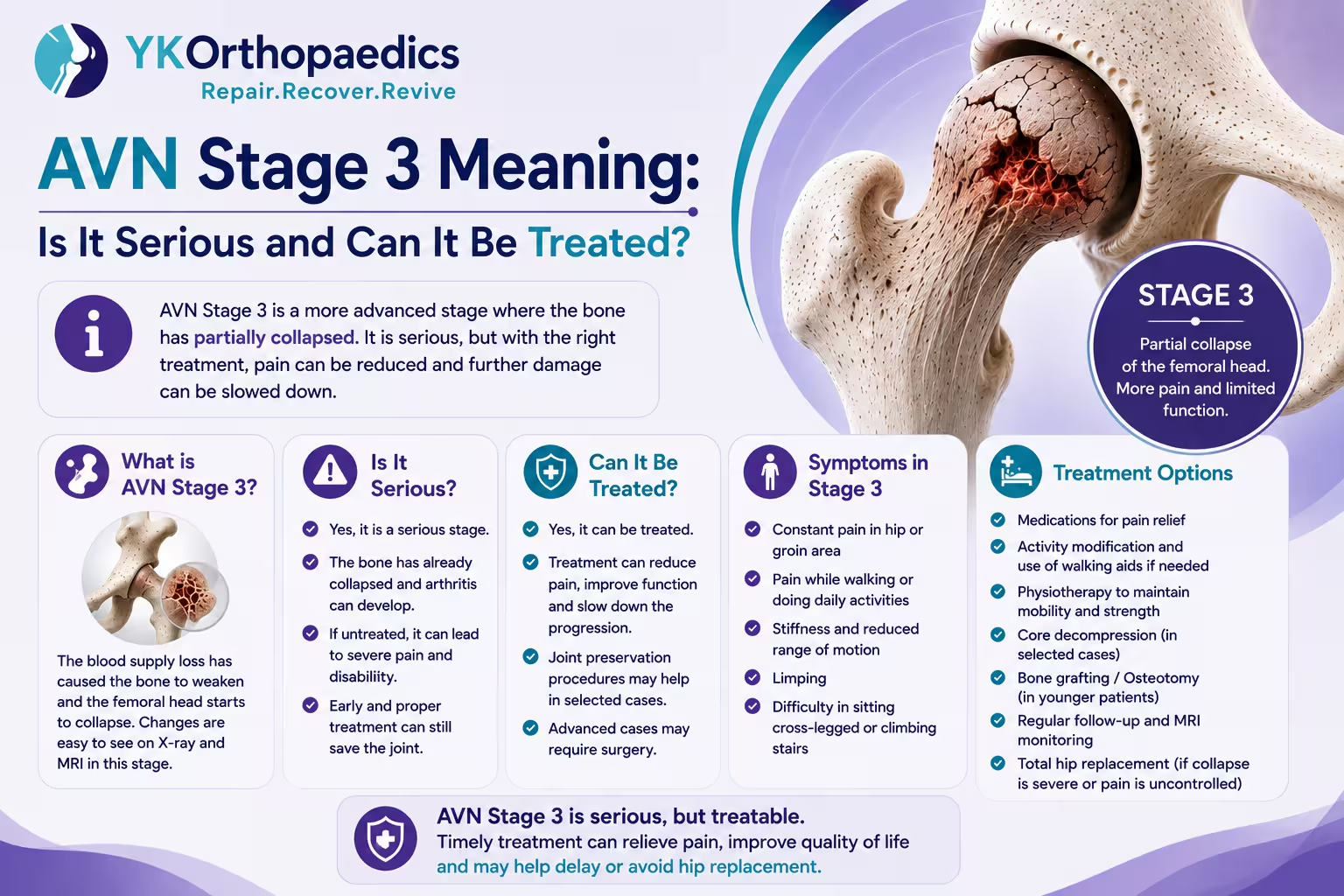
Stage 3 AVN is a serious stage because the bone has started to collapse. Some patients with limited or early collapse may still have treatment options aimed at preserving the joint, but once there is substantial collapse or secondary arthritis, total hip replacement may become the most appropriate treatment.
What Happens in Stage 3 AVN?
In earlier stages, the bone is damaged but the joint surface can remain intact.
In Stage 3:
- The weakened bone develops a subchondral fracture or collapse.
- The shape of the femoral head may begin to change.
- Pain often becomes more persistent.
- Hip movement may become restricted.
- Walking and weight-bearing can become increasingly difficult.
- The risk of developing secondary arthritis increases.
The exact definition of Stage 3 can vary depending on the staging system used, such as Ficat or ARCO.
What Are the Symptoms of Stage 3 AVN?
Common symptoms include:
- Hip or groin pain
- Pain while walking or standing
- Pain after physical activity
- Pain that may eventually occur at rest
- Hip stiffness
- Reduced range of motion
- Difficulty walking
- Limping
- Difficulty climbing stairs
- Trouble performing everyday activities
For hip AVN, pain is commonly felt in the groin, although it may also occur in the thigh or buttock.
Is Stage 3 AVN Serious?
Yes, Stage 3 AVN should be taken seriously.
The key difference from earlier stages is that structural failure has started.
Once the femoral head begins to collapse, the normal shape of the hip joint can be affected. Continued collapse can eventually lead to cartilage damage and secondary osteoarthritis.
However, the word "Stage 3" alone does not tell you exactly how severe the condition is. The extent of collapse and the location and size of the lesion are also important.
What Is the Crescent Sign in Stage 3 AVN?
The crescent sign is an imaging finding associated with a subchondral fracture in osteonecrosis.
It represents structural failure beneath the joint surface and indicates that the affected bone is beginning to collapse.
If your MRI or X-ray report mentions a crescent sign, discuss its significance with your orthopedic specialist.
Can Stage 3 AVN Be Treated?
Yes.
Treatment is possible, but the approach depends heavily on whether the collapse is limited or substantial.
Doctors may consider:
- Activity modification
- Protected weight-bearing
- Pain management
- Physiotherapy
- Selected joint-preserving procedures
- Hip replacement for advanced collapse and joint damage
The goal is to relieve pain, maintain mobility and, where possible, preserve the natural hip.
Can Stage 3 AVN Be Treated Without Hip Replacement?
In selected cases, yes—but it depends on the extent of collapse.
Once significant collapse has occurred, joint-preserving procedures become less predictable than they are in earlier-stage AVN.
If the femoral head has only limited structural damage and the joint surface remains relatively preserved, an orthopedic specialist may discuss whether a joint-preserving approach is appropriate.
However, when there is substantial collapse, cartilage damage or secondary arthritis, hip replacement may provide a more reliable outcome.
Is Core Decompression Useful in Stage 3 AVN?
Core decompression is generally most useful for selected early-stage AVN before significant collapse.
Once the femoral head has substantially collapsed, core decompression becomes less suitable and less predictable.
Therefore, if you have been diagnosed with Stage 3 AVN, the key question is:
How much has the femoral head collapsed?
Your MRI and X-ray findings are important for answering this.
When Is Hip Replacement Recommended?
Total hip replacement may be considered when:
- The femoral head has significant collapse.
- The hip joint has developed substantial damage.
- Secondary arthritis is present.
- Pain is severe or persistent.
- Walking and daily activities are significantly affected.
- Joint-preserving treatment is unlikely to provide adequate benefit.
For advanced hip AVN, hip replacement can provide significant pain relief and improve mobility and quality of life.
Does Every Stage 3 Patient Need Hip Replacement?
No.
Stage 3 covers a range of disease severity.
For example:
Limited collapse + relatively preserved joint
→ Joint-preserving treatment may still be discussed in selected patients.
Significant collapse + arthritis + severe symptoms
→ Total hip replacement may be more appropriate.
This is why treatment should not be decided from the stage number alone.
How Is Stage 3 AVN Diagnosed?
X-Ray
X-rays can demonstrate structural changes and collapse in more advanced AVN. They may show changes such as the crescent sign or flattening of the femoral head.
MRI
MRI helps determine:
- Size of the AVN lesion
- Location of the affected bone
- Extent of bone damage
- Whether collapse has occurred
- Whether the opposite hip is also affected
MRI is also particularly valuable when the diagnosis or extent of disease is uncertain.
CT Scan
CT may sometimes be used when detailed assessment of the bone surface or extent of collapse is required.
Can Stage 3 AVN Get Worse?
Yes.
If the damaged area continues to collapse, the shape of the femoral head can become increasingly abnormal. This can increase stress on the joint cartilage and eventually contribute to secondary osteoarthritis.
Possible progression includes:
Bone damage → Subchondral fracture → Femoral-head collapse → Joint damage → Secondary arthritis
The rate of progression is different for every patient.
What Should You Avoid With Stage 3 AVN?
Your orthopedic specialist may recommend reducing activities that place significant stress on the hip.
Depending on the condition, this may include:
- Running
- Jumping
- High-impact sports
- Heavy weight-bearing exercise
- Activities that significantly increase pain
Do not completely stop moving the hip unless specifically advised. Appropriate low-impact movement and physiotherapy may help maintain mobility.
Can Medicines Cure Stage 3 AVN?
Medicines cannot reliably reverse established bone collapse.
Pain-relieving medicines may help control symptoms, but they do not restore the blood supply or rebuild a collapsed femoral head.
Treatment decisions should therefore focus on the structural condition of the joint as well as pain control.
Can Stage 3 AVN Be Cured Completely?
Once substantial bone collapse has occurred, the structural damage generally cannot simply be reversed with medicines or home treatment.
However, treatment can still significantly improve pain and function.
Depending on the individual condition, joint-preserving treatment may be considered in selected cases, while hip replacement may be recommended when there is advanced collapse and joint damage.
What If I Am Young and Have Stage 3 AVN?
Being young does not mean that you automatically need a hip replacement, but it makes joint-preserving treatment considerations particularly important when clinically appropriate.
The orthopedic specialist will assess:
- Extent of collapse
- Lesion size
- Lesion location
- Cartilage condition
- Symptoms
- Activity requirements
- Overall health
If the joint can no longer be preserved reliably, hip replacement may still be considered despite younger age.
Can Stage 3 AVN Affect Both Hips?
Yes.
Bilateral AVN is possible, particularly in patients with systemic risk factors such as steroid exposure, excessive alcohol consumption or certain medical conditions.
Importantly, both hips may be at different stages.
For example:
- Right hip: Stage 2 AVN
- Left hip: Stage 3 AVN
Therefore, each hip should be evaluated individually.
When Should You See an Orthopedic Doctor?
If you have Stage 3 AVN, an orthopedic evaluation should not be delayed, particularly if you have:
- Increasing hip pain
- Pain at rest
- Difficulty walking
- Limping
- Increasing stiffness
- Reduced hip movement
- Difficulty climbing stairs
- Difficulty performing daily activities
The sooner the extent of collapse is accurately assessed, the sooner an appropriate treatment strategy can be planned.
Expert Opinion
According to Dr. Yugal Karkhur, a Orthopedic Doctor, Stage 3 AVN requires careful assessment because it represents a transition from bone damage to structural collapse.
The most important consideration is not simply the Stage 3 label, but how much of the femoral head has collapsed and whether the joint cartilage is still preserved.
In selected patients with limited collapse, joint-preserving treatment may still be considered. When significant collapse and arthritis are present, total hip replacement may offer a more reliable way to relieve pain and restore function.
Related Services
- Knee Replacement
- Hip Replacement
- ACL Reconstruction
- Meniscus Repair
- Carpal Tunnel Surgery
- Partial Knee Replacement
- Knee Arthroscopic Surgery
- AVN Treatment
Related Articles
- What Stage of AVN Do I Have?
- AVN Stage 1 Meaning
- AVN Stage 2 Meaning
- AVN Stage 4 Meaning
- How Quickly Does AVN Progress?
Conclusion
Stage 3 AVN means that the affected bone has developed subchondral fracture or collapse. It is more advanced than Stage 1 and Stage 2 and carries a greater risk of progressive joint damage.
However, Stage 3 does not automatically mean hip replacement. The appropriate treatment depends on the extent of collapse, lesion size and location, cartilage condition, symptoms and overall health.
If the collapse is limited, selected joint-preserving treatments may still be considered. When significant collapse and secondary arthritis have developed, total hip replacement may become the most appropriate option.
If you are looking for a Best Orthopedic Doctor in Gurgaon, Dr. Yugal Karkhur can evaluate your MRI and X-rays, assess the extent of femoral-head collapse and discuss the most suitable treatment approach.
FAQs
What does Stage 3 AVN mean?
Stage 3 AVN means that the affected bone has developed subchondral fracture or collapse. In hip AVN, the femoral head may begin to lose its normal shape.
Is Stage 3 AVN serious?
Yes. It is a significant stage because structural collapse has started. Further collapse can lead to cartilage damage and secondary arthritis.
Can Stage 3 AVN be treated without hip replacement?
In selected cases with limited collapse, joint-preserving treatment may still be considered. Advanced collapse and joint damage may make hip replacement more appropriate.
Is core decompression effective in Stage 3 AVN?
Core decompression is generally more effective in selected early-stage AVN before significant collapse. Its usefulness becomes more limited once substantial collapse has occurred.
Does Stage 3 AVN always require hip replacement?
No. The need for replacement depends on the amount of collapse, joint condition, symptoms and other individual factors.
What is the crescent sign in AVN?
The crescent sign represents a subchondral fracture beneath the joint surface and is an important indication of structural failure in osteonecrosis.
Can Stage 3 AVN become Stage 4?
Yes. Progressive collapse can damage the joint surface and lead to secondary osteoarthritis, which represents more advanced disease.
Can Stage 3 AVN be cured completely?
Established bone collapse cannot generally be reversed with medicines or home treatment. However, appropriate treatment can relieve pain, improve function and, in selected cases, preserve the joint.