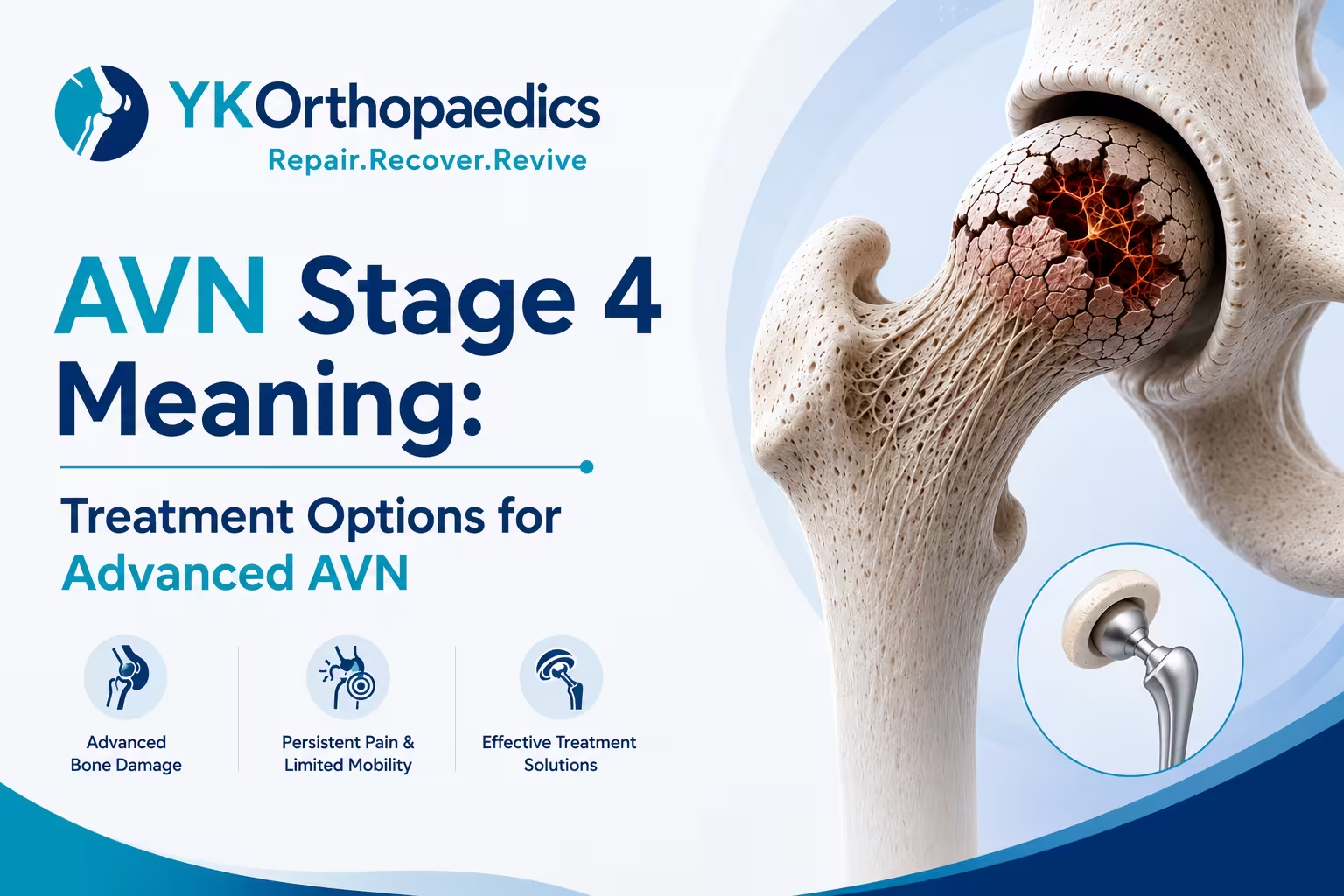
Stage 4 AVN is advanced AVN with bone collapse and joint damage. Medicines and home remedies cannot reverse the structural damage. Treatment may include pain management and physiotherapy for symptom control, but when pain and disability are significant, total hip replacement is commonly considered.
What Happens in Stage 4 AVN?
Stage 4 represents the most advanced phase of the commonly used Ficat-style staging system.
By this stage:
- The femoral head has undergone significant structural damage.
- Bone collapse or flattening is present.
- The normal shape of the hip joint can be affected.
- Cartilage may become damaged.
- Secondary osteoarthritis may develop.
- Hip movement can become increasingly restricted.
- Pain can significantly affect daily activities.
The exact terminology and staging criteria can vary depending on the classification system used, such as Ficat or ARCO.
What Are the Symptoms of Stage 4 AVN?
Advanced AVN can cause:
- Severe or persistent hip pain
- Groin pain
- Pain while walking or standing
- Pain during everyday activities
- Pain that may occur even at rest
- Hip stiffness
- Reduced range of motion
- Limping
- Difficulty climbing stairs
- Difficulty sitting or standing for long periods
- Difficulty performing routine activities
As the joint becomes more damaged, even simple movements may become uncomfortable.
Is Stage 4 AVN Serious?
Yes. Stage 4 AVN is considered advanced disease.
The major difference from earlier stages is that the problem is no longer limited to damaged bone. The structure and function of the joint itself have been affected.
Once significant femoral-head collapse and secondary arthritis have developed, simply trying to preserve the damaged bone becomes much more difficult.
Can Stage 4 AVN Be Cured Without Surgery?
Usually, no.
At Stage 4, the bone has already undergone significant structural collapse and the joint has developed degenerative changes.
Non-surgical treatments can help manage symptoms, but they cannot reliably:
- Restore the original shape of the femoral head
- Reverse established collapse
- Repair advanced cartilage damage
- Cure secondary arthritis
Therefore, if Stage 4 AVN is causing substantial pain and disability, surgery may be the most appropriate treatment.
Treatment Options for Stage 4 AVN
Treatment depends on the patient's symptoms, overall health, severity of joint damage and functional limitations.
1. Pain Management
Doctors may prescribe appropriate pain-relieving or anti-inflammatory medicines.
These can help control symptoms but do not reverse the structural damage caused by advanced AVN.
2. Physiotherapy
Physiotherapy may help maintain:
- Joint mobility
- Muscle strength
- Flexibility
- Functional movement
However, physiotherapy cannot restore a collapsed femoral head.
3. Walking Support
A cane, walker or other walking aid may reduce stress on the hip and improve stability.
This can be particularly useful when pain makes walking difficult.
4. Total Hip Replacement
For advanced hip AVN with significant collapse, arthritis, pain and functional limitation, Total Hip Replacement (THR) is commonly considered.
During the procedure, the damaged portions of the hip joint are replaced with artificial components.
The goals are to:
- Relieve pain
- Improve hip movement
- Restore walking ability
- Improve daily functioning
- Improve overall quality of life
Is Hip Replacement the Best Treatment for Stage 4 AVN?
For patients with advanced femoral-head collapse and significant joint damage, total hip replacement is often the most reliable treatment.
However, "best" depends on the individual patient.
The orthopedic surgeon will consider:
- Severity of pain
- Amount of femoral-head collapse
- Degree of arthritis
- Age
- Activity level
- General health
- Other medical conditions
- Impact on daily life
Can Core Decompression Treat Stage 4 AVN?
Core decompression is generally not the preferred treatment for advanced Stage 4 AVN.
Core decompression is primarily considered for selected patients with early AVN before significant bone collapse.
Once the femoral head has substantially collapsed and the joint has developed arthritis, replacing the damaged joint may provide a more predictable outcome.
Can Stage 4 AVN Be Treated With Medicines?
Medicines can help control pain and inflammation, but they cannot reverse advanced bone collapse or restore the normal structure of the hip.
Therefore, medication is generally considered supportive treatment rather than a definitive cure for Stage 4 AVN.
Can Stage 4 AVN Be Reversed?
Established femoral-head collapse generally cannot be reversed with medicines, exercise or home remedies.
The treatment goal at this stage is to address the damaged joint and restore function.
For patients with severe symptoms and advanced joint damage, total hip replacement may provide the most reliable long-term improvement.
What If I Delay Treatment for Stage 4 AVN?
Delaying appropriate treatment may allow symptoms and joint damage to continue affecting daily life.
Possible problems include:
- Increasing pain
- Progressive stiffness
- Reduced walking ability
- Increasing limp
- Loss of hip movement
- Difficulty performing routine activities
- Greater dependence on pain medication
- Further joint degeneration
If your doctor has diagnosed Stage 4 AVN, it is important to discuss the available treatment options rather than relying only on painkillers.
Can a Young Patient With Stage 4 AVN Get Hip Replacement?
Yes.
Young age does not automatically rule out hip replacement.
However, because younger patients may place greater demands on an artificial joint and may potentially require more lifetime orthopedic care, the decision should be individualized.
If the natural joint is already severely damaged by advanced AVN, hip replacement may still provide substantial benefits in terms of pain relief and mobility.
What Is Recovery Like After Hip Replacement?
Recovery varies from patient to patient.
After surgery, rehabilitation generally focuses on:
- Safe walking
- Gradually increasing activity
- Strengthening the muscles around the hip
- Improving movement
- Returning to daily activities
Your orthopedic team will provide specific instructions regarding weight-bearing, exercises and activity progression.
Can Stage 4 AVN Affect Both Hips?
Yes.
Bilateral AVN can occur, and both hips can eventually reach advanced stages.
However, both hips do not necessarily have to be at Stage 4 at the same time.
For example:
- Right hip — Stage 4 AVN
- Left hip — Stage 2 AVN
In such a situation, the treatment approach can be completely different for each hip.
How Is Stage 4 AVN Confirmed?
X-Ray
X-rays can show advanced structural changes such as:
- Femoral-head flattening
- Collapse
- Joint-space changes
- Secondary arthritis
MRI
MRI can show the extent of AVN and the affected areas of bone.
It is particularly valuable in earlier disease, although it can also provide useful information about advanced AVN.
CT Scan
CT can provide detailed information about the bone structure and extent of collapse when additional assessment is required.
When Should You Consider Hip Replacement?
Hip replacement may be discussed when:
- AVN has caused significant femoral-head collapse.
- Secondary arthritis is present.
- Pain is persistent or severe.
- Walking is significantly affected.
- Hip movement has become restricted.
- Conservative treatment is no longer providing adequate relief.
- Joint-preserving procedures are unlikely to be beneficial.
The decision should be based on the overall condition of the joint, not simply the Stage 4 label.
What Should You Do If You Have Stage 4 AVN?
If you have been diagnosed with Stage 4 AVN, discuss these questions with your orthopedic specialist:
- How much has the femoral head collapsed?
- How severe is the arthritis?
- Is the cartilage significantly damaged?
- Is hip replacement recommended in my case?
- What are the expected benefits of surgery?
- What will recovery involve?
- What activities can I return to after treatment?
Getting a clear assessment can help you make an informed treatment decision.
Expert Opinion
According to Dr. Yugal Karkhur, a Orthopedic Doctor , Stage 4 AVN represents advanced joint damage where the primary goal is to restore pain-free movement and daily function.
When significant femoral-head collapse and secondary arthritis are present, total hip replacement may offer a more reliable solution than attempting to preserve a severely damaged joint.
The final treatment decision should be based on the patient's imaging, symptoms, age, activity level and overall health.
Related Services
- Knee Replacement
- Hip Replacement
- ACL Reconstruction
- Meniscus Repair
- Carpal Tunnel Surgery
- Partial Knee Replacement
- Knee Arthroscopic Surgery
- AVN Treatment
Related Articles
- What Stage of AVN Do I Have?
- AVN Stage 1 Meaning
- AVN Stage 2 Meaning
- AVN Stage 3 Meaning
- How Quickly Does AVN Progress?
Conclusion
Stage 4 AVN is advanced avascular necrosis in which significant bone collapse and joint degeneration have occurred. At this stage, the focus shifts from preventing collapse to managing the damaged joint and restoring function.
Pain medicines, physiotherapy and walking support can help manage symptoms, but they cannot reverse established collapse. When pain, arthritis and functional limitations are significant, total hip replacement is often the most effective treatment option.
If you are looking for a Best Orthopedic Doctor in Gurgaon, Dr. Yugal Karkhur can evaluate your X-rays and MRI, assess the extent of hip damage and discuss whether hip replacement is appropriate for your condition.
FAQs
What does Stage 4 AVN mean?
Stage 4 AVN means advanced disease with significant bone collapse and degenerative changes in the affected joint.
Is Stage 4 AVN serious?
Yes. It is an advanced stage that can cause severe pain, stiffness, reduced mobility and secondary arthritis.
Can Stage 4 AVN be cured without surgery?
Advanced AVN with significant collapse generally cannot be reversed with medicines or home treatment. Surgery may be required when symptoms and joint damage are significant.
Does Stage 4 AVN always require hip replacement?
Not automatically, but total hip replacement is commonly considered when there is significant femoral-head collapse, arthritis, persistent pain and loss of function.
Can core decompression treat Stage 4 AVN?
Core decompression is generally intended for selected early-stage AVN before significant collapse. It is usually not the preferred treatment for advanced Stage 4 disease.
Can medicines reverse Stage 4 AVN?
No. Medicines may control pain but cannot reliably reverse established femoral-head collapse or advanced arthritis.
Can a young person undergo hip replacement for Stage 4 AVN?
Yes. Age alone does not prevent hip replacement. The decision depends on the severity of joint damage, symptoms, overall health and expected benefits.
Can Stage 4 AVN affect both hips?
Yes. AVN can affect both hips, although the two hips may be at different stages and may require different treatment approaches.