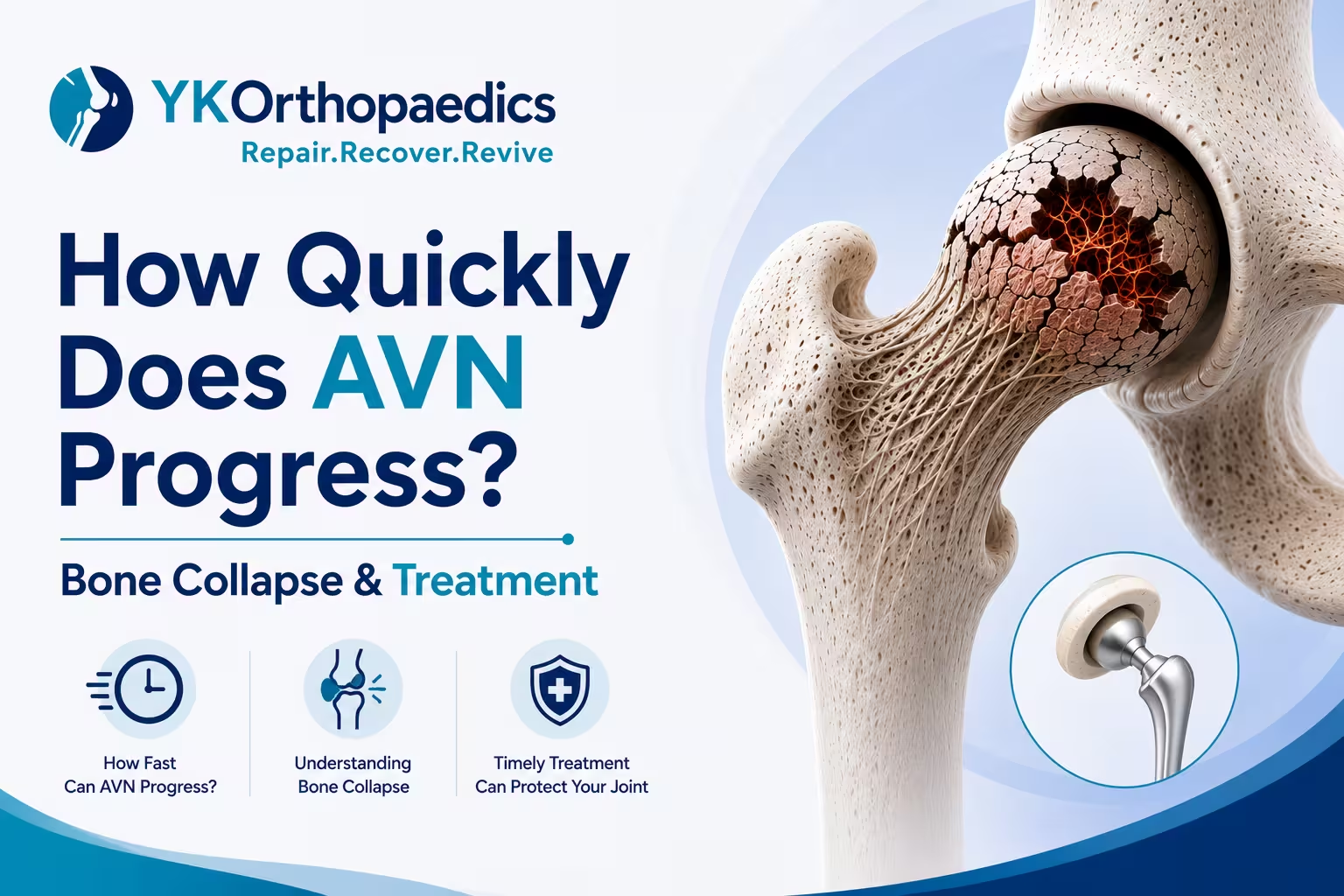
AVN can progress over weeks, months or longer, and there is no single timeline that applies to everyone. Progression depends on the size and location of the lesion, whether it affects a weight-bearing area, the underlying cause and how the bone responds to repair.
A typical progression can look like:
Reduced blood supply → Bone damage → Structural weakening → Subchondral fracture → Bone collapse → Joint damage/arthritis
Once the femoral head has significantly collapsed, reversing the structural damage becomes difficult and joint replacement may be needed.
What Determines How Quickly AVN Progresses?
Several factors influence the progression of AVN.
1. Size of the AVN Lesion
The amount of bone affected is important.
Small lesions may sometimes remain stable or heal, particularly when they are not exposed to major weight-bearing forces.
Larger lesions have a greater risk of structural failure and collapse.
2. Location of the AVN
The location can be just as important as the size.
An AVN lesion involving a weight-bearing portion of the femoral head is more concerning because that area experiences significant mechanical stress during walking and standing.
3. Stage of AVN
Earlier-stage AVN has not yet developed major collapse, while later-stage disease involves structural failure and joint degeneration.
The earlier AVN is identified, the greater the opportunity may be to consider treatments aimed at preserving the natural joint.
4. Underlying Cause
AVN associated with factors such as long-term corticosteroid use, excessive alcohol consumption, trauma or certain medical conditions may behave differently depending on the individual circumstances.
Addressing modifiable contributing factors is an important part of treatment.
5. How the Bone Repairs Itself
The body attempts to remove damaged bone and replace it with healthy tissue.
If the damaged area is small, these repair mechanisms may be able to maintain the structure of the bone. If damage and mechanical stress exceed the body's ability to repair the area, collapse can occur.
How Quickly Can AVN Cause Bone Collapse?
There is no exact number of days or months that can predict when collapse will happen.
Some patients may remain stable for a significant period, while others can experience relatively rapid progression.
NIAMS notes that the time between the onset of symptoms and loss of joint function can range from a few weeks to more than a year.
This wide variation is why it is not safe to assume that mild pain means the AVN is progressing slowly.
Can AVN Progress Without Severe Pain?
Yes.
Early osteonecrosis can have no symptoms or only mild symptoms.
In some patients, significant bone damage may be present before pain becomes severe. MRI can detect early AVN before changes are visible on an X-ray and, in some cases, before symptoms develop.
Therefore:
Mild pain ≠ mild AVN
and
Severe pain ≠ automatically advanced AVN.
Imaging is essential for determining the actual condition of the bone.
What Happens When AVN Starts to Progress?
Stage 1: Blood Supply Is Disrupted
The blood supply to part of the bone is reduced or interrupted.
Bone tissue begins to suffer from inadequate oxygen and nutrients.
Stage 2: Bone Tissue Becomes Damaged
The affected bone becomes structurally weaker.
At this stage, X-rays can sometimes still appear normal, while MRI can identify the disease.
Stage 3: Subchondral Fracture Develops
As the weakened bone is exposed to normal mechanical forces, a fracture can develop just beneath the joint surface.
This is an important sign of structural failure.
Stage 4: Bone Collapse
The damaged portion of the femoral head can collapse.
The normally rounded shape of the femoral head may become flattened or irregular.
Stage 5: Joint Degeneration
Once the shape of the joint changes, the cartilage can become damaged and secondary osteoarthritis may develop.
Pain and stiffness may increase, and movement can become increasingly difficult.
Is AVN Damage Permanent?
It depends on how early the disease is detected.
Small early lesions may sometimes heal or remain stable.
However, once significant bone collapse has occurred, the structural changes are generally much more difficult to reverse. If the joint has developed advanced degeneration, treatment may require joint replacement rather than attempting to restore the original bone structure.
This is why early diagnosis matters.
Can Early AVN Be Reversed?
Sometimes.
If the affected area is small, particularly if it is not in a major weight-bearing region, the body's repair process may be able to stabilize or rebuild the damaged bone.
However, there is no guarantee that every early AVN lesion will heal.
The outlook depends on:
- Lesion size
- Lesion location
- Stage
- Underlying cause
- Patient's age
- Overall health
- Weight-bearing demands on the joint
Can AVN Be Stopped From Progressing?
Treatment aims to slow or prevent further damage and preserve joint function, but no treatment guarantees that progression will stop in every patient.
For early disease, doctors may consider joint-preserving approaches depending on the individual case.
Non-surgical treatments can help manage symptoms, but they generally do not cure AVN or reliably prevent progression.
AVN Treatment Before Bone Collapse
When AVN is identified before significant collapse, the treatment strategy is generally focused on preserving the natural joint.
Depending on the individual case, treatment may include:
- Activity modification
- Protected weight-bearing
- Pain management
- Physiotherapy
- Addressing underlying risk factors
- Joint-preserving surgery
Core Decompression
Core decompression is one of the most commonly used surgical procedures for earlier-stage osteonecrosis.
It involves creating channels through the affected bone to reduce pressure and encourage repair. It is generally most useful before significant joint collapse.
AVN Treatment After Bone Collapse
Once the femoral head has significantly collapsed, joint-preserving procedures become less predictable.
If extensive collapse and degenerative changes are causing substantial pain and disability, total hip replacement is generally the most reliable treatment for restoring function and relieving pain.
The treatment decision depends on:
- Extent of collapse
- Joint condition
- Pain severity
- Functional limitations
- Age
- Overall health
- Activity requirements
Does Every AVN Patient Eventually Need Hip Replacement?
No.
Small, early lesions may remain stable or heal, and selected patients with early-stage disease may benefit from joint-preserving treatment.
However, larger lesions involving weight-bearing areas have a higher risk of collapse, and advanced AVN with significant joint damage may eventually require replacement.
Can AVN Progress Even If I Feel Better?
Yes.
A reduction in pain does not necessarily prove that the bone has healed.
Because symptoms and structural progression do not always occur at the same pace, follow-up imaging may be recommended to monitor the affected bone.
This is particularly important when there is a large lesion or other factors associated with a higher risk of progression.
How Is AVN Progression Monitored?
X-Ray
X-rays can be useful for monitoring later-stage structural changes and bone collapse.
However, they may miss early AVN.
MRI
MRI is particularly useful for monitoring AVN, especially during earlier stages.
It can help show:
- Size of the lesion
- Location of the affected bone
- Extent of bone damage
- Structural changes
- Whether collapse has developed
CT Scan
CT can provide detailed information about the bone structure and may be useful when assessing the extent of structural damage or collapse.
What Are Signs That AVN May Be Getting Worse?
You should discuss worsening symptoms with your orthopedic specialist if you develop:
- Increasing hip or groin pain
- Pain occurring more frequently
- Pain while resting
- Increasing difficulty walking
- Limping
- Increasing stiffness
- Reduced hip movement
- Difficulty climbing stairs
- Difficulty performing normal daily activities
A sudden increase in pain can occur when structural collapse develops.
Can AVN Affect Both Hips?
Yes.
AVN can affect both hips, particularly when associated with systemic risk factors.
Importantly, the two hips may not progress at the same rate.
For example:
- Right hip — early AVN without collapse
- Left hip — advanced AVN with collapse
This is why each hip should be evaluated separately.
What Can I Do to Reduce the Risk of Progression?
Your orthopedic specialist may recommend:
- Limiting high-impact activities
- Using walking support when advised
- Avoiding excessive alcohol
- Avoiding tobacco
- Reviewing long-term corticosteroid treatment with your doctor
- Treating underlying medical conditions
- Following the recommended physiotherapy program
- Attending follow-up appointments and imaging
Do not stop prescribed corticosteroids suddenly. Discuss any concerns about steroid treatment with the doctor managing your condition.
When Should You See an Orthopedic Doctor?
Seek an orthopedic evaluation if you have:
- Persistent unexplained hip or groin pain
- Pain while walking or standing
- Increasing stiffness
- Difficulty walking
- A history of long-term corticosteroid use
- Previous hip fracture or dislocation
- Known AVN
- Increasing symptoms despite treatment
Early diagnosis can provide more opportunities for joint-preserving treatment before significant collapse occurs.
Expert Opinion
According to Dr. Yugal Karkhur, a Orthopedic Doctor, there is no single timeline that can predict how quickly AVN will progress.
The most important factors are the size and location of the lesion, the stage of AVN and whether the weight-bearing portion of the femoral head has started to collapse.
When AVN is detected before significant collapse, selected joint-preserving treatments may be considered. Once extensive collapse and joint degeneration occur, total hip replacement may provide a more reliable solution for pain relief and restoration of function.
Related Services
- Knee Replacement
- Hip Replacement
- ACL Reconstruction
- Meniscus Repair
- Carpal Tunnel Surgery
- Partial Knee Replacement
- Knee Arthroscopic Surgery
- AVN Treatment
Related Articles
- What Stage of AVN Do I Have?
- AVN Stage 1 Meaning
- AVN Stage 2 Meaning
- AVN Stage 3 Meaning
- AVN Stage 4 Meaning
Conclusion
AVN does not progress at the same speed in every patient. Some small lesions may remain stable or heal, while larger lesions involving weight-bearing areas can progress to subchondral fracture, bone collapse and eventually arthritis.
There is no exact timeline for when collapse will occur. The time from symptoms to loss of joint function can range from weeks to more than a year, making early diagnosis and monitoring important.
If AVN is diagnosed before significant collapse, joint-preserving treatment may be possible in selected patients. Once extensive collapse and joint degeneration have developed, total hip replacement may become the most reliable treatment option.
If you are looking for a Best Orthopedic Doctor in Gurgaon, Dr. Yugal Karkhur can evaluate your MRI or X-ray, assess the stage and extent of AVN and discuss the appropriate treatment approach.
FAQs
How quickly can AVN progress?
There is no fixed timeline. Progression can occur over weeks, months or longer, depending on the size and location of the lesion and other patient-specific factors.
Can AVN cause permanent damage?
Yes. Significant bone collapse and secondary joint degeneration can cause permanent structural damage. Early treatment may provide a better opportunity to preserve the natural joint.
How long does it take for AVN to cause bone collapse?
There is no predictable timeframe. Some lesions remain stable, while others progress relatively quickly. The risk depends particularly on lesion size and whether it involves a weight-bearing area.
Can AVN stop progressing on its own?
Small lesions may sometimes heal or remain stable, but larger lesions have a greater risk of progression. Regular medical follow-up may be important.
Can AVN progress without pain?
Yes. Early AVN can cause little or no pain, and MRI can detect disease before symptoms or X-ray changes become obvious.
What happens if AVN reaches bone collapse?
The femoral head can lose its normal shape, leading to increasing pain, reduced movement and secondary arthritis. Advanced collapse may require total hip replacement.
Can early AVN be treated without surgery?
Selected early cases may be managed with activity modification, protected weight-bearing and symptom management, although non-surgical treatment does not reliably cure or stop AVN.
Is hip replacement always needed after AVN?
No. Some patients can be treated with joint-preserving approaches before significant collapse. Hip replacement becomes more relevant when extensive collapse and joint damage cause substantial pain and disability.